


Table of content
25 Best Books for Emotional Intelligence
Looking for the best books for emotional intelligence? See 25 top EQ books for work, leadership, relationships and self-awareness, grouped by goal.

Table of content
The best books for emotional intelligence depend on what you want to improve. For quick workplace habits, start with Emotional Intelligence 2.0. For the science behind EQ, read Daniel Goleman's Emotional Intelligence. For hard conversations, pick Crucial Conversations or Nonviolent Communication, and for deeper personal patterns, try Adult Children of Emotionally Immature Parents.
Below are 25 of the most useful emotional intelligence books, grouped by goal, with a short note on what each one does best.

How to Choose an Emotional Intelligence Book
Choose a book by the skill you want to practice, because no single title covers all of emotional intelligence. EQ spans self-awareness, managing emotions, empathy, communication, leadership and relationships, and most books go deep on one or two of these.
- For daily habits at work: practical guides with short strategies, such as Emotional Intelligence 2.0 or Emotional Intelligence Habits.
- For leading people: books on leadership styles and team climate, such as Primal Leadership or Dare to Lead.
- For conversations and relationships: communication books such as Crucial Conversations or How to Be an Adult in Relationships.
- For self-understanding: books on mindfulness, vulnerability or family patterns.
If you are not sure where your gaps are, a free EQ test gives you a baseline before you pick a book.
Foundational Books on Emotional Intelligence
These books explain what emotional intelligence is and why it matters, and they are the best starting point if you are new to the topic.
1. Emotional Intelligence by Daniel Goleman
Emotional Intelligence (1995) is the book that made EQ a household term. Goleman uses research and real-life examples to argue that emotional skills can matter as much as IQ in work and life, and he walks through the five components of EQ and how each one can be developed.
A key message is that temperament is not fixed. Patterns learned in childhood can deepen over time, but because the brain keeps changing throughout life, emotional responses can be retrained. Some neuroscience sections are dense, but the practical takeaways are clear.
2. Emotional Intelligence 2.0 by Travis Bradberry and Jean Greaves
Emotional Intelligence 2.0 is the most practical starter guide. It groups EQ into four skills (self-awareness, self-management, social awareness and relationship management) and offers 66 short strategies you can try right away, plus access to an online EQ assessment.
Examples include writing down your emotional triggers, making a list of emotion versus logic when you are torn, watching how people interact to read emotional cues, and acknowledging other people's feelings even when you disagree. The tactics are easy to use at work, though they focus more on behavior than on deeper emotional patterns.
3. Social Intelligence by Daniel Goleman
Social Intelligence extends Goleman's earlier work from managing your own emotions to understanding other people. It covers the science of social interaction, how relationships shape us, and how to strengthen social skills.
4. Permission to Feel by Marc Brackett
Permission to Feel explains why emotions matter and how to handle them with a clear method. Brackett, director of the Yale Center for Emotional Intelligence, presents RULER (Recognizing, Understanding, Labeling, Expressing and Regulating emotions), an approach used by parents, teachers and workplaces to build emotionally healthy environments.
Best Emotional Intelligence Books for Work and Leadership
These books focus on how emotional intelligence shapes performance, teams and leadership.

5. Primal Leadership by Daniel Goleman, Richard Boyatzis and Annie McKee
Primal Leadership shows how a leader's emotions set the tone for a whole team. The authors describe six leadership styles, four that build a positive, resonant climate and two that can create negative cycles if overused, and explain how effective leaders switch styles to fit the situation and build EQ through self-directed learning.
6. The Emotionally Intelligent Manager by David R. Caruso and Peter Salovey
The Emotionally Intelligent Manager challenges the idea that emotions get in the way of good decisions. Salovey, one of the psychologists who first defined emotional intelligence, and Caruso explain four core emotional skills and how managers can use them as a strength.
7. Emotional Intelligence at Work by Hendrie Weisinger
Emotional Intelligence at Work treats EQ as a career tool. Psychologist Hendrie Weisinger gives practical tips for using emotional intelligence in the workplace, improving team dynamics and leading with EQ.
8. The EQ Leader by Steven J. Stein
The EQ Leader shows how leaders can use emotional intelligence to build purpose-driven organizations, set shared goals and energize their teams.
9. Dare to Lead by Brené Brown
Dare to Lead applies Brené Brown's research on courage and vulnerability to leadership. It gives new and experienced managers tools for honest, caring conversations, accountability and building psychologically safe teams.
10. The Happiness Advantage by Shawn Achor
The Happiness Advantage argues that happiness fuels success rather than the other way round. Achor turns positive psychology research into seven principles for training the brain toward optimism and productivity at work.
Best Books for Communication and Relationships
These books build the social side of EQ: reading people, handling conflict and keeping relationships healthy.

11. Crucial Conversations by Kerry Patterson, Joseph Grenny, Ron McMillan and Al Switzler
Crucial Conversations is the go-to guide for talks where stakes are high, opinions differ and emotions run strong. It teaches you to stay calm, speak plainly and listen well, which are core skills in emotional intelligence and conflict resolution at home or at work.
12. Nonviolent Communication by Marshall B. Rosenberg
Nonviolent Communication teaches you to speak and listen with empathy instead of blame or judgment. Rosenberg's four-step model (observations, feelings, needs and requests) helps you understand the other person rather than trying to win the argument.
13. What Every Body Is Saying by Joe Navarro
What Every Body Is Saying focuses on nonverbal communication. Navarro, a former FBI counterintelligence agent, explains how body language can reveal what people think and feel, with examples from job interviews and everyday conversations.
14. The Language of Emotional Intelligence by Jeanne Segal
The Language of Emotional Intelligence shows how EQ leads to clearer communication. Segal lays out five essential tools for reading emotional signals, building trust and strengthening relationships.
15. How to Be an Adult in Relationships by David Richo
How to Be an Adult in Relationships draws on Buddhist ideas to explain how adults can build mature, loving connections. Richo describes five keys to healthy relationships: attention, acceptance, appreciation, affection and allowing.
16. Adult Children of Emotionally Immature Parents by Lindsay C. Gibson
Adult Children of Emotionally Immature Parents helps readers understand how growing up with self-centered, controlling or emotionally unavailable parents can affect adult life. Gibson, a clinical psychologist, shows how to recognize emotionally immature behavior, set healthy boundaries and start healing.
Books for Self-Awareness, Mindfulness and Resilience
These books strengthen the inner side of EQ: noticing your emotions, staying flexible and recovering from setbacks.

17. Mindfulness in Plain English by Bhante Henepola Gunaratana
Mindfulness in Plain English is a clear introduction to Vipassana meditation. It explains how wanting and avoiding things feed dissatisfaction, and how noticing thoughts without judgment helps you step back from emotional reactions and see more clearly.
18. Emotional Agility by Susan David
Emotional Agility focuses on one key part of EQ: getting unstuck from unhelpful thoughts and feelings. Psychologist Susan David offers practical ways to become more adaptable and resilient in daily life.
19. Daring Greatly by Brené Brown
Daring Greatly explores vulnerability as a strength rather than a weakness. Brown connects vulnerability with shame and shows how letting go of the need to look perfect can improve work, relationships and parenting.
20. Think Again by Adam Grant
Think Again makes the case for mental flexibility. Grant shows how confirmation bias and desirability bias keep people attached to old ideas, and encourages readers to think like scientists: stay curious, question assumptions and be willing to change their minds.
21. Hardwiring Happiness by Rick Hanson
Hardwiring Happiness explains why the brain holds on to negative experiences more strongly than positive ones. Psychologist Rick Hanson pairs neuroscience with simple steps for absorbing good experiences and building lasting inner strength.
22. Master Your Emotions by Thibaut Meurisse
Master Your Emotions is a short, easy-to-read guide to how negative emotions work and how to change them. Exercises at the end of each chapter make it a good fit for people who struggle with rumination and negativity.
Workbooks and Habit-Building Guides
If you learn best by doing, these books turn emotional intelligence into exercises and routines.
23. Emotional Intelligence Habits by Travis Bradberry
Emotional Intelligence Habits builds on Emotional Intelligence 2.0 with small daily habits for managing emotions, reading other people, handling stress and having hard conversations.
24. The Emotional Intelligence Workbook by Jill Dann
The Emotional Intelligence Workbook lets you develop EQ at your own pace with self-study exercises and plain explanations. Pair it with these emotional intelligence activities for more hands-on practice.
25. Rewire by Nicole Vignola
Rewire is a neuroscience-based workbook for reframing negative thinking, managing stress and building healthier mental habits one exercise at a time.
Core Components of Emotional Intelligence
Emotional intelligence is usually described through five components, and knowing them helps you pick the book that targets your weakest area. They are explained in more depth in this guide to what emotional intelligence is.
- Self-awareness: recognizing your feelings and how they affect your thoughts and actions.
- Self-regulation: managing your emotions, especially when they could harm you or others.
- Motivation: directing your emotions toward your goals without relying on outside rewards.
- Empathy: understanding and relating to other people's emotions.
- Social skills: building and maintaining healthy relationships through clear verbal and nonverbal communication.
Emotional intelligence is not about hiding negative feelings to seem pleasant. It means noticing uncomfortable emotions without letting them control your behavior.
Daily Practices for Emotional Growth
Reading builds understanding, but emotional intelligence grows through daily practice.

- Reflect on your emotions at the end of each day, for example in a short journal.
- Prepare for difficult conversations by naming what you feel and what you need.
- Use one stress-management routine consistently, such as a short breathing or mindfulness break.
- Practice reading other people's emotions and checking whether you read them correctly.
Pick one book, practice one skill from it for a few weeks, then move on. For more ideas, see these strategies on how to improve emotional intelligence.



DISC Team is a content writing team for tracnghiemtinhcach.vn, focusing on the DISC model, communication styles, and teamwork. The team aims to explain concepts in accessible language, helping readers connect them with situations in their work and everyday lives.
View author profile

Don't Let Your Potential Stay Hidden!
Take the DISC test today and discover your unique 'YOU', with deep insights into your true personality and potential.
 Understand yourself
 Choose the right career
 Suggest effective communication
 Reduce negative emotions
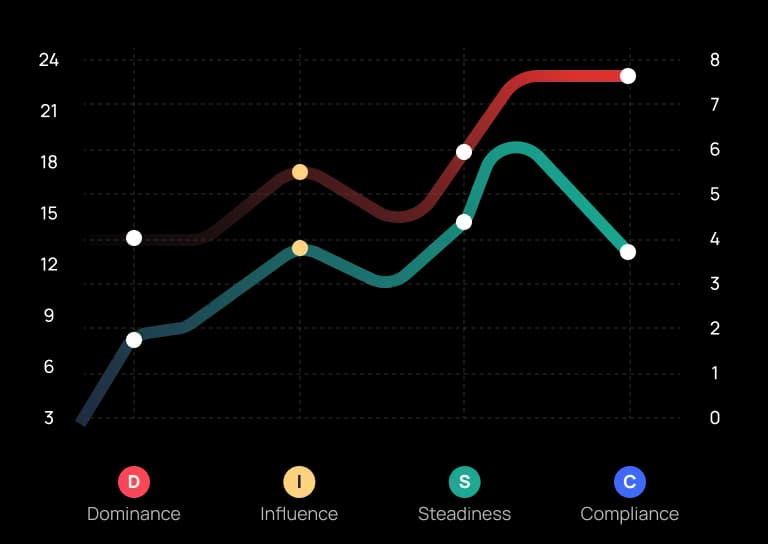
Represents your instinctive behaviors and desires.
Shows the behavioral tendencies you think you should exhibit in specific situations.
Related articles
You may also be interested in
 IQ, EQNov 03, 2026
WAIS IQ Test: What It Measures and How It Works
What is the WAIS IQ test? Learn its subtests and index scores, how it is given and scored, how it differs from online IQ tests, and its limits.
 IQ, EQNov 03, 2026
What Happens When an IQ Is Too High?
Can an IQ be too high? See how a very high IQ links to overthinking, perfectionism, anxiety, relationships and neurodivergence, plus coping tips.
 IQ, EQNov 02, 2026
What Is Genius IQ? Score Ranges, Rarity and Meaning
What IQ is considered genius? Learn the 140 benchmark, bell curve odds, and why IQ alone doesn’t make a genius. Take the IQ test.
