


Table of content
What Is Emotional Intelligence? The 5 Components Explained
What is emotional intelligence? Explore the definition, EQ vs IQ, behavioral signs, and practical ways to strengthen your emotional skills at work.
Table of content
Understanding the answer to “What is emotional intelligence?” has become a mandatory operating capability.
Throughout your career, you'll face intense workplace pressure and complicated organizational dynamics, and operating in those conditions requires you to identify, understand, and regulate your internal emotional reactions while reading and responding effectively to the people around you.
That emotional competence is built systematically through regular structured self-reflection, deliberate behavioral regulation, and consistently empathetic communication. Pure cognitive ability gives you technical aptitude, but your everyday interpersonal effectiveness, decision-making quality, and long-term career resilience depend directly on your emotional capability.
What Is Emotional Intelligence and How Does It Work?
Emotional intelligence (EQ) is the ability to blend thinking and feeling to make optimal decisions, a vital skill for thriving in today's complex world. Put simply, it's being smarter with feelings. It helps you understand yourself, make better decisions, and connect with others. A key component is using emotions as data: noticing, understanding, and responding to them with clarity and purpose. This means being aware of how feelings influence decisions, relationships, and performance, then learning to use that awareness to lead a more effective and fulfilling life.
EQ is a kind of being smart, but not what we usually think of as being smart. In recent decades, psychologists who study intelligence have recognized many different kinds, just as IQ, EQ, SQ and AQ compared reveal diverse dimensions of human capability. Emotional intelligence is the skill of recognizing your own feelings, working with them rather than reacting in problematic ways, and reading the feelings arising in others so you can collaborate, resolve conflicts, and get along well.

There are 2 types of emotional intelligence:
- Ability emotional intelligence, the skill to notice and understand emotions.
- Trait emotional intelligence, your natural emotional style, which is part of your personality.
Your innate personality (your trait emotional intelligence) provides a baseline, but your ability to understand and manage emotions is a skill you can develop. Some people are naturally more coordinated, yet anyone can become a better dancer with practice. You can improve your emotional intelligence regardless of your personality type.
The study of emotional intelligence arguably began about 2,000 years ago when Plato wrote, "All learning has an emotional base." The term itself, as a scientifically testable form of intelligence, goes back to a seminal 1990 article by two researchers, Peter Salavoy and John Mayer. It was later popularized by Dan Goleman in his 1995 book Emotional Intelligence: Why It Can Matter More Than IQ. Inspired by Goleman's book, a framework for teaching and practicing these skills was created in 1997.
Emotional intelligence operates across core frameworks and primary classifications:
- The Mayer and Salovey Four Branch Model focuses on how people perceive, use, understand and manage emotions.
- Daniel Goleman's widely recognised framework describes five components of emotional intelligence: self-awareness, self-regulation, motivation, empathy and social skills.
- The three-part process developed by researchers focuses on three core pursuits: Know Yourself (build awareness of your feelings and patterns); Choose Yourself (pause, reflect, and act intentionally); Give Yourself (align your actions with purpose and values).
The 5 Components of Emotional Intelligence
Daniel Goleman's framework maps workplace emotional intelligence across 5 core components that steer day-to-day behavior and ongoing professional development:
Self-Awareness:
Recognize personal emotions, strengths, and limits to understand how your mood and communication style affect others. For example, a self-aware manager notices when stress triggers impatience and adjusts their tone before it disrupts a meeting.
Self-Regulation:
Manage emotional reactions before they dictate behavior so you navigate criticism, conflict, and pressure constructively. Rather than lashing out in anger or suppressing feelings, emotionally regulated workers pause to examine the underlying cause of their frustration.
Motivation:
Sustained progress and resilience rely on intrinsic motivation, the internal drive to pursue goals and personal growth because the work itself is rewarding. This internal commitment keeps employees focused on milestones even when fatigue or project setbacks arise.
Empathy:
Understanding the emotions, perspectives, and unspoken needs of teammates builds interpersonal trust and psychological safety, especially when empathetic colleagues notice non-verbal signals like hesitant agreement and validate those concerns before moving forward.
Social Skills:
Building relationships, communicating clearly, and resolving friction diplomatically enable smooth collaboration across diverse teams, where developing these interpersonal skills helps individuals address disagreements constructively by listening actively and finding shared compromises.

Combined, these elements of emotional intelligence give leaders and HR teams a reliable operating foundation to anchor coaching, leadership programs, and employee development conversations.
What Does EQ Stand For and How It Compares to IQ
Raw problem-solving capacity sits inside your IQ, or intelligence quotient, while the direct ability to read, interpret, and regulate group dynamics belongs to your EQ, or emotional quotient. Each benchmark tracks completely different operational functions.
Operators often pit emotional intelligence against cognitive horsepower during talent reviews, swapping in the label EQ without much distinction. In actual practice, the true emotional intelligence meaning encompasses your full range of social behavior on the ground, while EQ refers specifically to the score you get from formal testing.
Standard information processing forms the core engine of your IQ, but steering live interpersonal friction is where your EQ takes over. You rely on cognitive firepower to dissect metrics and solve hard technical puzzles, but social competence dictates whether you can actually communicate those answers, handle real workplace pressure, and work smoothly alongside peers.
Setting up these traits as rivals creates an artificial conflict for leaders, since sharp analytical thinking and emotional awareness continually reinforce one another. Your day-to-day mental output leans heavily on emotional maturity to cushion severe stress, keep personal drive steady, and preserve team alignment when project deadlines get tight.
View raw intellect as basic computing muscle, and treat interpersonal acumen as the operating protocol that keeps the system from crashing. Examining how EQ differs from IQ shows why shipping hard initiatives always demands strong relational instincts right beside deep technical expertise.
This functional breakdown outlines exactly where both capabilities split across key operational workplace priorities:
Area | IQ | EQ |
| Main focus | Cognitive ability and reasoning. | Emotional and social capability. |
| Workplace relevance | Problem-solving, analysis and learning speed. | Communication, self-management, empathy and collaboration. |
| Common use cases | Technical tasks, complex decision-making and role capability. | Leadership, feedback, conflict resolution and team dynamics. |
| Development focus | Knowledge, skills and cognitive performance. | Self-awareness, emotional regulation and relationship management. |
Brain chemistry links analytical problem-solving and emotional regulation together at the root. Research from Mary Helen Immordino-Yang proves that cognitive skill building moves across the exact same neural pathways the mind relies on to process feeling.
In Brain Rules, John Medina explains that human learning depends on emotional drivers rather than detached logic. Rather than splitting your thinking into neat, isolated compartments, your brain consistently runs both circuits at the same time.
Most traditional companies and training programs still over-index on raw logic and specialized trade knowledge instead of interpersonal habits. Daniel Goleman challenged that bias by documenting how emotional strength anchors enduring professional momentum.
His findings show that EQ carries as much weight as IQ for lasting results, especially as you direct people, navigate team partnerships, and manage high-stakes executive leadership responsibilities.
Behavioral Signs of Emotional Intelligence
Watch how people listen, absorb criticism, and handle pressure during everyday work routines to gauge their true level of emotional maturity.
- Emotionally competent professionals express their feelings openly, identify personal triggers, and remain composed during crises by listening attentively before offering constructive feedback, showing classic signs of a high EQ person.
- People with low emotional maturity react defensively to critique, blame colleagues for operational friction, and avoid difficult conversations until team trust breaks down, reflecting known low EQ signs.
Figure out whether these reactions are consistent workplace patterns or just isolated bad days, so you'll focus structured development on meaningful progress.
Benefits of Developing Emotional Intelligence
The data consistently ties high emotional intelligence to personal wellbeing, stronger professional relationships, and sharper operational execution. Workplaces that deliberately cultivate these baseline habits report lower employee turnover alongside higher engagement across their teams.
Across the global market, The Future of Jobs report from the World Economic Forum shows employers still value analytical thinking above most capabilities. But capabilities like active listening, empathy, self-awareness, and motivation still land securely within the top 10 across their list of 26 evaluated core competencies.

Findings from Gallup's Q12 meta-analysis tie worker engagement directly to tangible business returns, including customer loyalty, employee retention, profitability, staff wellbeing, and baseline productivity. While several factors shape that engagement, your day-to-day emotional habits govern the actual frontline behaviors that build it.
Conflict Resolution
Bypass assuming negative intent during disagreements and immediately diagnose the real operational breakdown behind workplace friction.
Tackle emerging disagreements early and informally before quiet tension hardens into open hostility. Professional guidance from the CIPD endorses this approach, where leaders use clear emotional awareness to guide productive talks while separating individual personalities from tactical breakdowns.
When workplace pressure triggers defensive behavior, pause your initial reaction during any peer dispute, figure out whether the friction stems from competing workloads, diverse workplace personality traits interacting across team projects, or mismatched communication habits, and steer the dialogue right back to shared team goals.
By sitting calmly with the feeling when anger surfaces, you isolate your personal triggers while diagnosing the unspoken frustrations driving the other person. Controlling how you react stops an ordinary tactical dispute so it won't compound into lasting team damage.
Leadership Impact
Grounded leaders adjust their leadership styles across several vital operational areas:
Psychological safety
Rigorous workplace studies from McKinsey link psychological safety directly to stronger retention, sharper decision-making, team learning, and higher organizational performance. You cultivate that environment through emotional intelligence, giving everyone on your bench permission to question assumptions, raise concerns, and debate issues constructively.
Executive self-regulation
The emotional climate of any team inevitably mirrors how leadership handles pressure. Managers remaining calm during stressful feedback prevent downward transference of anxiety across their groups. When you absorb critical input cleanly, maintain personal composure during crunches, and communicate with steady clarity, your people follow that standard.

Trust and engagement building
High-trust teams grow out of consistent operational habits, where you listen attentively, fulfill commitments, and treat peers fairly during high-friction sprints. That same emotional intelligence also spots quiet disengagement, fading confidence, or early frustration quickly, letting you step in and correct course before localized friction metastasizes into widespread organizational dysfunction.
Frequently Asked Questions About Emotional Intelligence
Can emotional intelligence be learned and improved?
When you treat emotional intelligence as a daily operating habit, you can steadily sharpen it through deliberate practice, thoughtful reflection, direct coaching, and regular feedback. Professionals build these capabilities over time by deliberately targeting their listening habits, empathy, emotional regulation, conflict management, and adaptable communication styles.
How do organizations and individuals measure emotional intelligence?
Organizations evaluate emotional competence by pairing day-to-day office observations with practical assessment tools like 360-degree feedback, behavioral interviews, coaching check-ins, and structured evaluations. Assessment instruments split cleanly between self-report inventories where individuals score their own habits and ability-based tests that measure scenario-based problem solving. Individuals can Take the free EQ test in order to gauge baseline strengths and map out concrete targets for personal growth.
Is emotional intelligence the same as being nice?
Genuine emotional intelligence focuses on directing personal responses with clear intention instead of simply defaulting to being agreeable or polite. That operational discipline demands setting firm boundaries, making difficult choices, and addressing team friction with clarity alongside genuine compassion.
Why is emotional intelligence important at work?
Everyday operational performance hinges on emotional intelligence because it directly shapes how professionals collaborate, manage challenging moments, deliver direct feedback, and guide others while sustaining sound judgment, team cohesion, and effective people management. Across different departments, core organizational functions like cross-functional collaboration, psychological safety, dispute management, and clear communication rely on this exact competence.
Both organizations and individual contributors gain a practical operating system to evaluate how people handle pressure, communicate with one another, maintain productive relationships, and drive team results. Mastering these core competencies gives you the tools required to lead with clarity, coordinate seamlessly across departments, and preserve personal resilience in demanding professional environments.
Understanding what is emotional intelligence and treating your emotional responses as operational data completely changes how you make tough decisions under pressure. This approach provides the framework to audit baseline reactions, evaluate team dynamics through structured feedback, and resolve interpersonal friction before it disrupts collaboration. Developing that capability requires steady mechanical discipline built on deliberate practice, firm boundaries, and daily execution. When you manage projects with that level of clarity, you protect team confidence and keep execution moving forward.


Don't Let Your Potential Stay Hidden!
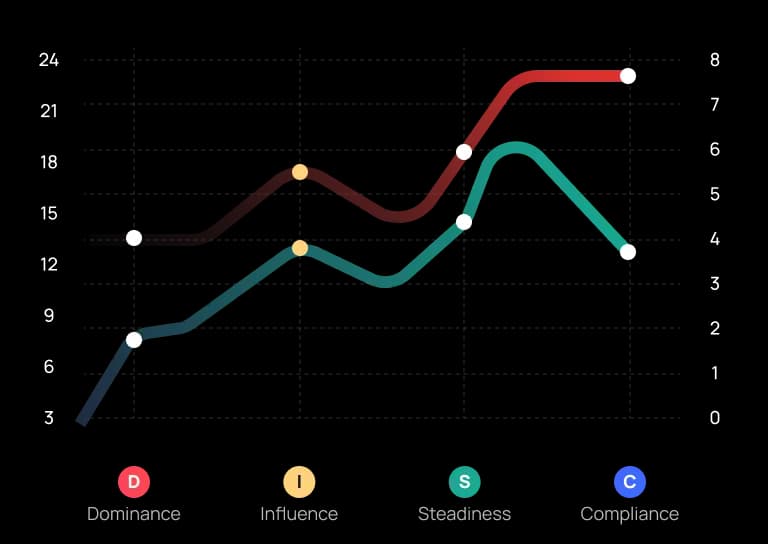
Take the DISC test today and discover your unique 'YOU', with deep insights into your true personality and potential.
 Understand yourself
 Choose the right career
 Suggest effective communication
 Reduce negative emotions
Represents your instinctive behaviors and desires.
Shows the behavioral tendencies you think you should exhibit in specific situations.
Related articles
You may also be interested in
 IQ, EQSep 16, 2026
How to Improve Emotional Intelligence: 9+ Practical Strategies
Learn how to improve emotional intelligence with practical strategies for self-awareness, self-regulation, empathy, communication, and better relationships.
 IQ, EQSep 16, 2026
10+ Emotional Intelligence Activities for Teams & Leaders
Try practical emotional intelligence activities that build self-awareness, empathy, emotional regulation, communication, and team resilience.
 IQ, EQSep 16, 2026
Average IQ by Age: What's Normal at Every Age
IQ is pinned to 100 at every age because it ranks you against your peers, not raw ability. See the full average IQ by age chart and what your score means.
