


Table of content
How to Improve Emotional Intelligence: 9+ Practical Strategies
Learn how to improve emotional intelligence with practical strategies for self-awareness, self-regulation, empathy, communication, and better relationships.
Understanding how to improve emotional intelligence comes down directly to regulating your internal states while steering difficult interpersonal dynamics. For those questioning can people change their personality, this capacity develops through learnable competencies rather than fixed traits, systematically replacing involuntary emotional reactivity with deliberate choices aligned with your personal values across both work and personal settings.
The Science of Improving Emotional Intelligence
Understanding what emotional intelligence is means training deliberate choices aligned with your personal values. When exploring whether emotional intelligence can be learned, standard neuroplasticity models demonstrate that your brain reshapes its physical structure as you repeat specific behaviors. Deliberately practicing emotional intelligence reinforces the neural circuits handling empathy, regulation, and sound judgment.
Think of these habits like paths across a park, where repeatedly leaving the worn trail of anger for a calmer line eventually makes that choice your default route. Sudden stress, however, will hijack your intentions whenever unexpected friction catches you off guard.
To build responses that don't crack under real pressure, measure your EQ first to benchmark your baseline score before training yourself to defuse physical tension immediately so your self-awareness stays intact. Spend 10 to 15 minutes every day drilling that pause between a trigger and your reaction, and you'll see visible gains in impulse control within 60 to 90 days, while larger changes take 3 to 6 months.

Intellectual horsepower and emotional competence pull on entirely different levers in any workplace, yet they operate together so that emotional intelligence directly sharpens your reasoning, problem-solving, and teamwork.
Your raw IQ can get you into college, but you'll need EQ to handle the grind of final exams when compounding pressure threatens your focus. In senior leadership, high EQ predicts lasting success far better than pure intellect alone, which is why the World Economic Forum ranks emotional intelligence as a premier workplace capability for 2030.
Plenty of businesses now rate those interpersonal instincts just as high as technical ability. Mastering how to increase emotional intelligence remains a continuous lifetime practice.
Strategies to Strengthen Self-Awareness
Map your daily feelings and track their immediate effects to gain genuine control over your actions, since true self-awareness serves as the foundational bedrock of emotional intelligence.
Organizational psychologist Tasha Eurich, writing in Insight, points out that genuinely self-aware professionals unlock far greater confidence and sharper creative output across their teams. They consistently make sounder calls, communicate with clarity, build noticeably stronger relationships, and foster deeper collaboration.
Tracking Bodily Sensations and Physical Cues
Most people burn through tons of feelings each day without consciously recognizing them. One of the best ways to build clarity is to isolate the physical sensations each emotion produces alongside the exact events that set it off.
Tuning into these physical states becomes second nature once daily observation turns into an automatic habit. Set random timers across your schedule, take several deep breaths whenever an alarm rings, and audit your emotional state alongside whatever physical sensations crop up across your body.
Notice whether feelings such as anger, sadness, fear, disgust, or joy show up (think chest, stomach, or throat) or register through subtle micro-expressions across your face. Paying calm attention to the present moment without judging it helps you step back from consuming thoughts, track your biology directly, and gain a far wider perspective on daily friction.
Emotional Journaling and Daily Logging
A structured daily review proves taking a ten-minute pause before answering shields sensitive workplace communications:
- Write down what occurred at the end of each day, noting both the specific feelings it brought up and the exact way you handled it.
- Review these documented details regularly to spot recurring trends, build sharper awareness of your actions, and pinpoint where your problems actually originate.
- Treat difficult moments as chances to learn instead of brushing past reality or denying an error to yourself or peers. Asking "what can this teach me?" reveals practical lessons. For instance, realizing that sending a sharp email came from workplace hunger and irritability shows that you require better daily self-care or a ten-minute pause before answering sensitive messages.

Anticipating Situational Triggers
Anticipating your emotional state before walking into a tense situation gives you the room to name and accept feelings early. That clear baseline keeps you firmly in control, letting you choose an intentional response instead of defaulting to a raw reaction.
Spotting internal reactions the moment they surface defines genuinely self-aware professionals, who process feelings before speaking instead of digging their heels in. Ask yourself what you're experiencing right now and whether you can name it, alongside which emotions normally spike under intense stress. Taking time to choose your answer and label what is happening inside dials down immediate reactivity, showing you how to develop emotional intelligence across every subsequent conversation.
Gathering Feedback to Improve Self-Awareness at Work
Barriers to Executive Feedback
Developing real emotional intelligence is practically impossible without an objective picture of your traits and motivations, since solitary self-assessment breeds massive blind spots around how your behavior lands with colleagues.
Andrews points to research by Tasha Eurich showing that while 95 percent of people rate their self-awareness as high, only 10-15 percent actually meet objective standards. Managers and CEOs struggle most with this gap. Writing in the Harvard Business Review, Eurich observed that gaining authority often sparks overconfidence in personal self-knowledge, while subordinates withhold candid feedback out of fear, depressing overall self-awareness.
Objective Peer Input
Calibrating your self-perception requires direct observations from colleagues who know your daily operating habits, since evaluating yourself in isolation is wildly unreliable. Ask coworkers to pinpoint your key strengths and weaknesses, document their statements, and review them for shared themes without turning defensive.
Undergoing a full 360-degree review gives an unbiased gauge of emotional skills, giving you a clear yardstick to measure personal assumptions against peer observations. Brushing off gaps between your own self-ratings and coworker reviews by claiming other people misunderstand your true intent or arguing that you judge yourself too harshly only reveals missing self-awareness.
Explaining discrepancies away by claiming one judges oneself too harshly merely obscures valuable diagnostic data.

Emotional Self-Regulation Techniques
Self-Management Mastering your own actions and physical health while locking down sharp emotional outbursts gives you genuine self-management, which is what lets you show steady initiative and honor commitments when facts on the ground shift. You have to steer your internal states deliberately so sudden impulses never call the shots on your operational moves. Never let raw feelings run things. High-EQ operators manage their reactions directly, absorbing heavy stress and messy office friction while hitting one hundred percent of their promised obligations every single quarter.
Stress Impairment Making solid calls about everyday behavior means filtering raw reactions through emotional discipline, though that deliberate control unravels fast under intense pressure. You must lock in your composure before acute strain clouds your judgment, because losing your grip swaps clear thinking for sloppy unforced errors. Running under extreme tension degrades the accurate appraisal of feelings in yourself and your peers by fifty percent.
Organizational Impact Among the clearest signs your EQ is low, letting bitter moods and sharp reactive impulses run unchecked spreads a matching wave of hostility across your whole team, pushing departmental turnover higher until leadership is forced to look in the mirror. Talented people regularly sign up for promising organizations, but they consistently walk out the door because of bad managers.
Pausing Between Stimulus and Reaction
The Immediate Pause Staying level-headed enough to pause and reflect before speaking or moving under pressure demands controlled respiration. Taking deep breaths, taking a sip of water, or counting to ten stabilizes your pulse when tensions spike. You can buy a biological delay of three seconds before replying by resting both feet flat against the floor and breathing out through pursed lips across four slow counts.
Responding Over Reacting Shifting automatic behavior gets much easier once you understand your internal emotional mechanics, just like spotting an unspoken resentment toward a coworker explains why you secretly treated them differently. Pay close attention to raw physical sensations before making any move. Deciding whether to overreact or stay composed remains your call whenever intense sensations surface, preserving deliberate control in ninety-nine cases out of a hundred.
Sensory and Physiological Resets
Among actionable tips to increase EQ, using sensory resets like cold water calms your autonomic nervous system to stop volatile outbursts:
- Call a time out to splash cold water across your face, step outside into fresh air, or fix a beverage, giving yourself necessary room to regain composure, assess the immediate situation, and decide how to respond.
- Identify specific coping techniques that calm your system down, whether taking a walk, playing music, or turning to physical activity.
- Break your current physical routine to alter incoming sensory signals because motion dictates emotion, whether by joining an exercise class or directing an active mind into a book or a puzzle.

Physical Well-Being and Routine Stability
Dietary Balance Controlling the food and drink you consume directly shapes your daily emotional stability, making dietary balance a straightforward yet high-leverage operating priority.
Schedule Commitments Daily execution comes down to putting an explicit schedule on your calendar and defending those blocks against interruptions. Locking in specific commitments for items A, B, and C by date X within Y hours eliminates procrastination.
Restorative Habits Sudden emotional outbursts usually trace back to skipping planned downtime to decompress and quietly sort through feelings after heavy operational conflicts. Setting aside regular restorative habits like reading or meditation drops your subsequent reactive episodes by fifty percent.
Cognitive Reframing and Channeling Anger
Channeling emotional intensity into productive goals keeps you moving forward when acute operational friction spikes. Holding your fire makes sense until the right moment arrives, but turning that friction into fuel ensures you fix problems instead of getting mad.
Operating with genuine intention means doing what you mean by weighing every practical option alongside its concrete consequences before choosing a path. Discovering how to be more emotionally intelligent involves shutting down cynical lines of thought, treating negative notions as mere mental noise while leaning on verified facts to reach objective conclusions.
Cognitive Reframing bypasses naive optimism while refusing to let personal offense dictate your next operational move, ensuring that you solve an unfair situation with a completely clear, focused head.
Methods to Deepen Empathy and Social Awareness
When you study the model from Jamil Zaki, empathy splits into three components: diagnosing what others feel, sharing that emotion, and wanting to improve their circumstances. Operating with that deep awareness lets you deliver constructive tough love, using real understanding to help others improve.
Cognitive perspective-taking means deliberately weighing someone's feelings before you react, so when a coworker digs in with defensive hostility, you ignore literal arguments and ask what unspoken outcome they dread losing. Recognizing that everyone brings distinct feelings and triggers lets you return an emotionally appropriate, measured response by adapting your communication style.
Direct interaction comes down to deliberate listening habits that let you absorb another person's situation without interruption, keeping your personal concerns and preconceptions on pause so you hold consistent eye contact instead of checking your phone or waiting to speak. Affirm the speaker with steady acknowledgment, then paraphrase their points to confirm your understanding.

Mastering how to read people accurately requires tracking physical signals, because the muscles around someone's eyes, nose, mouth, and forehead reveal emotional intent, while an alert posture communicates an open presence. Watch closely for cue clusters like a torso angled away from you or crossed arms with tightened fists. Once those defensive postures appear together, pause your point and ask how the conversation is landing so far.
Interpersonal dynamics depend on continuous reciprocal emotional tracking. Tracing shifts in your own state alongside another person's reactions builds self-awareness, since catching personal discomfort around specific viewpoints reveals your underlying priorities.
Broaden your social awareness outward by escaping the opinion bubbles where personal viewpoints are constantly reinforced, spending time reading opposing arguments and having your ideas challenged. Navigating unfamiliar shared spaces builds authentic social acumen.
Emotional Intelligence Skills for Relationship Management
Translate your outward focus into everyday leadership by leaning on the interpersonal skills that matter most, which combine personal self-regulation with sharp, proactive social awareness.
Andrews argues that social capabilities divide good managers from genuinely great ones when you evaluate influence, teamwork, and conflict management. When you develop these habits, you pick up the leverage needed to inspire peers and maintain productive working relationships in any room.
Pay attention to how people around you operate, then use those observations to steer everyone toward a shared operational finish line. Real collaboration always traces back to basic emotional awareness, because you can't align a team without understanding what they face each morning.
Once you understand those everyday pressures, your team interactions run smoother, faster, and deliver far better outcomes across the board.
Within the four-part emotional intelligence model popularized by Daniel Goleman, relationship management functions as a core domain. That area requires you to build sturdy bonds, communicate clearly, rally your colleagues, collaborate effectively, and handle workplace friction directly.
Assertive Communication
Assertive speech will always beat aggressive posturing when you need to get your point across in competitive rooms. Rely on straightforward honesty without turning abrasive or deliberately hurtful to the people sitting at the table.
Building this habit gives you a durable capability that pays off across your career and your personal life. State your perspective plainly during team discussions, while staying genuinely receptive to how your colleagues interpret the situation.
Run difficult conversations through a disciplined formula: state your neutral observation of the action, explain the impact on workflow, and establish your specific boundary. For instance, 'When our agenda changes without warning, delivery slips; let's stick to our agreed schedule today and tackle those extra topics tomorrow morning.'
Speaking assertively prevents quiet resentment and sets clear boundaries, but it can temporarily ruffle feathers with people who were accustomed to your easy compliance.
Operators with high EQ voice their expectations and firm boundaries with zero drama, while low EQ professionals constantly struggle to hold their ground.
Constructive Conflict De-escalation
A steady approach to team friction with personal poise and structured problem-solving ensures outcomes remain balanced for everyone involved, while mastering distinct conflict resolution styles lets you convert heated departmental clashes into productive collaborative breakthroughs:
- Conflict and disagreements are inevitable in human relationships, as two people cannot hold identical priorities, opinions, and expectations at all times; however, resolving disputes constructively strengthens mutual respect, while viewing friction without fear of threat or punishment promotes freedom, creativity, and safety.
- Emotionally intelligent employees de-escalate tensions and find mutually beneficial solutions, resolving difficult disagreements constructively with a solution-oriented mindset instead of a combative attitude.
- Collaborative problem-solving and viewing friction as entirely normal characterize high EQ individuals, who address difficult counterparts with tact and diplomacy, whereas low EQ individuals tend to either avoid or escalate conflicts.

Frameworks for Structuring Emotional Competence
Researchers design structured diagnostic models to translate internal physiological signals into dependable operating habits. In professional emotional intelligence training, teams and executives across more than 150 countries rely on these neuroscience-grounded frameworks to convert theoretical concepts into direct personal execution through honest reflection and purposeful daily action.
The Four-Domain Competency Model
Psychologist Daniel Goleman organizes emotional competence into four interconnected domains to direct your daily performance:
- Self-Awareness: The cornerstone of emotional intelligence and the base the other components depend on; you recognize your own emotions, know your strengths and weaknesses, understand how feelings shape thoughts and behavior, and hold self-confidence.
- Self-Regulation: The ability to manage these emotions and behaviors; you control impulsive feelings and actions, steer emotions through healthy channels, take initiative, follow through on commitments, adapt to shifting circumstances, and pause to take a deep breath during tense, stressful moments to stay calm before speaking or acting.
- Social Awareness: The capacity to read other people through active empathy; you track individual feelings, motives, and concerns, pick up on subtle social cues, remain comfortable inside group settings, and recognize organizational power dynamics without hesitation.
- Social Skills / Relationship Management: What separates a great manager from an average one; these practical capabilities cover influence, conflict management, teamwork, and inspiring others, enabling you to build and maintain healthy connections across every area of life.
The Three-Domain Action Framework
Operating as a practical three-part system, the Six Seconds Model of Emotional Intelligence provides three sequential diagnostic questions across your daily routines, driving clear self-knowledge, intentional personal choices, and purposeful human connection:
- Know Yourself: Deepen your personal awareness by noticing what you do. The 1-2-3 KCG exercise begins by asking: What am I feeling right now? What else?
- Choose Yourself: Operate with intention by doing what you mean. This step prompts conscious decision-making: What options do I have? What are the consequences?
- Give Yourself: Drive purposeful action by executing for a clear reason. This step aligns daily actions with broader goals: What do I truly want for myself and for others?
Plutchik's Wheel of Emotions
This diagnostic wheel outlines the structural relationships among primary feeling states like joy, sadness, anger, and fear, demonstrating how bodily sensations blend together and change in intensity.
Emotional Vocabulary Expansion Accurately identifying and naming what you experience is the baseline discipline for building emotional intelligence. Widening your emotional vocabulary converts raw physical reactions into clean diagnostic data that sharpens your everyday judgment and protects critical working relationships.
Emotions as Informational Data Internal bodily signals operate as practical diagnostic cues regarding yourself and your environment. This mapping reclassifies internal feelings from urgent behavioral directives into neutral analytical data. Taking brief moments to isolate those specific physical sensations and interrupt automatic reactivity is the core mechanism that builds emotional intelligence.
Work inward from the outer edges to establish if your physical response is driven by disgust, fear, sadness, or anger. Deciding whether you feel mildly annoyed, truly angry, or in pure rage directly cools down amygdala activation.
Mastering emotional intelligence requires fundamentally resetting how you manage uncomfortable physiological spikes when operating under pressure. Once you treat internal feelings as informative inputs rather than urgent orders to execute, you retain complete authority over your conduct in every room you enter.
Translating physiological signals into deliberate choices comes from systematic practice rather than any innate personality trait. These diagnostic frameworks give you an operational blueprint to dismantle raw emotional reactivity into clear, mechanical steps.
When you benchmark baseline sensations across the four competencies, apply the three Six Seconds questions during daily friction, and pinpoint your exact coordinates on Plutchik's wheel, you remove the guesswork from your interpersonal conduct. Your autonomic nervous system will still trigger default alarms under pressure, but mastering how to improve emotional intelligence provides the exact tools to govern your subsequent decisions.


Don't Let Your Potential Stay Hidden!
Take the DISC test today and discover your unique 'YOU', with deep insights into your true personality and potential.
 Understand yourself
 Choose the right career
 Suggest effective communication
 Reduce negative emotions
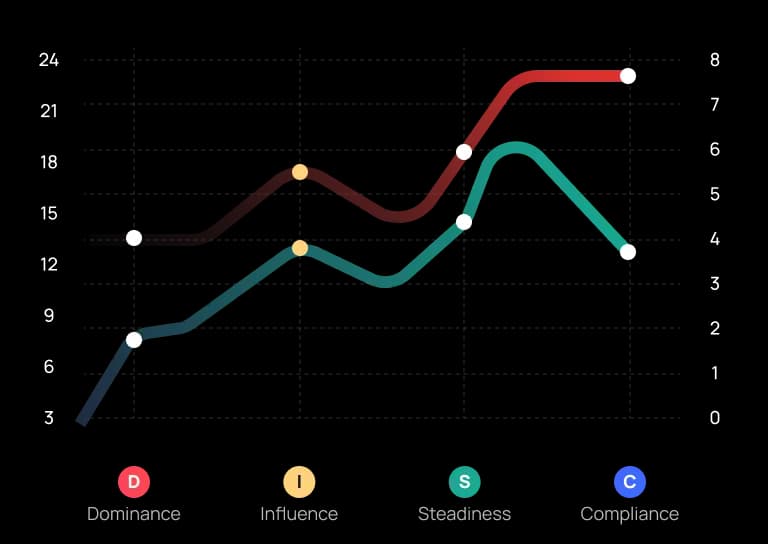
Represents your instinctive behaviors and desires.
Shows the behavioral tendencies you think you should exhibit in specific situations.
Related articles
You may also be interested in
 IQ, EQSep 16, 2026
10+ Emotional Intelligence Activities for Teams & Leaders
Try practical emotional intelligence activities that build self-awareness, empathy, emotional regulation, communication, and team resilience.
 IQ, EQSep 16, 2026
Average IQ by Age: What's Normal at Every Age
IQ is pinned to 100 at every age because it ranks you against your peers, not raw ability. See the full average IQ by age chart and what your score means.
 IQ, EQSep 08, 2026
What Is Emotional Intelligence? The 5 Components Explained
What is emotional intelligence? Explore the definition, EQ vs IQ, behavioral signs, and practical ways to strengthen your emotional skills at work.
