


Table of content
DISC Assessment for Hiring: How to Use DISC to Hire Better Candidates
Learn how to use DISC assessment for hiring responsibly. Discover how DISC helps evaluate work style, team fit, communication, onboarding, and hiring decisions.

Table of content
Hiring the right person takes more than reading a resume. Employers also need to understand how a candidate works, communicates, and fits into a team. A DISC assessment for hiring helps reveal these behavioral insights simply. In this guide, you will learn how to use DISC correctly to support better interviews, smarter decisions, and stronger long-term hires.
What Is a DISC Assessment for Hiring?
A DISC assessment for hiring is a behavioral assessment that helps employers understand how a candidate may work, communicate, and respond to pressure. It focuses on four styles: Dominance, Influence, Steadiness, and Compliance.
In the recruitment process, DISC provides hiring teams with useful insights into team fit, work style, and role alignment. This makes using DISC test in recruitment helpful for asking better interview questions and planning onboarding.
DISC should not replace interviews, resumes, or skill tests. Instead, it supports DISC assessment for job fit by showing how a person may fit a role and team. The goal is not to label candidates, but to make hiring decisions more balanced.

How the DISC Assessment Works in the Hiring Process
A DISC assessment for hiring works best when it supports a clear hiring process. It helps employers understand how a candidate may work, communicate, and fit into a team. However, DISC should be used with interviews, skills checks, and work history, not as the only hiring factor.
Step 1 – Define the role requirements first
Start by defining what the role needs before reviewing DISC test results. This helps the hiring team judge each candidate against the same job standard.
Focus on key role needs such as:
- Core skills and qualifications
- Daily tasks and work pace
- Communication style required for the role
- Level of teamwork or independence
- Type of manager support needed
This step makes the DISC test for employee selection more useful by connecting the assessment to real job demands.
Step 2 – Screen for skills, qualifications, and experience
Next, review the candidate’s resume, work history, technical skills, and relevant achievements. DISC does not measure job knowledge, so it should not replace this step.
A candidate should first meet the basic role requirements. After that, DISC can give extra insight into their work style and team behavior.
Step 3 – Use DISC after initial screening, before final decision
DISC should be used after the first screening, but before making the final hiring choice. At this stage, the employer already knows the candidate has the right background.
This is where DISC for recruitment process planning becomes useful. It helps hiring teams compare the candidate’s natural behavior with the role, team culture, and manager expectations.
Step 4 – Interpret the candidate’s DISC profile
A DISC profile looks at four behavior styles: Dominance, Influence, Steadiness, and Conscientiousness. These styles can show how a person may approach tasks, people, change, and rules.
For example:
- Dominance may show a direct and goal-focused style
- Influence may show an outgoing and people-focused style
- Steadiness may show a calm and supportive style
- Conscientiousness may show a careful and detail-focused style
DISC for employee personality assessment should not be used to label someone as good or bad. It should help employers understand how each person may perform in a specific work setting.
Step 5 – Use DISC insights to ask better interview questions
DISC results can help hiring managers ask better interview questions. Instead of asking general questions, they can focus on real work situations.
For teams learning how to use DISC in hiring, this step is very helpful. It can guide questions about conflict, deadlines, feedback, teamwork, and change. The answers can help confirm whether the DISC result matches the candidate’s real behavior.
Useful question areas include:
- How the candidate handles pressure
- How they work with different personality styles
- How they respond to feedback
- How they manage rules, details, or fast changes
Step 6 – Build a tailored onboarding plan
After the hiring decision, DISC can support a better onboarding plan. Some employees may need clear steps and structure. Others may need more freedom, quick feedback, or more team connection.
This makes hiring with DISC personality test useful beyond recruitment. It helps managers guide new employees in a way that fits their work style. As a result, the new hire can settle in faster and work with more confidence.

The Right Way to Use DISC Assessment in Hiring
A DISC assessment for hiring works best when it supports, not replaces, human judgment. It helps teams understand work style, communication needs, and role fit in a fair way.
Use DISC as a supplement, not a filter
DISC should be one part of a wider hiring process. It can help with DISC for hiring managers who want to understand how a candidate may work with others.
It should not be used to reject someone on its own. A DISC profile shows behavior style, not skill, talent, or job success.
Use DISC to review:
- How a candidate may communicate
- How they may respond to pressure
- How they may work in a team
The goal is not to label someone as a personality hire. The goal is to understand how they may fit into the role and team.
Combine DISC with structured interviews and skills tests
DISC becomes more useful when it is used with other hiring methods. A DISC personality test for hiring decisions should be checked against real evidence.
Hiring teams should combine DISC with:
- Structured interviews
- Job-related skills tests
- Work samples or role tasks
This gives a clearer view of the candidate. It also helps reduce bias and weak hiring choices.
Focus on adaptability, not only natural style
A DISC profile shows a person’s natural work style. However, people can learn, adjust, and grow in different roles.
Hiring teams should look at how a candidate adapts to change. This is useful when reviewing DISC leadership styles for roles that involve teamwork, support, or decision-making.
A strong candidate is not always the one with the most obvious DISC match. The better choice may be someone who can adjust their style when the job needs it.
Use the same process for all candidates
Every candidate should follow the same process. This keeps the hiring system fair and easy to compare.
A consistent process should include:
- The same assessment step
- The same interview structure
- The same scoring method
This helps hiring teams avoid unfair judgments. It also makes DISC results more reliable in the final review.
Explain why the assessment is being used
Candidates should know why DISC is part of the hiring process. A short explanation can build trust and reduce stress.
This is helpful for people searching for how to pass employment personality tests, as DISC is not about perfect answers. It is used to understand work behavior, communication style, and possible role fit.
Employers should explain that DISC supports better hiring, onboarding, and team planning. It should never feel like a hidden test or a rejection tool.

Benefits of DISC Assessment for Employers
A DISC assessment for hiring helps employers understand how people may act at work. It shows how a candidate may communicate, solve problems, and fit into a team. When used with interviews and skill checks, it supports better hiring choices.
More objective hiring conversations
DISC gives hiring teams a clearer way to discuss each candidate’s work style. It can reduce guesswork during interviews and help managers ask better follow-up questions.
Employers can use DISC insights to explore:
- How a candidate communicates with others
- How they may respond to pressure
- What type of work setting may suit them
- How their style may match the role
This makes the interview process more focused and less based on first impressions.
Better communication between managers and new hires
DISC helps managers understand how a new hire may prefer to receive guidance, feedback, and support. Some people like direct instructions, while others need more discussion or reassurance.
This helps managers choose the right tone from the start. It can also reduce early misunderstandings between both sides.
Stronger team balance
A team works better when people bring different strengths. DISC can show whether a candidate may add a missing style to the group.
For example:
- A direct style may help push work forward
- A social style may improve team connection
- A steady style may support routine work
- A careful style may improve accuracy
This helps employers build teams with better team balance and stronger daily cooperation.
More personalized onboarding
DISC can make onboarding more useful for each new employee. Instead of using one general approach, managers can adjust support based on the person’s behavior style.
A new hire who values structure may need clear steps and written guidance. A more action-focused person may prefer quick tasks and early responsibility. This makes the first weeks easier and more productive.
Lower risk of early turnover
A DISC assessment for hiring can help employers spot possible fit issues before making a final decision. It gives more insight into how a person may work, communicate, and adapt to the role.
DISC does not predict performance by itself. But when used with interviews, skills checks, and reference reviews, it can support better hiring choices. This may lower the risk of early turnover and improve long-term fit.
Common Mistakes When Using DISC in Recruitment
A DISC assessment for hiring can help recruiters understand how a person may act at work. It shows behavior style, communication style, and possible fit with a team. But it should not replace interviews, skills checks, or careful hiring judgment.

Using DISC as a pass or fail test
DISC is not designed to mark a candidate as right or wrong. It helps recruiters understand how someone may communicate, respond to pressure, and work with others. Treating it as a pass or fail test can lead to unfair decisions.
Rejecting candidates based only on DISC profiles
Recruiters should not reject someone only because of their DISC type. Each profile can bring value in the right role. Hiring decisions should also include skills, experience, interview answers, and job needs.
Assuming DISC predicts job performance
DISC does not measure technical ability, knowledge, motivation, or future results. It can show likely work behavior and possible support needs, but it cannot prove that someone will perform well in a role. A DISC assessment works best as one part of a wider selection process.
Ignoring team dynamics
Using DISC only to review one candidate is too narrow. Recruiters should also consider team dynamics, manager style, and the working environment. A strong hire is not only someone who fits the role, but also someone who can collaborate well with the existing team.
Using DISC too early in the hiring funnel
DISC should not be used as an early screening filter. It is more useful after basic qualifications, skills, and experience have been checked. At that stage, DISC can guide interview questions, improve candidate evaluation, and support a smoother onboarding plan.
Best Practices Checklist for Using DISC in Hiring
This checklist helps you apply the DISC assessment for hiring clearly and practically. Each step supports better decisions and improves candidate fit.
1. Define role success criteria before testing
Start by defining what success looks like in the role. Focus on key tasks, work pace, and communication needs. This helps you match behavioral traits with real job demands. It also improves accuracy when reviewing DISC results.
2. Use DISC after initial qualification screening
Use DISC after you check basic qualifications and experience. This keeps the process fair and structured. DISC then supports deeper candidate evaluation instead of replacing core screening steps.
3. Never use DISC as the only selection criterion
DISC does not measure skills or knowledge. It should not be the only factor in hiring decisions. Combine it with interviews, tests, and experience. This creates a balanced and reliable process.
4. Ask DISC-informed interview questions
Use DISC insights to guide your interview questions. Focus on communication style, teamwork, and response to pressure. This helps you uncover clear behavioral insights and real work patterns.
5. Compare candidates against role needs, not stereotypes
Avoid labeling candidates based on DISC types. Instead, compare their behaviors with job needs and team culture. This leads to fair and effective hiring decisions.
6. Use results for onboarding and manager alignment
DISC results can guide onboarding and early support. Managers can adjust communication and task style to fit the new hire. This improves employee onboarding and reduces early turnover risk.
7. Keep the process transparent and consistent
Explain why you use DISC in hiring. Apply the same steps to all candidates for the same role. A clear DISC assessment for the hiring process builds trust and ensures consistency.
How DISC Insights Help You Hire Better
A DISC assessment for hiring helps you understand how a person may work with others. It shows their likely behavior, communication style, and response to daily tasks.
This gives hiring teams more than a resume. It helps them see how a candidate may fit the role, the manager, and the team.
DISC can support hiring by helping you:
- Understand how a candidate communicates
- See how they may handle pressure
- Identify their natural work style
- Ask better interview questions
- Plan a smoother onboarding after hiring
However, DISC should not be the only hiring tool. It works best when used with interviews, skills tests, and clear job needs. When used well, DISC assessment can improve candidate fit, team alignment, and employee retention. It helps managers make better choices and support new hires from the first day.
Ready to learn your own style? Take the DISC online test today and see how your profile can support smarter hiring decisions.
Conclusion
A strong hire is not only skilled but also fits the role, team, and work style. A DISC assessment for hiring helps employers see these factors more clearly. When used with interviews and skills checks, DISC supports fairer and smarter decisions. Start using DISC as a practical guide to improve hiring, strengthen onboarding, and build teams that work better together.
FAQs
1. Is DISC assessment legally safe for recruitment?
Yes, DISC is generally safe when used correctly in hiring. It focuses on behavior, not protected traits like age or gender. Employers should avoid using it as the only decision tool. Instead, combine it with interviews and skills checks to ensure fair and compliant recruitment practices.
3. When should employers use DISC in the hiring process?
DISC is best used during the mid-stage of hiring. After initial screening, it helps compare shortlisted candidates. Recruiters can better understand behavior and team fit. This allows more focused interviews and clearer decisions based on both skills and working style.
3. Should DISC be used before or after the interview?
DISC can be used either before or after interviews, depending on the process. Many employers use it after the first interview to gain deeper insights. This helps validate impressions and guide follow-up questions, making the final decision more balanced and informed.


Don't Let Your Potential Stay Hidden!
Take the DISC test today and discover your unique 'YOU', with deep insights into your true personality and potential.
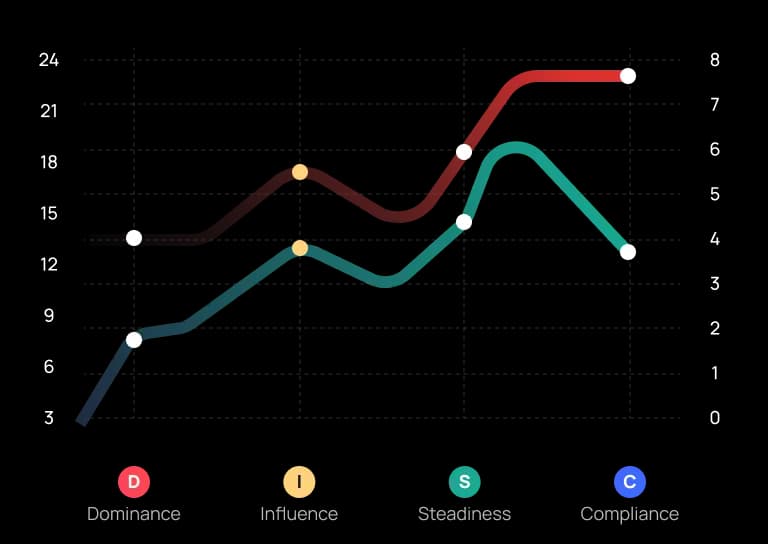
 Understand yourself
 Choose the right career
 Suggest effective communication
 Reduce negative emotions
Represents your instinctive behaviors and desires.
Shows the behavioral tendencies you think you should exhibit in specific situations.
Related articles
You may also be interested in
 DISCSep 28, 2026
How to Identify Your Strengths and Weaknesses at Work
Understand your strengths and weaknesses at work by reviewing your skills, past achievements, etc. Improve and align your strengths with career goals.
 DISCMay 29, 2026
DISC Profile Activities for Team Building, Communication, & Workplace
Discover how DISC profile activities enhance team collaboration and communication. Apply practical exercises to build self-awareness and apply at work.
 DISCMay 21, 2026
What Does the DISC Assessment Measure? Key Behavioral Styles Explained
Discover what does the DISC assessment measure and understand your behavior & communication style. Learn how insights can improve teamwork and personal growth.
