


Table of content
DISC Assessment Tool: Understand Behavior, Communication & Work Style
Discover how a DISC assessment tool reveals your behavior style. Learn how it can improve communication and support better teamwork at work.

A DISC assessment tool helps you understand how people think, communicate, and work in different situations. It gives clear insight into behavior styles and supports better teamwork, hiring, and self-awareness. This guide explains how DISC works, how to read your results, and when to use it effectively. Read on to explore practical ways to apply DISC in real work settings.
What Is a DISC Assessment Tool?
A DISC tool is a behavioral assessment used to understand how a person tends to act, speak, and work with others. It does not measure intelligence, skills, or personal values. Instead, it focuses on common behavior patterns.
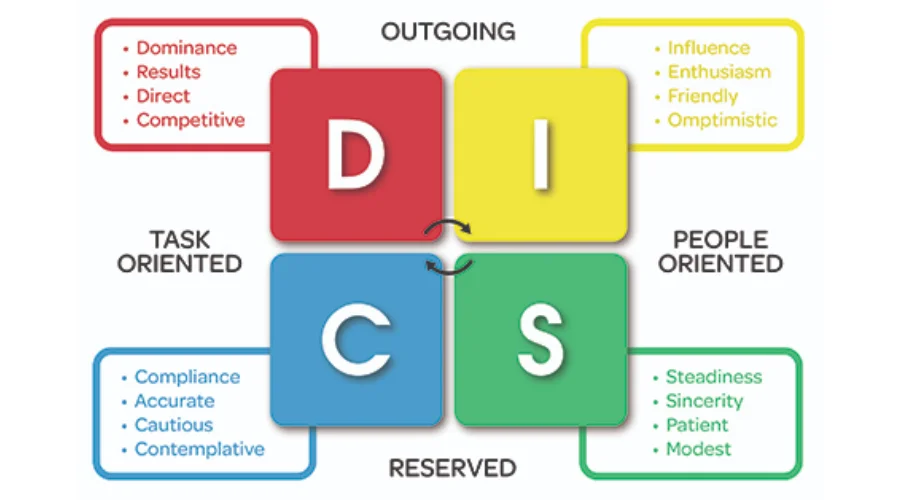
The tool is based on four DISC styles:
- Dominance: Direct, goal-focused, and confident
- Influence: Social, persuasive, and energetic
- Steadiness: Calm, patient, and supportive
- Compliance: Careful, accurate, and rule-focused
Most DISC personality test tools ask users to answer a short set of questions. The results create a DISC profile that explains a person’s work style, communication habits, and response to pressure.
A DISC assessment tool is often used for self-awareness, team communication, and workplace development. In some cases, an online DISC tool can also help users get quick insight before they choose a more detailed report.
Take the DISC Assessment Online
Taking a DISC test online is usually simple and quick. A clear process helps you answer with confidence and understand your results without confusion.
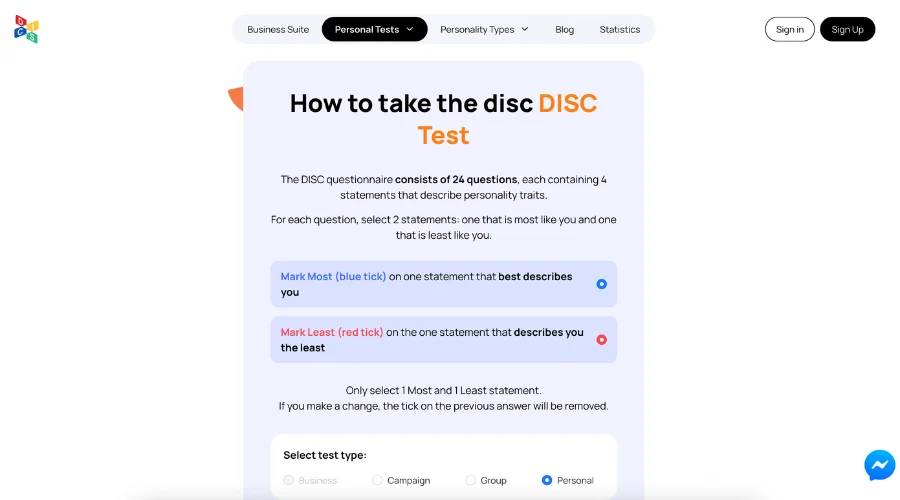
Step 1 – Start the DISC assessment
Begin by choosing a trusted online DISC platform with clear instructions. Some users may start with a Free DISC assessment tool to explore their behavior style before choosing a detailed report.
Before you begin, check these basic points:
- The test explains what DISC measures
- The questions are easy to understand
- The report shows clear DISC style results
- The platform gives practical guidance after the test
Step 2 – Answer behavior-based questions
Answer each question based on how you naturally act at work or in daily situations. This Behavioral assessment works best when your answers reflect real habits, not ideal behavior. Try to answer quickly and honestly. Do not overthink each question, because DISC focuses on common behavior patterns.
Step 3 – Get your instant DISC profile
After you submit the test, you will receive your DISC profile. The report usually explains your tendencies across Dominance, Influence, Steadiness, and Conscientiousness.
Your profile may show:
- How you communicate with others
- How you make decisions
- How you respond to pressure
- How you prefer to work in a team
Step 4 – Review your primary and secondary DISC style
Review both your main DISC style and your supporting style. This helps you understand your behavior in a more balanced way.
This step also helps you avoid DISC test common mistakes, such as reading one result as a fixed label. DISC should guide self-understanding, not limit how you see yourself.
Step 5 – Apply your results to real work situations
Use your DISC results to improve communication, teamwork, leadership, and conflict handling. The value of DISC comes from applying the insight in real situations, not only reading the report.
You can apply your results by:
- Adjusting your communication style with different people
- Understanding why some teamwork issues happen
- Improving how you handle feedback or stress
- Choosing better ways to support team collaboration
Understanding Your DISC Assessment Results
A DISC assessment tool helps you read your behavior patterns with more clarity. It explains how you may communicate, make decisions, react to change, and work with others. These results can also support a DISC test for self-awareness, but they should not be used as fixed labels.
Dominance
People with high Dominance often like clear goals and fast action. They tend to focus on results, solve problems quickly, and take charge when needed.
This style often shows these traits:
- Confident in making decisions
- Comfortable with challenges
- Focused on outcomes and progress
- Direct in communication
Influence
People with strong Influence often enjoy communication and social interaction. They usually bring energy to a team and can encourage others through positive expression.
This style is often linked to:
- Strong people skills
- A persuasive communication style
- High energy in group settings
- Interest in teamwork and shared ideas
Steadiness
People with high Steadiness often value trust, balance, and stable work routines. They tend to listen well and support others in a calm way.
This style often shows these traits:
- Patient in communication
- Reliable in daily work
- Supportive toward team members
- Calm when facing change
- Comfortable with steady processes
Compliance: Analytical, precise, and structured
People with strong Compliance often care about accuracy, rules, and clear standards. They usually prefer careful planning before making decisions.
This style often appears through:
- Attention to detail
- Logical thinking
- Respect for structure
- Focus on quality and accuracy
7 DISC Tools Worth Exploring For Better People Insights
Choosing the right DISC assessment tool helps people understand behavior, communication, and teamwork more clearly. The tools below offer different ways to support self-awareness, hiring, training, and team growth.
1. Discpersonalities.com
Discpersonalities.com is a simple option for users who want to explore their DISC profile without a complex setup. It helps people notice their natural behavior patterns and use the results in daily work or communication.
- Provides a free DISC personality test
- Helps identify DISC personality type
- Explains strengths and communication habits
- Useful for beginners exploring behavioral profile insights
2. Everything DiSC
Everything DiSC is built for organizations that want to use DISC in real workplace settings. As a practical DISC test for businesses, it helps teams understand how different styles work together.
- Built around workplace applications
- Offers personalized DISC reports
- Supports team collaboration and onboarding
- Includes interactive learning tools for continuous development
3. TTI Success Insights
TTI Success Insights is suitable for companies that need deeper behavior insights at work. Its DISC-based reports can support coaching, leadership training, and talent decisions, so it can be a useful DISC tool for hiring.
- Measures observable behavior patterns
- Supports leadership development and team training
- Combines DISC with other assessment models
- Provides detailed and structured reports
4. Assessments 24x7
Assessments 24x7 works well for coaches, trainers, and businesses that need flexible reports. It can serve as practical DISC assessment software for teams that want clear insights they can apply right away.
- Offers online DISC assessments
- Helps users understand communication style and strengths
- Provides customizable reporting options
- Suitable for training and organizational development
5. Truity
Truity is a user-friendly choice for people who want quick and simple personality insights. For readers comparing the best DISC test tool for self-discovery, it can be an easy place to start.
- Easy to use for personal self-discovery
- Explains behavior and working preferences clearly
- Suitable for beginners, comparing DISC options
6. Crystal (CrystalKnows)
Crystal is useful for professionals who want DISC insights for real conversations. It helps users adjust how they communicate with different personality styles.
- Offers a free DISC personality assessment
- Provides instant and easy-to-understand results
- Improves workplace communication and relationship building
- Useful for sales, hiring, and team collaboration
7. Tony Robbins DISC
Tony Robbins DISC is designed for users who want to link personality insights with personal growth. It can also work as a simple DISC tool for team building when groups need a shared way to understand behavior.
- Free to complete online
- Provides a downloadable profile report
- Helps identify strengths and motivators
- Useful for improving self-awareness and performance
Free DISC Assessment vs Full DISC Assessment Tool
Before choosing between a free test and a full DISC tool, it is important to understand what each option can actually provide. The table below compares both choices based on depth, accuracy, workplace use, and practical value.
Comparison Point | Free DISC Assessment | Full DISC assessment tool |
| Best For | A quick first look at your DISC personality type. | A deeper view of workplace behavior, communication, and team fit. |
| Report Depth | Gives basic results, often with your main DISC style. | Offers detailed DISC profile reports, charts, and practical guidance. |
| Accuracy Support | Useful for general self-awareness. | Better for serious use because strong tools include clearer data, validation, and support. |
| Workplace Use | Helps users understand simple communication style differences. | Supports hiring, onboarding, coaching, leadership, and team collaboration. |
| Action Steps | May give short tips after the test. | Gives more specific advice for managers, teams, and personal development. |
| When To Choose | Choose it if you want a fast, low-commitment start. | Choose a full DISC assessment tool if decisions affect people, roles, or team performance. |
How is the DISC tool used in the workplace?
The DISC assessment tool helps workplaces understand how people communicate, make decisions, respond to pressure, and work with others. It gives teams a shared way to discuss behavioral styles, workplace communication, and team collaboration without making the conversation feel personal.
DISC for teams
DISC helps teams work with less confusion. Each person may have a different way of sharing ideas, solving tasks, or responding to pressure. When team members understand these differences, they can adjust how they communicate.
DISC can help teams:
- Improve workplace communication
- Build better team collaboration
- Reduce small misunderstandings
- Respect different communication styles
- Work with more trust and clarity
This is useful for daily meetings, group projects, and cross-functional work.
DISC for managers and leaders
Managers and leaders use DISC to understand how each employee prefers to work. Some people need direct goals. Some need clear steps. Others may need time, support, or more details before taking action.
With DISC, leaders can give feedback in a better way. They can also guide each person based on their natural work style. This makes leadership more personal, clear, and practical.
DISC does not replace real management skills. It supports leaders by giving them a simple view of how people may respond at work.
DISC for hiring and onboarding
DISC can support hiring and onboarding when used in the right way. It helps employers understand how a person may communicate, adapt, and work with others. In hiring, DISC should not be the only factor in a decision. It works best when combined with interviews, skills, experience, and role requirements.
During onboarding, DISC can help new employees:
- Understand their own behavioral tendencies
- Learn how to connect with the team
- Adjust faster to the company culture
- Know how their manager prefers to communicate
This can make the first stage of employment smoother and less stressful.
DISC for conflict resolution
Many workplace conflicts happen because people communicate in different ways. One person may be direct and fast. Another may need more time or detail. These differences can create tension if people do not understand each other.
DISC helps make conflict less personal. It gives employees a shared language to explain what they need and how they prefer to work.
For example, DISC can help a team see whether conflict comes from:
- A fast decision-making style
- A need for more detail
- A different tone in communication
- A mismatch in work pace
This helps teams solve problems with more respect and less blame.
DISC for employee development
DISC is also useful for employee growth. It helps people see their strengths and areas they can improve. This can support coaching, training, and career planning. Employees can use DISC to improve how they speak, listen, handle pressure, and work with others. Managers can also use it to create better professional development plans.
When used well, DISC helps people become more self-aware. It also helps them build stronger work habits and better relationships at work.

Limitations of DISC Assessment Tools
A DISC tool can help people understand common behavior patterns at work. However, it has clear limits, so users should read the results with care.
- The DISC tool should not be the only method used for hiring. It does not measure job skills, work history, technical ability, or future performance.
- DISC results can change based on the setting. A person may act one way at work, but respond differently under stress or in a new role.
- People should not be labeled by one DISC style. Most people show a mix of traits, and their behavior can change over time.
- DISC explains behavior, not full personality. It does not measure values, intelligence, mental health, or personal motivation.
- DISC should be used with other tools, such as interviews, skill tests, and work samples. This gives a fairer and more complete view of a person.
- Results can be misunderstood without clear guidance. Users should learn what each style means before comparing the DISC assessment cost or using the report for team decisions.
- DISC is best used for self-awareness, communication, and teamwork. It should not be treated as a complete answer for every people-related decision.
Conclusion
A DISC assessment tool is a simple way to understand behavior and improve how people work together. When used correctly, it supports better communication, clearer decisions, and stronger teamwork. However, it should always be combined with other methods for a full view. Explore your DISC profile today and start applying these insights to create more effective and balanced work relationships.
FAQs
Is a free DISC assessment accurate?
Free DISC assessments can provide a basic overview of behavior styles and communication patterns. However, they often lack depth, validation, and detailed reporting. Paid versions usually offer more reliable insights, better accuracy, and professional interpretation, which makes them more suitable for workplace or hiring decisions.
What does a DISC assessment measure?
A DISC assessment measures observable behavior and how a person responds to tasks, people, and challenges. It focuses on four main traits: Dominance, Influence, Steadiness, and Conscientiousness. It does not measure intelligence, skills, or emotional health, but helps explain communication and work style preferences.
How often should I retake a DISC assessment?
You can retake a DISC assessment when your role, environment, or responsibilities change. Many experts suggest reviewing it every one to two years. This helps reflect personal growth, shifting behavior patterns, and new work contexts, while keeping your self-awareness and communication style up to date.


DISC Team is a content writing team for tracnghiemtinhcach.vn, focusing on the DISC model, communication styles, and teamwork. The team aims to explain concepts in accessible language, helping readers connect them with situations in their work and everyday lives.
View author profile

Don't Let Your Potential Stay Hidden!
Take the DISC test today and discover your unique 'YOU', with deep insights into your true personality and potential.
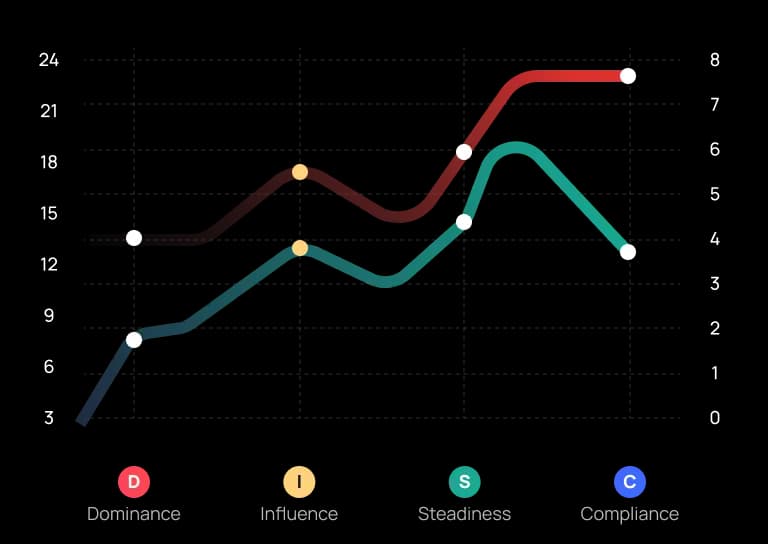
 Understand yourself
 Choose the right career
 Suggest effective communication
 Reduce negative emotions
Represents your instinctive behaviors and desires.
Shows the behavioral tendencies you think you should exhibit in specific situations.
Related articles
You may also be interested in
 DISCSep 28, 2026
How to Identify Your Strengths and Weaknesses at Work
Understand your strengths and weaknesses at work by reviewing your skills, past achievements, etc. Improve and align your strengths with career goals.
 DISCMay 29, 2026
DISC Profile Activities for Team Building, Communication, & Workplace
Discover how DISC profile activities enhance team collaboration and communication. Apply practical exercises to build self-awareness and apply at work.
 DISCMay 29, 2026
DISC Assessment for Hiring: How to Use DISC to Hire Better Candidates
Learn how to use DISC assessment for hiring responsibly. Discover how DISC helps evaluate work style, team fit, communication, onboarding, and hiring decisions.
