


Table of content
What Does the DISC Assessment Measure? Key Behavioral Styles Explained
Discover what does the DISC assessment measure and understand your behavior & communication style. Learn how insights can improve teamwork and personal growth.

Curious about what does the DISC assessment measure and how it can reveal your work and communication style? This assessment uncovers your natural behavior patterns, decision-making approach, and response to challenges. In this article, we explore each DISC dimension, clarify common misconceptions, and show how you can use your results to improve teamwork and personal growth.
What Does the DISC Assessment Measure?
What the DISC assessment measures is a common question for people who want to understand their workplace behavior. DISC does not measure intelligence, talent, or personal value. It measures DISC personality traits, work habits, and how a person responds to people, tasks, pace, and structure.
Your Behavior Patterns And Work Preferences
The DISC assessment shows how you usually approach work. It explains what is measured in the DISC test through your daily choices, task style, and work focus.
It can show whether you prefer to:
- Move quickly and make decisions fast
- Plan carefully before taking action
- Work closely with others
- Focus on details, rules, and accuracy
Your Response Style In Challenging Situations
DISC also shows how you may act under pressure. It helps explain how you respond to conflict, change, deadlines, or unclear tasks.
Some people become more direct when stressed. Others may become quieter, more careful, or more supportive. This makes DISC useful for improving self-awareness and teamwork.
Your Influence And Communication Style
The assessment helps identify your communication styles and how you influence others. It shows whether you tend to persuade, guide, listen, explain, or ask for facts before acting.
DISC may reveal that you prefer to:
- Speak with energy and confidence
- Use calm and supportive language
- Share clear facts before making a point
- Give direct instructions when needed
Your Preferred Work Pace And Daily Rhythm
DISC measures how you like to manage time and workflow. It shows whether you feel more comfortable with a fast, changing pace or a steady routine.
This can help explain your task rhythm, response speed, and comfort level with change. It also helps teams assign work in a more suitable way.
Your Approach To Rules, Structure, And Procedures
DISC also explains how you relate to systems, standards, and instructions. This is where DISC assessment traits explained can help you understand your need for freedom, clarity, accuracy, or structure.
It may show whether you:
- Prefer flexible ways of working
- Need clear steps and expectations
- Check details before making decisions
- Follow processes to reduce mistakes
Your Key Motivators, Stress Triggers, And Ideal Work Environment
Finally, what does the DISC assessment measure includes your motivators, stress triggers, and ideal work setting. It shows what the DISC test reveals about you simply and practically.
The result can help you understand:
- What keeps you engaged at work
- What may cause stress or conflict
- Which environment helps you perform better
- How can you work better with different people

What does the DISC assessment not measure?
The DISC assessment shows how you act in different situations. It is not meant to reveal everything about you. Understanding its limits helps avoid wrong assumptions and misuse of the results.
Intelligence or IQ
One common misconception is that a DISC report reflects a person’s cognitive ability or intellectual capacity. In reality, this tool does not measure intelligence, IQ, or analytical reasoning. It is designed to identify behavior preferences rather than assess academic aptitude or problem-solving ability.
Understanding your DISC test traits can give insight into how you act in various situations, but not your intellectual performance.
Aptitude or technical skills
DISC does not evaluate job-specific abilities or technical expertise. It identifies behavioral styles in DISC test, showing how you prefer to act in different situations rather than what you are capable of doing.
- It does not test programming, math, or specialized knowledge
- It highlights natural responses to challenges and teamwork preferences
- It helps understand communication styles in work environments
Mental health
DISC is not designed to assess emotional wellbeing or diagnose psychological conditions. It reflects behavior tendencies in social or professional contexts, but does not measure stress resilience or mental health status.
Values, beliefs, and hiring decisions
DISC does not capture personal values, ethics, or belief systems. It should never be used as the sole basis for hiring or promotion decisions. Organizations can use the DISC measure for employees to better understand team dynamics and preferred interaction patterns. Using it in combination with other tools provides a more complete picture of performance and potential.
Taking the DISC assessment gives insight into how you naturally act and communicate. It also helps identify your DISC personality types careers and enhances collaboration. Start your DISC journey today and gain practical guidance for improving teamwork and personal growth.

The Four Core Areas Measured by DISC
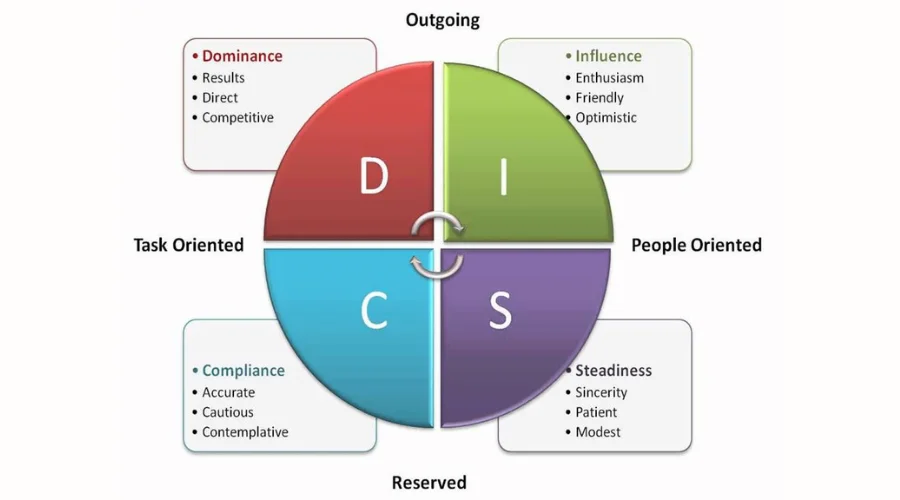
The what does the DISC assessment measure question focuses on understanding natural behavior patterns in different situations. It evaluates communication styles, decision-making approaches, and how people handle challenges. The results appear on a DISC test scale, providing a clear visual of your tendencies.
Dominance
Dominance reflects how individuals face obstacles and pursue goals. People high in this area are confident, decisive, and results-oriented. They often take initiative in leadership roles and prefer challenging environments where they can drive outcomes.
- Take initiative and lead when needed
- Solve challenges quickly and effectively
- Focus on results and achieving objectives
Influence
Influence describes how people interact, persuade, and inspire others. Those strong in this trait are social, energetic, and enjoy motivating teams. They thrive in collaborative environments and often use communication to encourage and connect with others.
- Build trust and positive relationships
- Inspire and energize colleagues
- Share ideas enthusiastically and persuasively
Steadiness
Steadiness shows a person’s ability to maintain balance and consistency. Individuals with high steadiness are patient, dependable, and supportive. They value stability, prefer predictable routines, and excel in teamwork where cooperation is key.
- Stay calm under pressure
- Value consistent routines and harmony
- Collaborate effectively with others
Compliance
Compliance measures how individuals follow rules, handle structure, and maintain accuracy. Analytical and detail-focused people often score high here. They prioritize quality, adhere to standards, and carefully plan their work to ensure precision.
- Follow guidelines and procedures closely
- Focus on accuracy and detail
- Organize tasks methodically and efficiently
Understanding your profile helps improve communication, teamwork, and personal growth. Take the DISC assessment today to uncover your natural behavior patterns and strengths.
How the DISC Assessment Measures Behavior
Understanding what does the DISC assessment measure helps you see your natural patterns in work and life. It shows how you respond to challenges, communicate with others, and handle tasks. This also explains what is DISC testing for in a practical, workplace context.
You Answer Behavior‑Based Statements
During the assessment, you’ll see a list of statements focused on actions, reactions, and work‑style choices. Rather than asking for opinions, it emphasizes how you behave in different scenarios - such as dealing with conflict, interacting with others, or approaching tasks.
By selecting responses that reflect your natural conduct, the tool collects reliable information about your interpersonal style and motivational triggers.
Your Responses Are Scored Across DISC Dimensions
Once complete, your selections are evaluated against the four main DISC dimensions:
- Dominance: how you take control and make decisions.
- Influence: how you connect and persuade others.
- Steadiness: how patient and consistent you are.
- Compliance: how careful and detail‑oriented you act.
This scoring process assigns values that indicate how strongly you align with each dimension, painting a clear picture of your behavioral tendencies. These scores provide measurable insight into your assertiveness, adaptability, collaboration style, and attention to detail.
Your Highest Score Shows Your Primary DISC Style
The dimension with the highest score represents your dominant behavioral preference. This primary style reveals how you are likely to act in leadership roles, group settings, and stressful moments. Knowing your main DISC category helps explain why certain environments feel natural to you and why others might seem challenging.
Blended Styles Create a More Detailed Behavioral Profile
Often, individuals display a mix of two or more DISC traits. When your scores are closely balanced across categories, this blend forms a more intricate profile. A blended outcome highlights how you might shift behaviors depending on context or people involved. This deepens your understanding of strengths, flexibilities, and potential blind spots.
Why knowing what DISC assessment measures matters
Understanding what does the DISC assessment measures help individuals and teams gain practical insights into workplace behavior. This assessment evaluates how people naturally respond to challenges, interact with others, and manage tasks. Recognizing these patterns improves self-awareness and supports professional growth.
Helping you understand yourself more clearly
The DISC assessment identifies your dominant behavioral tendencies. Knowing whether you lean toward dominance, influence, steadiness, or conscientiousness helps you predict your reactions in different situations. This insight empowers you to make decisions aligned with your strengths and work style.
Improving communication with different personality styles
Different DISC types process information and express ideas uniquely. By understanding these differences, you can adjust your communication style to connect more effectively.
- Adapt your tone and words to match others’ styles
- Share ideas in ways that are easily received
- Build stronger and smoother professional relationships
Reducing conflict and misunderstanding
Many workplace conflicts stem from misinterpreting behavior. DISC highlights why people act in certain ways, reducing assumptions and tension.
- Recognize behavioral patterns to avoid misjudgments
- Respond with empathy instead of frustration
- Resolve disagreements faster and more calmly
Supporting better teamwork and leadership development
DISC insights guide leaders in assigning tasks that match team members’ natural strengths. Understanding behavioral tendencies enhances coaching, promotes collaboration, and nurtures effective leadership skills. Teams become more cohesive and productive as a result.
Creating a common language for workplace behavior
DISC provides a shared vocabulary for describing workplace behavior. Standardized terms replace vague labels, making feedback, conflict resolution, and cultural development more precise and effective.
Common Misunderstandings About What DISC Measures
The DISC assessment is widely used in workplaces and personal development. However, many people misunderstand its purpose and scope. Clarifying these points can help you use the tool effectively.
DISC is not the same as a full personality diagnosis
Many people think DISC gives a full clinical personality profile. That is not true. What does the DISC assessment measure is your behavior style in daily life and work. It shows how you act with others. It does not diagnose mental or emotional health. It does not label your inner psyche. It simply shows your typical way of reacting and communicating.
DISC does not tell you exactly which career to choose
Some believe DISC can pick one perfect job for you. The tool is not meant for that. DISC shows your work preferences and social style. It helps you see where you may feel most natural. But it does not point to one single career. You still need to think about your interests and skills. DISC guides your decision, but does not decide for you.
DISC should not put people into rigid boxes
Many worry that DISC traps them in a fixed group. But this is a misunderstanding. The assessment gives patterns, not limits. People can change and act in many ways. DISC is a tool to help you learn, not to bind you. Your style can shift with experience and context.
DISC results can support growth, not limit potential
Some think DISC caps what you can do. In fact, it can boost your growth. When you know your style, you can improve how you work with others. You can enhance your communication and teamwork. You can grow as a leader or collaborator. You use the insights to build skill, not to stop trying new things.

Conclusion
Understanding what does the DISC assessment measure gives you practical insight into your natural behavior, communication, and work style. By applying these insights, you can improve teamwork, reduce misunderstandings, and enhance leadership skills. Whether in personal or professional settings, knowing your DISC profile empowers growth and collaboration. Take the next step and explore your DISC results to unlock your full potential today!
FAQs
Does the DISC assessment measure personality or behavior?
The DISC assessment focuses on observable behavior, not deep personality traits. It identifies how people typically act, communicate, and respond in different situations. It highlights behavior patterns for teamwork, leadership, and communication rather than providing a full personality diagnosis.
Does DISC measure intelligence?
No, DISC does not assess intelligence, cognitive ability, or mental capacity. It strictly evaluates behavioral tendencies and preferences, helping people understand how they act in social and work contexts. Intelligence or skills must be evaluated with other appropriate tools.
Can DISC predict job performance?
DISC cannot directly predict job performance. It shows behavioral patterns and preferences that can guide role fit and teamwork strategies. An effective application helps improve collaboration, communication, and productivity, but does not guarantee success in a specific role.
What is the most important thing DISC measures?
The most important insight DISC provides is how individuals behave and interact with others. It clarifies tendencies in Dominance, Influence, Steadiness, and Conscientiousness, helping people understand communication styles, work preferences, and strategies for personal and professional growth.


Don't Let Your Potential Stay Hidden!
Take the DISC test today and discover your unique 'YOU', with deep insights into your true personality and potential.
 Understand yourself
 Choose the right career
 Suggest effective communication
 Reduce negative emotions
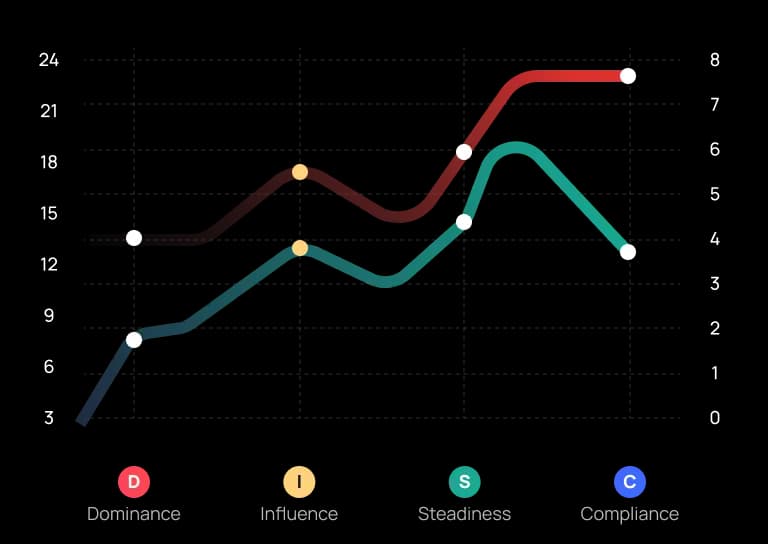
Represents your instinctive behaviors and desires.
Shows the behavioral tendencies you think you should exhibit in specific situations.
Related articles
You may also be interested in
 DISCSep 28, 2026
How to Identify Your Strengths and Weaknesses at Work
Understand your strengths and weaknesses at work by reviewing your skills, past achievements, etc. Improve and align your strengths with career goals.
 DISCMay 29, 2026
DISC Profile Activities for Team Building, Communication, & Workplace
Discover how DISC profile activities enhance team collaboration and communication. Apply practical exercises to build self-awareness and apply at work.
 DISCMay 29, 2026
DISC Assessment for Hiring: How to Use DISC to Hire Better Candidates
Learn how to use DISC assessment for hiring responsibly. Discover how DISC helps evaluate work style, team fit, communication, onboarding, and hiring decisions.
