


Table of content
How to Do the DISC Test: Step-by-Step Guide to Finding Your DISC Style
Learn how to do the DISC test, answer questions correctly, understand your D, I, S, or C result, and use your profile to improve work and communication.

Curious about your behavior and communication style? How to do the DISC test can help you gain valuable insights into your personality. Whether for personal growth or improving workplace dynamics, this test is a great tool. In this article, we’ll walk you through the easy steps to take the DISC test and unlock a deeper understanding of yourself. Keep reading to get started!
How to Do the DISC Test Online
Taking the DISC test online is a straightforward process. By following these clear steps, you'll understand your personality better and gain valuable insights. Here are the steps to take the DISC test successfully.
Step 1 – Choose a reliable DISC test provider
To start, you need to pick a reliable DISC test provider. Look for a platform that:
- Has good user reviews and is known for accurate results.
- Provides clear DISC test instructions.
- Offers a free DISC personality test to try before purchasing.
These factors ensure that your DISC test process goes smoothly and produces trustworthy results.
Step 2 – Find a quiet place and answer naturally
Before taking the test, find a quiet, distraction-free environment. This will help you:
- Stay focused and answer the questions honestly.
- Reflect your true self and do not rush your responses.
- Improve the quality of your DISC test results.
Remember, it’s important to answer each question as naturally as possible to get the most accurate results.
Step 3 – Read each group of statements carefully
When you begin, the test will present groups of statements about different behaviors. For each group:
- Take your time to fully understand each option before making a selection.
- Paying close attention to wording ensures your profile accurately represents your tendencies across: Dominance, Influence, Steadiness, and Compliance traits.
- This careful review is essential for how the DISC test works effectively.
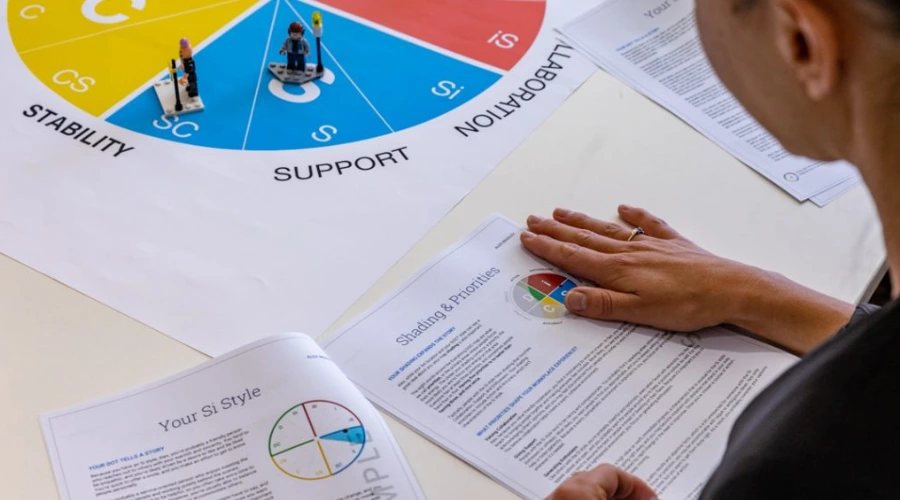
Step 4 – Select the statement most like you
In each section, choose the description that feels most true to how you naturally act or think. This “most like me” response helps the system detect your strengths and primary behavioral style.
Honest answers improve the usefulness of the final profile, giving you insights into how to interpret DISC test results.
Step 5 – Select the statement least like you
After selecting the statement that is most like you, pick the one that is least like you. This “least like me” selection helps balance your responses and reveals deeper nuances in your personality pattern.
Being accurate here sharpens the detail in your DISC Test for beginners. It also helps in interpreting a DISC graph once you receive your results.
Step 6 – Submit the test and get your DISC profile
Once you've answered all the questions, submit the test to receive your personalized DISC profile. Your results will show:
- Your dominant personality trait.
- How your traits relate to your behavior and interactions with others.
This report will be available immediately or sent to your email. It will give you insights on how to interpret a DISC graph and apply the results to understand yourself or others better.
By following these steps, you'll learn how to do the DISC test online effectively, ensuring you get valuable insights into your behavior and personality.
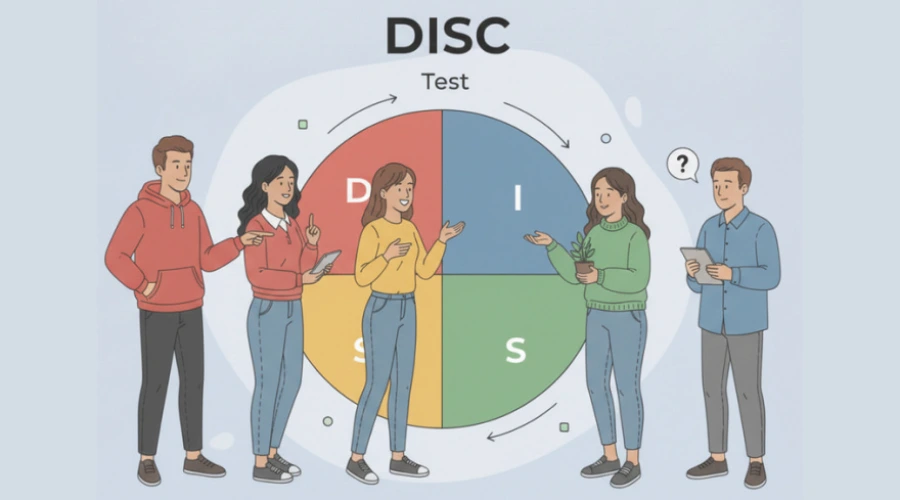
How Long Does the DISC Test Take?
When you're wondering how to complete DISC assessment, it's important to know how much time you'll need to set aside. The time required can vary based on the version of the test you choose. Some tests are quick and simple, while others offer more detailed insights, especially for professional or workplace settings.
Free DISC tests usually take 5–15 minutes
For those looking to get a quick overview of their personality, the free DISC tests are a great option. These tests are designed to be brief, allowing you to gain some insights into your behavior in just a few minutes. Here's what you can expect:
- These are quick and easy to complete, making them perfect for those who are new to personality assessments.
- The test focuses on key personality traits, helping you understand your basic behavior style.
- On average, these tests take 5 to 15 minutes to finish, making them a quick way to gain some initial insight.
If you're just starting and want a fast personality overview, this is a great option. It helps you understand how to profile a person without much time commitment.
Full workplace DISC assessments may take longer
For a more detailed analysis, the full DISC assessments are better. These tests go deeper and provide a clear view of your behavior in a work environment. Here’s a breakdown:
- These versions are more in-depth and often include a wider range of questions.
- Designed for professional environments, they provide detailed feedback on your work behavior, leadership style, and teamwork dynamics.
- Expect to spend anywhere from 20 to 45 minutes on a full assessment.
For those looking to apply how the DISC test works in the workplace, this version is more suitable. It offers a deeper analysis that helps individuals and teams understand communication styles and improve overall work efficiency.
In summary, a DISC test for beginners can be completed in just a few minutes, while a full workplace assessment requires more time but offers richer insights into your professional behavior.
How to Answer the DISC Test Correctly
When learning how to do the DISC Test, it’s important to approach each question with clarity and self‐awareness. Your answers shape the results, helping you understand your behavior and tendencies better.

Be honest, not strategic
To get a reliable result, answer sincerely instead of trying to how to do the DISC Test with tactics that aim to impress others. Choosing options that truly reflect your behavior gives you an authentic profile you can trust.
Answer based on your usual behavior, not your ideal self
Focus on how you naturally act in everyday situations. Avoid selecting responses based on who you want to be, especially when you practice how to do the DISC Test. Honest answers help produce a profile that can guide meaningful personal or professional growth.
In a how to run a DISC workshop, this honesty ensures that the insights provided are genuinely useful for the participants.
Think about the right context
When answering the questions, consider the context. Here are some key things to keep in mind:
- Reflect on your behavior in specific environments, such as at work or in social situations.
- Think about how you act under stress, as your responses will differ depending on the situation.
- Ensure your answers reflect your usual self rather than an idealized version.
Do not overthink similar statements
Many items may sound alike. Instead of analyzing each nuance, choose the answer that most closely matches your typical reaction. This minimizes confusion and ensures your assessment reflects real tendencies.
Stay consistent without forcing a result
Consistency in your answers helps generate a balanced DISC report. Do not manipulate your choices to achieve a specific outcome; let your honest patterns guide you as you learn how to do the DISC Test.
Understanding Your DISC Test Results
The DISC Test offers valuable insights into your personality traits. By understanding the results, you can improve your communication, work habits, and relationships. Here’s a breakdown of the four DISC styles.
Dominance (D)
People with a Dominance (D) profile are assertive and driven. They like to take charge and seek results quickly. D-types tend to be competitive and thrive in environments where they can make quick decisions and tackle challenges head-on.
- Key Traits: Assertiveness, competitiveness, decisiveness
- Work Style: Prefers fast-paced environments, focuses on getting results, and values efficiency
Understanding the D personality type helps in recognizing that they work best with clear objectives and a focus on outcomes. When interacting with them, it’s important to be direct and to the point.
Influence (I)
The Influence (I) type is energetic, outgoing, and enjoys being around people. I-types love environments where they can interact with others and have the freedom to be creative.
- Key Traits: Enthusiasm, social nature, persuasion skills
- Work Style: Enjoys collaboration, thrives in team settings, and is driven by positive energy
An I personality thrives when they are in social situations and can engage with others. They are most effective when working in a team-oriented environment, where they can influence and encourage their colleagues.
Steadiness (S)
Steadiness (S) individuals are calm, supportive, and reliable. They are the stabilizers of a group, valuing consistency and harmony. S-types enjoy environments that are predictable and thrive when their work is steady and structured.
- Key Traits: Patience, empathy, reliability
- Work Style: Prefers routine tasks, seeks stability, and enjoys supporting others
The S personality type excels in roles that require patience and consistency. They help create a stable environment where everyone feels supported and understood.
Compliance (C)
People with a Compliance (C) profile value accuracy and precision. They are detail-oriented, methodical, and tend to follow procedures strictly. C-types excel in roles that require careful analysis and adherence to rules.
- Key Traits: Analytical, perfectionist, detail-oriented
- Work Style: Focuses on accuracy, values structure, and works best in roles that require attention to detail
An individual with a C personality thrives when tasks are well-defined and involve analyzing data or creating detailed reports. They prefer a structured environment where quality is emphasized over speed.
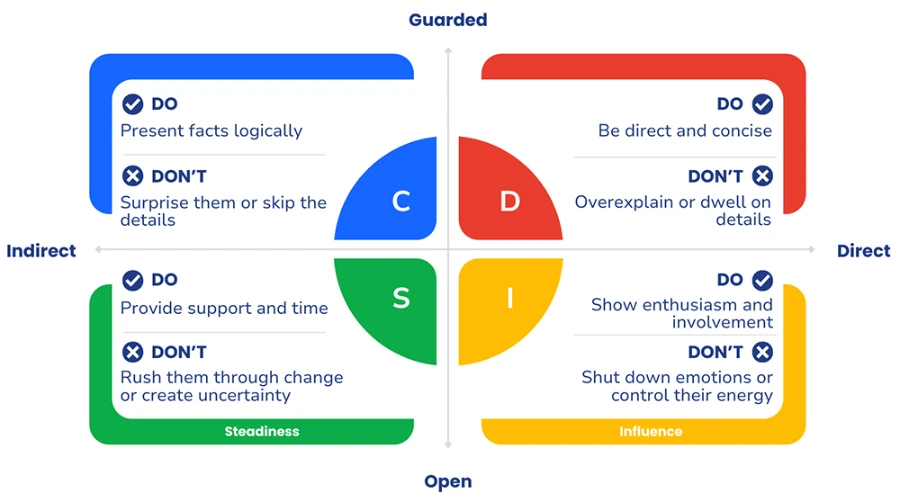
Why Most People Are a Blend of DISC Styles
Most individuals do not fit perfectly into one DISC type but rather exhibit a blend of several styles. This combination gives a more nuanced understanding of how someone behaves in different situations.
Understanding that people may have traits from multiple DISC types helps in adapting your approach to their behavior, whether you’re working with them on a team or communicating with them. By recognizing the blend, you can better navigate interactions and enhance collaboration.
Common Mistakes When Taking the DISC Test
Understanding how to do the DISC Test can be difficult if you make some common mistakes. These errors can lead to inaccurate results and limit the effectiveness of the test. Let’s take a closer look at the most frequent mistakes.
Trying to “pass” the DISC test
Some people try to “pass” the DISC test by choosing answers they think are right or expected. However, this approach does not give an accurate view of your true behavioral traits. The DISC test is designed to reflect who you really are, not who you want to be.
Choosing answers based on what a job wants
It’s tempting to pick answers that seem to fit a job description or employer expectations. But this approach can distort your DISC profile. The test should focus on your natural preferences and behaviors, not what you think others want.
Treating your DISC style as a fixed label
Many people treat their DISC profile as a permanent label, which is a mistake. DISC results are flexible and can change based on various factors like context or growth. Viewing them as static can limit personal development.
Ignoring secondary DISC traits
Your DISC profile includes secondary traits, which are just as important. Focusing only on your dominant trait can limit your understanding. Consider all aspects of your profile for a complete picture.

Using DISC as the only career or hiring decision tool
Finally, avoid using DISC as the only factor for hiring or career decisions. It’s valuable but should be used alongside other assessments. This ensures a well-rounded evaluation of your strengths.
By avoiding these common mistakes, you can get a more accurate and meaningful DISC test result.
Is the DISC Test Accurate?
The DISC Test helps assess your behavior and communication style. It gives you insight into how you naturally respond to different situations. While the test offers useful information, its accuracy can depend on various factors, such as test quality and honest responses.
DISC is useful for behavioral awareness
The DISC Test is great for understanding your natural tendencies in different situations. It helps you know how you respond under pressure and how you interact with others. This awareness can improve teamwork and communication.
- It provides insight into your personality type.
- Helps with better collaboration and conflict resolution in teams.
DISC should not be used as a complete measure of ability
The DISC is about behavior, not skill or intelligence. It focuses on how you behave, not how well you perform tasks. Therefore, it shouldn't be the only factor when making decisions like hiring or promoting.
- It measures behavioral traits, not job performance.
- Should be used alongside other assessments for a complete evaluation.
Free tests vs professional DISC assessments
Free DISC tests can give a basic overview of your personality. However, professional assessments offer more detailed, accurate results, which are better for in‑depth analysis and decision‑making.
- Free tests are quick and easy but may lack precision.
- Professional assessments offer more reliable, detailed, and accurate results. Investing in a professional test can provide more actionable insights for personal and team development.
Conclusion
Now that you know how to do the DISC test, it’s time to apply these insights to improve your personal and professional life. Whether you’re looking to boost communication, enhance teamwork, or better understand yourself, the DISC test is a powerful tool. Take the next step and start your journey to self-awareness today. Don't wait - uncover your true potential with the DISC test!
FAQs
How many questions are in the DISC test?
The DISC Test typically consists of around 20 to 30 questions, depending on the version. The questions are designed to assess your behavior and communication style, focusing on how you react in different situations.
Can you fail the DISC test?
No, you cannot fail the DISC Test. It is not designed to measure success or failure but to give you an understanding of your behavior. Understanding how to do the DISC test correctly means recognizing it as a tool for self-awareness, not a grading system. The test highlights your natural tendencies and communication preferences.
How often should I retake the DISC test?
It’s recommended to retake the DISC Test every 1 to 2 years, especially if you’re undergoing significant life changes or career shifts. Regular retakes can help you track changes in your behavior patterns over time and provide insights into how your personality and communication style evolve.


DISC Team is a content writing team for tracnghiemtinhcach.vn, focusing on the DISC model, communication styles, and teamwork. The team aims to explain concepts in accessible language, helping readers connect them with situations in their work and everyday lives.
View author profile

Don't Let Your Potential Stay Hidden!
Take the DISC test today and discover your unique 'YOU', with deep insights into your true personality and potential.
 Understand yourself
 Choose the right career
 Suggest effective communication
 Reduce negative emotions
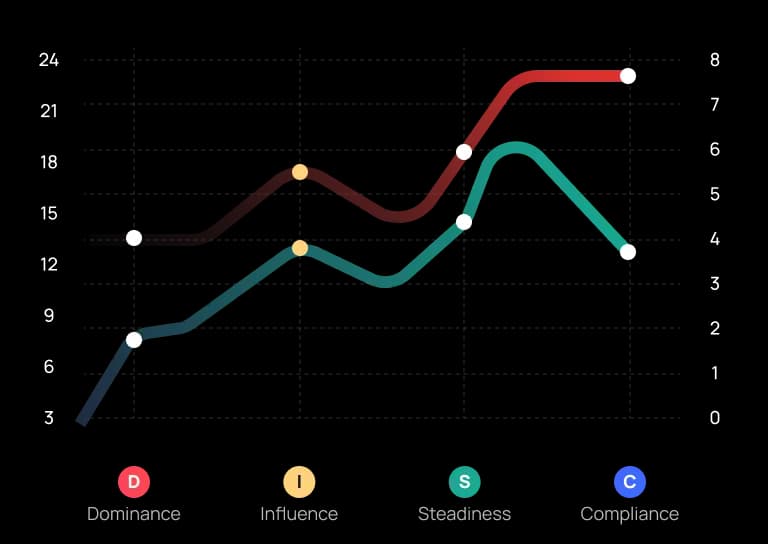
Represents your instinctive behaviors and desires.
Shows the behavioral tendencies you think you should exhibit in specific situations.
Related articles
You may also be interested in
 DISCSep 28, 2026
How to Identify Your Strengths and Weaknesses at Work
Understand your strengths and weaknesses at work by reviewing your skills, past achievements, etc. Improve and align your strengths with career goals.
 DISCMay 29, 2026
DISC Profile Activities for Team Building, Communication, & Workplace
Discover how DISC profile activities enhance team collaboration and communication. Apply practical exercises to build self-awareness and apply at work.
 DISCMay 29, 2026
DISC Assessment for Hiring: How to Use DISC to Hire Better Candidates
Learn how to use DISC assessment for hiring responsibly. Discover how DISC helps evaluate work style, team fit, communication, onboarding, and hiring decisions.
