


Table of content
DISC Test vs Myers Briggs: Differences, Uses, and Which One to Choose
Compare DISC test vs Myers Briggs (MBTI) to understand differences, and best use cases. Discover which assessment fits your career or personal growth goals.

Table of content
Curious about understanding yourself or your team better? The DISC Test vs Myers-Briggs comparison reveals which assessment suits your goals. Whether you're aiming to boost team collaboration with DISC's straightforward approach or seeking deeper self-awareness with Myers-Briggs' detailed insights, both tests offer unique benefits. Dive into the article to explore which test is right for you and start unlocking your full potential today!
What Is the DISC Test?
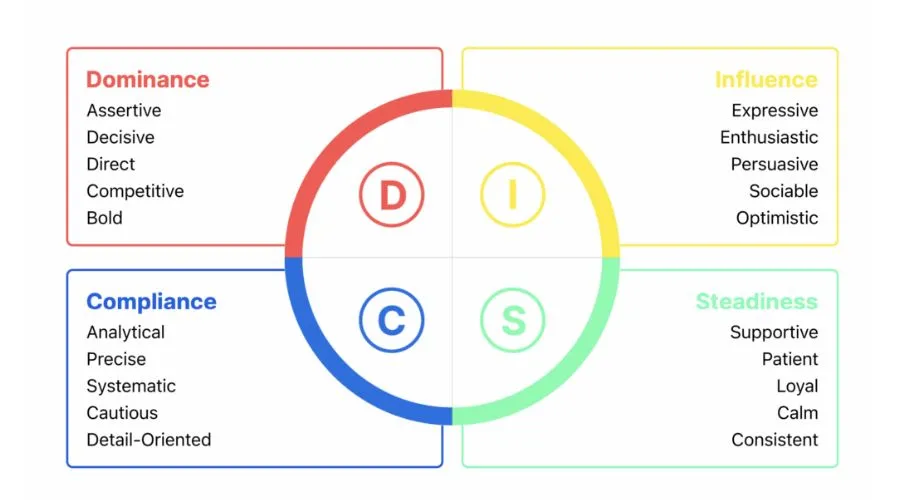
The DISC Test is a behavior‑focused personality assessment used to understand how individuals react and behave in different situations. It divides people into four main personality types: Dominance, Influence, Steadiness, and Compliance. Each type represents how someone communicates, solves problems, and handles stress. The DISC is highly effective in professional settings for improving teamwork and communication.
Key Points about the DISC Test:
- Focusing on observable behaviors and workplace interactions.
- Helping improve team collaboration by identifying strengths and areas for growth.
- A simple and practical tool for understanding how people operate day-to-day.
Learn more about the Big Five Personality traits!
What Is the Myers-Briggs (MBTI)?
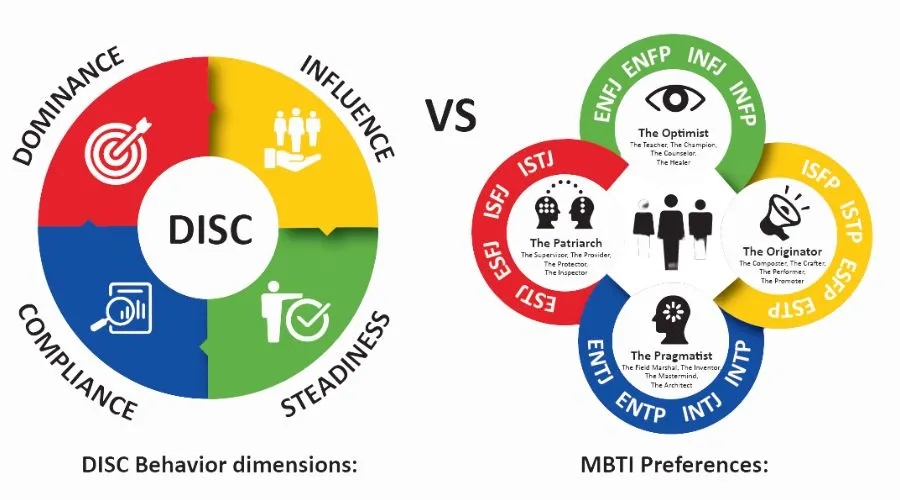
The Myers‑Briggs Type Indicator (MBTI) assesses personalities based on four pairs of psychological preferences: Introversion vs. Extraversion, Sensing vs. Intuition, Thinking vs. Feeling, and Judging vs. Perceiving. This results in 16 distinct personality types. MBTI is introspective, offering insight into how individuals process information, make decisions, and perceive the world around them.
Key Points about the Myers-Briggs Test:
- Focuses on internal thought patterns and how people make decisions.
- Provides deeper insights into personal motivations and emotional responses.
- Often used for self-reflection and career exploration.
DISC Test vs Myers Briggs: At-a-Glance Comparison
When choosing a personality or behavioral test, it’s important to understand the differences. Below is a DISC personality test vs MBTI comparison table to help you decide which one fits your needs.
Dimension | DISC | Myers-Briggs |
| Purpose | Measures observable behaviors and communication style | Focuses on cognitive preferences and personality types |
| Focus | Behavioral focus | Personality and mental framework focus |
| Number of Types | 4 primary styles, 12 sub-styles | 16 types across 4 dichotomies |
| Complexity | Low; simple to understand and apply | Moderate; 16 types with complex 4-letter codes |
| Workplace Usage | Ideal for workplace communication and team building | Useful for self-reflection and conversation starters |
| Scientific Backing | Based on William Marston's research, validated for workplace use | Widely used but shows inconsistent results on retests |
| Actionability | Provides actionable tips on communication | Helps with self-awareness and understanding others' personalities |
What Do DISC and Myers-Briggs Have in Common?
When comparing DISC and Myers-Briggs similarities despite their differences. Here's what both assessments have in common:
- Self-Awareness: Both tests help individuals understand their behavior. They provide insights into how people act in different situations, especially in social and work environments.
- Non-Clinical Tools: Neither the DISC Test nor Myers-Briggs is a clinical tool. They don’t diagnose health issues. They focus on personal and professional development by understanding personality and behavior.
- Used in the Workplace: Both tests are common in workplaces. They are used for team-building, leadership training, and hiring decisions. Companies choose between them to improve communication and teamwork.
- Structured Feedback: Both assessments give structured feedback based on answers to set questions. The results help people grow personally and professionally.
In conclusion, while there are some Key differences DISC vs MBTI, both tools aim to help individuals understand their behaviors. They are used to improve interactions and encourage personal growth, whether for career development or team success.
Key Differences Between DISC and Myers‑Briggs
Understanding the DISC Test vs Myers Briggs helps readers understand the fundamental differences between these popular assessments. Here, we explore the main contrasts to help you decide which test aligns better with your needs.
Behavioral Style vs Personality Type Approach
The fundamental difference between the DISC Test and Myers-Briggs lies in their approach to personality.
- DISC focuses on observable behaviors, such as how you interact with others or how you handle stress. It categorizes people into four behavior styles: Dominance, Influence, Steadiness, and Compliance.
- Myers-Briggs, on the other hand, examines cognitive processes, like how people make decisions and process information. It sorts people into sixteen personality types based on how they think and feel.
Simplicity vs Complexity
When comparing DISC Test vs Myers Briggs, DISC is often considered more straightforward:
- DISC uses a four-category system that is easy to interpret and apply in real-world situations.
- Myers-Briggs, however, offers more detail and complexity, sorting people into sixteen types. While this provides deeper insights, it can be more challenging to interpret without a solid understanding.
Actionability in Real‑World Situations
Both tests have practical uses, but DISC Test and Myers Briggs show differences in how they apply in day-to-day life:
- DISC provides actionable insights, making it useful for teamwork, leadership, and conflict resolution. It’s often used in workplace settings.
- Myers-Briggs, though insightful, is more suited for personal growth and career alignment. It helps individuals understand their preferences but may not offer immediate, practical guidance.
Workplace vs Personal Development Focus
The DISC Test vs Myers Briggs debate also highlights their differing focuses:
- DISC is often used in professional environments, improving collaboration and communication in teams. It’s ideal for organizations that focus on action-based results.
- Myers-Briggs is generally more focused on personal development. It helps individuals explore career options, understand internal motivations, and discover long-term goals.
Scientific Validity and Criticism
Both tests have faced scientific criticism but remain popular. DISC vs MBTI reliability is often debated:
- DISC is considered easier to apply and is widely used in the workplace due to its simplicity.
- Myers-Briggs has a more theoretical foundation. While it provides valuable insights, it can be more challenging to integrate without experience or training.
Choosing the right tool depends on whether you need practical, behavior-based insights or a deeper exploration of personality traits for career development.
When to Use DISC and MBTI in Real‑World Use Cases
Understanding when to use DISC Test vs Myers Briggs depends on the specific needs of your organization or personal growth. Here's a quick breakdown of how they apply to various real-world scenarios:
Team communication and collaboration
For enhancing team communication, DISC is often the go‑to. It focuses on visible behaviors, which makes it easy to apply immediately. DISC personalities work best together when the goal is efficient and clear communication.
- DISC helps teams recognize different communication styles quickly, promoting clear and efficient interactions.
- Myers-Briggs provides a deeper understanding of individual personalities but can be more complex to implement in team settings.
Hiring and onboarding
When hiring, DISC often takes the lead due to its focus on workplace behavior. It directly matches a person's behavior to the work environment, making it a great tool for onboarding.
- DISC is often the go-to tool during hiring because it directly aligns personality traits with workplace behavior. It helps assess how well a candidate will fit into the team and work environment.
- Myers-Briggs vs DISC for career: While MBTI is valuable for self-awareness, DISC gives more actionable insight for hiring processes.
Self-reflection and personal growth
For self-reflection, Myers-Briggs shines. It helps individuals understand their strengths and weaknesses, offering a deeper dive into personality development.
- Myers-Briggs strengths and weaknesses are helpful for personal insights and life choices.
- DISC can provide helpful observations, but is better suited for work-related behavior.
Conflict resolution
When resolving conflicts, the DISC Test vs Myers-Briggs debate shows DISC as the preferred tool. It helps identify communication differences and offers immediate solutions. Myers-Briggs, while insightful, doesn’t offer the same level of practical guidance in conflict resolution.
- DISC is the ideal choice for conflict resolution. It helps identify communication differences and provides immediate solutions to manage these differences in real-time.
- Myers-Briggs provides insightful personality data but doesn’t offer as much practical guidance for resolving conflicts in the workplace.
Leadership development
For leadership development, both assessments can be valuable, but DISC is typically more effective for understanding how leaders interact with their teams and make decisions. Myers-Briggs provides deeper insights into leadership style but isn’t as directly tied to leadership behavior.
- DISC is a great tool for leadership development as it focuses on the practical aspects of how leaders interact with their teams and make decisions.
- Myers-Briggs provides deeper insights into leadership styles, but is less focused on day-to-day leadership behaviors compared to DISC.
Sales and customer interaction
In sales, adapting to different communication styles is key. The DISC Test vs Myers Briggs debate typically favors DISC for its ability to help salespeople quickly identify customer behaviors and tailor their approach accordingly.
- DISC is favored because it allows salespeople to quickly identify customer behavior and tailor their approach accordingly.
- Myers-Briggs provides rich insights into personality, but is less suited for fast-paced sales environments where immediate understanding of a customer’s behavior is essential.
By carefully selecting which assessment to use, you can better align with specific goals, whether it's for team communication, hiring, or self-reflection.

Which test is better for you: DISC Test vs Myers Briggs?
When choosing between the DISC Personality Test and Myers Briggs, the best option depends on your goals. Both assessments offer valuable insights, but they differ in focus and application.
Why Choose the DISC Test?
- Focuses on behavior: DISC looks at how people act in different situations.
- Simple and practical: It breaks down personalities into four styles: Dominance, Influence, Steadiness, and Compliance.
- Great for teams: DISC helps improve team communication, leadership, and collaboration.
- Quick results: You can use DISC insights immediately in the workplace.
Why Choose Myers-Briggs?
- Focuses on personality types: Myers-Briggs dives into how people think and make decisions.
- In-depth understanding: It has 16 different personality types based on preferences.
- Self-growth: Myers-Briggs is great for personal reflection and career planning.
- Long-term insights: It gives a deeper understanding of your inner motivations.
So, which one should you choose?
- For team development, communication, and leadership: The DISC Test is a more practical, straightforward choice. It’s designed to help organizations improve communication, collaboration, and overall efficiency within teams.
- For individual reflection and career development: Myers-Briggs is the preferred option if you are focused on understanding your deep-rooted motivations, preferences, and cognitive styles.
If your primary goal is to enhance workplace dynamics, foster better team communication, and apply immediate insights, the DISC Test is likely the better fit. For more personalized, introspective growth, Myers-Briggs provides deeper psychological insights.
Conclusion
Now that you understand the key differences between the DISC Test vs Myers-Briggs, it’s time to take action! Whether you're looking to improve team dynamics with DISC’s simple, practical approach or dive deeper into your personal growth with Myers-Briggs, both assessments offer valuable insights. Explore the best test for your needs and start unlocking your potential today.
Explore more about the difference between Enneagram and DISC!
FAQs
Is DISC more accurate than Myers Briggs?
The accuracy of the DISC Test vs Myers Briggs depends on your goals. DISC provides practical insights into behavior, while MBTI focuses on cognitive preferences. Neither is inherently more accurate; both are valid tools, but their accuracy depends on how well they match the context in which they’re applied.
Can you use both DISC and MBTI together?
Yes, you can use both DISC and MBTI together. While DISC focuses on behavioral styles, MBTI provides deeper psychological insights. Combining both can give a more comprehensive understanding of personality, enhancing self-awareness and improving teamwork dynamics.
Are DISC and MBTI assessments free?
Both DISC Test and Myers-Briggs assessments typically require payment for full access. Some platforms offer free sample tests, but to gain detailed reports or certifications, you often need to purchase the full assessment.
Which is better for team building: DISC or Myers Briggs?
The DISC Test is generally more suited for team building as it focuses on observable behaviors, helping improve communication and collaboration. In contrast, Myers-Briggs offers deeper insights into individual preferences, which can be valuable for personal development but may not be as immediately applicable to team dynamics.
Why is DISC considered more actionable in the workplace?
DISC is considered more actionable because it focuses on observable behaviors and communication styles, directly improving teamwork, leadership, and conflict resolution. Its results are easy to understand and apply, making it ideal for immediate workplace improvements.


DISC Team is a content writing team for tracnghiemtinhcach.vn, focusing on the DISC model, communication styles, and teamwork. The team aims to explain concepts in accessible language, helping readers connect them with situations in their work and everyday lives.
View author profile

Don't Let Your Potential Stay Hidden!
Take the DISC test today and discover your unique 'YOU', with deep insights into your true personality and potential.
 Understand yourself
 Choose the right career
 Suggest effective communication
 Reduce negative emotions
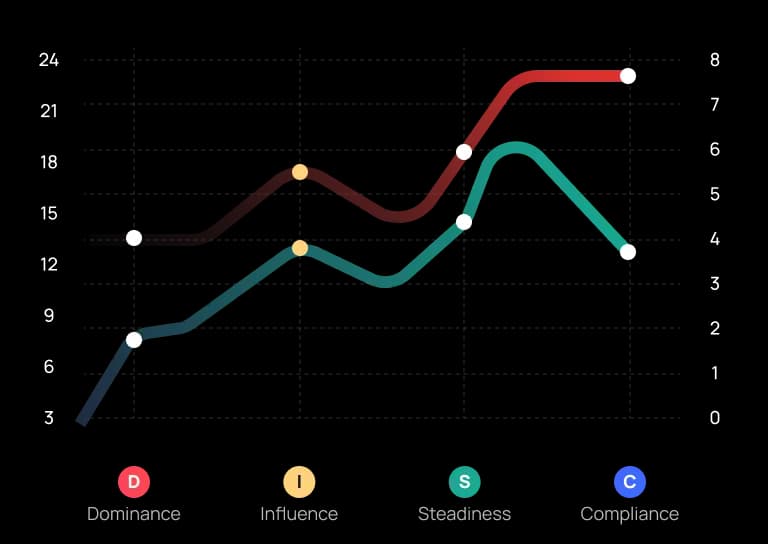
Represents your instinctive behaviors and desires.
Shows the behavioral tendencies you think you should exhibit in specific situations.
Related articles
You may also be interested in
 DISCSep 28, 2026
How to Identify Your Strengths and Weaknesses at Work
Understand your strengths and weaknesses at work by reviewing your skills, past achievements, etc. Improve and align your strengths with career goals.
 DISCMay 29, 2026
DISC Profile Activities for Team Building, Communication, & Workplace
Discover how DISC profile activities enhance team collaboration and communication. Apply practical exercises to build self-awareness and apply at work.
 DISCMay 29, 2026
DISC Assessment for Hiring: How to Use DISC to Hire Better Candidates
Learn how to use DISC assessment for hiring responsibly. Discover how DISC helps evaluate work style, team fit, communication, onboarding, and hiring decisions.
