


Table of content
How to Identify Your Strengths and Weaknesses at Work
Understand your strengths and weaknesses at work by reviewing your skills, past achievements, etc. Improve and align your strengths with career goals.
Personal growth starts with learning how to identify your strengths and weaknesses: which abilities help you do your job and which ones aren't yet strong.
Strengths and weaknesses go beyond interview material; throughout our working lives, each of us must take personal responsibility for keeping our skills current from the very beginning.
How to Identify Your Strengths and Weaknesses on Your Own
A self-assessment for strengths and weaknesses can help, but it can lean hard toward bias when you’ve heard from only a few people or chosen the wrong ones. Treat your own views and peer feedback as evidence, never the whole record.
The process only gets useful when you’re honest. Write down the strengths you actually use, not the ones you’d like to claim.
Energy Auditing
Start with enjoyment
Compare what you enjoy with what you put off, then ask what drives you and which traits help you succeed. Analytical skills, determination, and problem-solving ability may point to strengths.
Watch your emotions and the small clues that an activity moves easily and leaves you feeling in control. A cousin can finish an impressive sketch within 30 minutes, while drawing feels difficult for me; notice that contrast and the areas that run smoothly and feel under control.
Good feelings may reveal your passions, but reaching a goal can also give you an emotional rush when the activity itself holds little interest.

Weaknesses tend to appear in four common ways:
- You do not like an activity or feel any positive emotions
- You lack energy or procrastinate when you face that area.
- You complete the work, but it takes more time than others
- Other people do it much better.
Effortless Execution
Identify your strengths Strengths often appear in activities you perform well without much effort. A cousin who is an outstanding artist can draw an amazing drawing in 30 minutes, while people like me find drawing intriguing and difficult. For him, it feels simple. Because the work feels natural, people often dismiss their greatest strengths as basic common sense. Clients sometimes forget what they do well because those activities have become habitual. These strengths can feel ordinary.
Activity Tracking
Recording what you enjoy throughout a full week can uncover strengths and skills that keep showing up. Compare recurring answers and determine whether they are accurate.
- Over one week, write down the 5 things you most enjoy doing.
- Ask why you like each activity.
- Consider someone who updates a blog with opinions, short stories, and material found around the web. They set aside time to write and find things to publish, then schedule social media posts linking to the site.
- Use activities you naturally do or enjoy to identify related qualities. This person may like being organised, following popular culture, and working well alone.
- Gather answers from a few places, highlight repeated areas and character traits, then compare them with your own view. The skills named most often will probably be your strongest.
Historical Performance Audits
Historical Performance Audits show what you’ve already proven and where you still have room to develop. Include verbal accolades, cards, letters, and emails in that review. Begin with records from recent years, then review these sources:
- Performance reviews, which may include your manager’s perspective and your own because many companies collect input from employees and management.
- Appraisals and one-to-ones received in the past. If you have not worked before, feedback from a work placement or school work can help.
- 360⁰ surveys completed by your boss, team, and peers.
- Awards and certifications.
- Feedback such as verbal accolades, congratulatory cards, letters, and emails.
Check those same records for weaknesses, development opportunities, complaints, and criticism.
Your past wins show which skills helped you succeed and which ones may need refining for future challenges. Past failures can reveal where a project or job broke down, helping you grow and spot tasks or roles you may want to avoid.

Personal Strengths and Weaknesses Inventory
Your strengths are the skills, qualities, and abilities that help you perform well in studies, projects, internships, teamwork, and problem-solving. Include both what you do and how you deal with people.
Technical Skills
Technical Skills can include programming, data analysis, design, and writing. List the technical and soft skills that fit your current role, as well as the ones you hope to develop. Use your current job description to shape the list.
Check which skills your industry demands, too. Track trends and compare your abilities with current expectations.
Behavioral Skills
Behavioral Skills include communication, adaptability, leadership, discipline, curiosity, and resilience.
Strengths and weaknesses cover the tasks you handle and how you handle them with other people. Include interpersonal strengths and skills, behaviours, attributes, characteristics, qualities, and mindsets.
Personal Skills
Your skills inventory should shift as you gain experience and take on different projects. Revisit and update it regularly, while staying open to learning; that openness supports a growth mindset in your future career.
External Feedback Channels
Your own reactions and research tell you part of the story, while colleagues, friends, family, and teachers often spot strengths and weaknesses outside your view. Ask how they see you, then set their answers beside your own assessment; the points of agreement and disagreement reveal how others perceive you.
Outside feedback may clash with your self-view, so get ready to hear answers that don't fit your expectations. This also supports understanding your workplace personality, especially when recognizing communication habits and team dynamics at work.
Peer Surveys to Identify Personal Strengths
Survey 5-10 people; that should be sufficient to build a sound analysis of their answers.
Pick people from past teams, close friends, family, and your wider peer group. Send them a short questionnaire asking what drove your success, which strengths stand out, where you outperform others, and which weaknesses they see in you.
- What do you think made me successful in the past?
- What strengths do I have, and what am I good at?
- In which areas do you think I am better than others? What makes me superior?
- What are my weaknesses, and what do you think I should not be doing at all?
Sort the strongest patterns together, then set them beside what you've noticed about yourself. Group the most evident findings together, and note consistent comments from different individuals. You'll get a fuller picture of your strengths and weaknesses by combining your own perspective with the views of the people around you.

Some replies may catch you off guard or point to personality traits you've never considered, so don't brush those answers aside.
Questions to Identify Strengths
Specific questions produce more useful feedback. Email a mix of personal and professional contacts, ask for their input, and use the wording below to keep the request quick and clear; don't overthink it.
- What should I start doing?
- What should I stop doing?
- What should I continue doing?
- What is unique about me compared with other leaders or people you know or work with?
Explain that the request supports your leadership development and that you're still figuring things out. Ask them to answer the 4 questions with as much detail and specificity as they can provide. A quick first reply works best for both sides, so thank each person for taking the time to respond.
Ask people you like and respect where they think you perform best. Then make a list of people who can point you toward jobs that fit your strengths and personality, and ask them to explain their reasoning.
Peer compliments can point to a real strength. When several people say, “You’re a really good listener,” take note of that repeated feedback and keep it in mind as a possible strength.
Strengths and Weaknesses Assessment Tools
The repeated comments can reveal a strength. Career assessment tools add structure, helping you learn how to identify your strengths and weaknesses, spot preferences and blind spots, and consider possible career paths. A free DISC assessment can provide a practical benchmark for personal strengths and behavioral tendencies.
StrengthsFinder 2.0 sorts people across 34 talent themes. The model says Talent × Investment = Strength, meaning a natural pattern in how you think, feel, or act becomes a steady ability when you put resources behind it. Frameworks like how to profile a personality can help categorize psychological types and behavioral traits. Putting 10 toward a weakness versus 25 toward a strength shows why developing what already comes naturally may beat repairing weak spots.

Start with the question you want answered. VIA Character Strengths looks at character strengths and may indicate where you’ll flourish on a team. For career fit, Holland Code (RIASEC) works from six personality categories to point toward suitable careers. The Myers-Briggs test, or MBTI, assigns 16 preference types and can shed light on communication styles and favored work environments.
Use Skill-based assessments to measure abilities tied to the industry or role you want, along with areas that may require development. What the DISC assessment measures can clarify core behavioral dimensions and potential conflict triggers. Read the results carefully because standardized tests mostly capture self-perception; they won’t show how someone responds under intense workplace pressure. Not every assessment is free or necessary, so don’t treat any single result as the final decision.
Strategic Capability Management
But strengths should be your main resource, and you should apply them often enough to matter without pushing them until they become liabilities. If you drive tasks to completion without considering the people carrying them, you may drain motivation or cause burnout. Use the strength fully while watching its shadow.

Treat weaknesses as chances to learn, not permanent labels, and use your strengths to help build them where you can. For administrative or secondary tasks, partner selectively with someone stronger in the gap. But foundational skills your position requires remain yours to develop and own.
After you complete a career assessment, list transferable skills, meaning capabilities that carry across different positions or industries. Compare that list with the skills job adverts ask for to see where you fit and which abilities may need development. This connects your current strengths with the demands of future positions.
Frequently Asked Questions
How many strengths and weaknesses should you mention in an interview?
When you're answering an interview question, one or two strengths plus a weakness will usually do; a clear answer backed by a real example beats a long list with no examples.
Make every strength clear, specific, and brief.
- State the strength clearly.
- Explain it with a real example.
- Connect it to the job role.
What are safe weaknesses for students to mention in interviews?
Limited experience and nervousness during presentations are common weaknesses for freshers, as is overthinking; explain how practice and feedback are helping you improve in each area.
Show the weakness and the effort behind it.
- Lack of experience: Explain that practice and feedback are helping you build experience.
- Nervousness in presentations: Describe how practice is helping you improve.
- Overthinking: Show how you are working on it through practice and feedback.
How to Find Your Strengths and Weaknesses Without Work Experience?
If you haven't had work experience, look for strengths in work that comes naturally or earns praise from teachers or peers, as well as situations where you feel confident while working. These patterns give you several places to start.
Natural abilities and positive feedback
Ask what comes naturally and what teachers or peers praise, paying attention to when you feel most confident while working.
Repeated challenges
Review recurring feedback and the tasks or areas that demand extra effort or that you avoid.
Someone close to you, including family members or a teacher or lecturer, can also offer useful outside views.
Can a weakness become a strength?
Yes, sometimes. Attention to detail can help, but it becomes a weakness once it slows your speed. Detail orientation can support work quality.
Describe the trait with balance and show what you're learning, then use that process to identify strengths and weaknesses more confidently.
This process shows how to identify your strengths and weaknesses through honest self-observation, documented results, and feedback from other people. It helps you match strengths to the work you want and explain weaknesses more precisely, while deciding which gaps to manage instead of hide. When work experience is limited, your examples can come from subjects and tasks, as well as practice, presentations, and repeated feedback. You can then decide more clearly what to invest in and what to improve.


Don't Let Your Potential Stay Hidden!
Take the DISC test today and discover your unique 'YOU', with deep insights into your true personality and potential.
 Understand yourself
 Choose the right career
 Suggest effective communication
 Reduce negative emotions
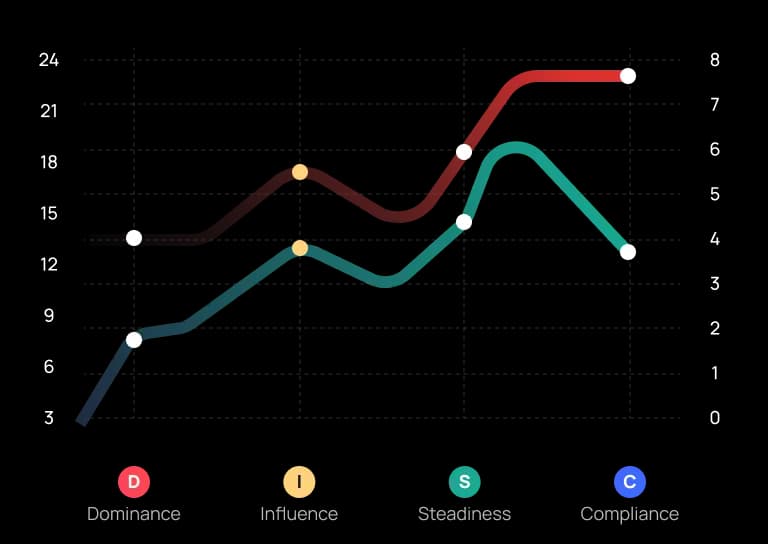
Represents your instinctive behaviors and desires.
Shows the behavioral tendencies you think you should exhibit in specific situations.
Related articles
You may also be interested in
 DISCMay 29, 2026
DISC Profile Activities for Team Building, Communication, & Workplace
Discover how DISC profile activities enhance team collaboration and communication. Apply practical exercises to build self-awareness and apply at work.
 DISCMay 29, 2026
DISC Assessment for Hiring: How to Use DISC to Hire Better Candidates
Learn how to use DISC assessment for hiring responsibly. Discover how DISC helps evaluate work style, team fit, communication, onboarding, and hiring decisions.
 DISCMay 21, 2026
What Does the DISC Assessment Measure? Key Behavioral Styles Explained
Discover what does the DISC assessment measure and understand your behavior & communication style. Learn how insights can improve teamwork and personal growth.
