


Table of content
What Are DISC Behavioral Style Blends? How They Shape Personality
Learn what DISC behavioral style blends are and how combinations of DISC styles shape personality. Discover how these blends influence the workplace.

Table of content
Most people are not defined by one DISC style alone. They show a mix of traits that shape how they think, communicate, and work with others. Understanding what are DISC behavioral style blends helps readers see why behavior feels more complex than a single label. In this guide, you will learn how DISC blends work, how they influence personality, and why they matter in workplace communication, teamwork, and leadership.
What Are DISC Behavioral Style Blends
To understand what are DISC behavioral style blends, it is important to recognize that DISC profiles rarely consist of only one behavioral trait. Instead, most individuals demonstrate a combination of multiple DISC characteristics with different intensity levels. These combinations form a unique DISC behavioural style for each person.
A DISC blend occurs when two or more traits appear strongly within the same personality profile. This means a person may have one dominant style supported by another secondary tendency. As a result, behavior is shaped by the interaction of these traits rather than a single category, which is why DISC personality analysis often focuses on how styles combine.
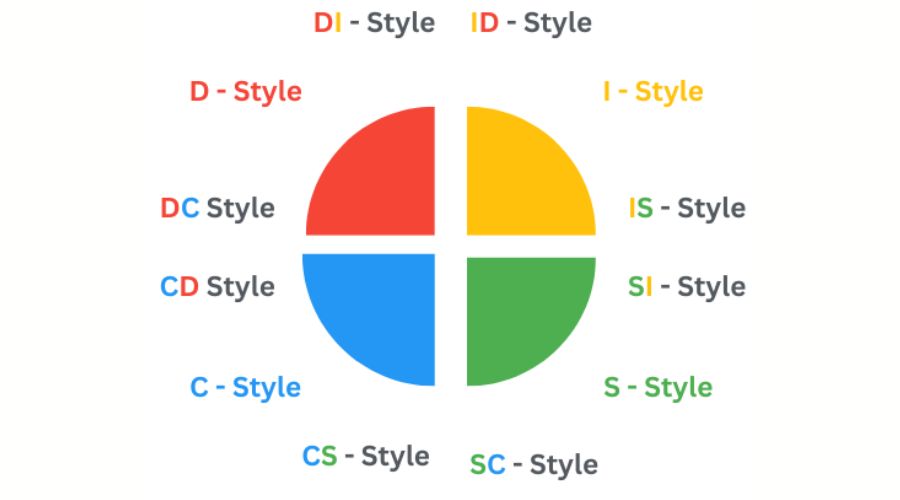
Key characteristics of what are DISC behavioral style blends include:
- Combination of DISC traits: DISC is based on four core styles - Dominance (D), Influence (I), Steadiness (S), and Compliance (C). Most individuals display varying levels of each trait rather than a single isolated type.
- Primary and secondary tendencies: One trait usually appears as the strongest behavioral driver, while a second trait supports and influences how the primary style is expressed.
- Common blend patterns: Profiles such as DI, SC, or CS illustrate how two styles combine to shape communication habits, work preferences, and interaction patterns.
- Behavioral complexity: Studying what are DISC behavioral style blends helps explain why individuals who share the same main DISC category can still behave differently in teamwork, decision-making, and stressful situations.
DISC assessments commonly show that many people score strongly in two adjacent styles. This blending provides a more realistic representation of personality patterns compared with single-type models. Understanding disc behavioral style therefore, helps individuals interpret behavior more accurately and improve communication in professional and social environments.
The Four Core DISC Personality Styles
To understand what are disc behavioral style blends, you first need to know the four core DISC styles. Each style describes how people respond to tasks, communicate with others, and make decisions at work.
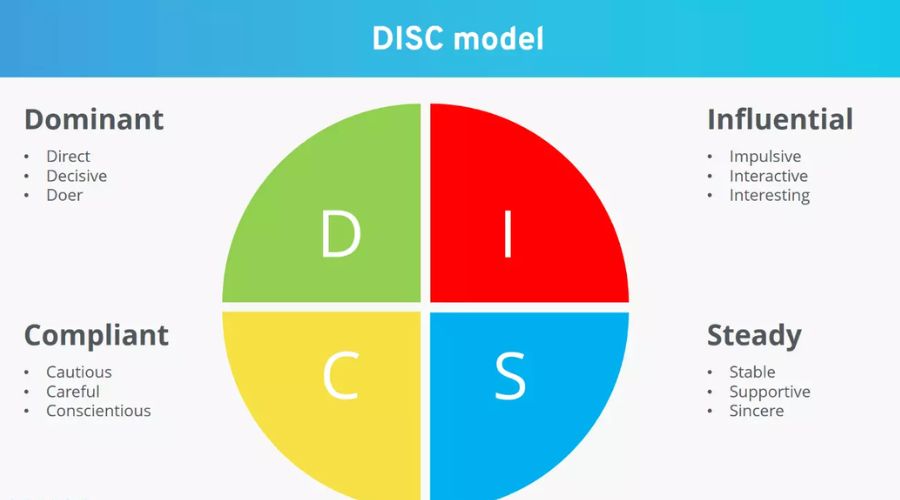
1. Dominance (D) Style
The Dominance style focuses on results and action. People with this style prefer fast decisions and clear goals. In discussions about what disc behavioral style blends are, the D style often adds assertiveness and strong drive.
Key characteristics of the Dominance style include:
- Direct and confident communication
- Strong focus on goals and results
- Quick decision-making in challenging situations
- Preference for independence and control
- Competitive mindset when solving problems
2. Influence (I) Style
The Influence style centers on communication and social interaction. These individuals enjoy connecting with people and creating positive energy in teams. When explaining what disc behavioral style blends are, the Influence element adds enthusiasm and strong relationship skills. Many people also ask what does i stand for in DISC, which refers to Influence.
Key characteristics of the Influence style include:
- Friendly and expressive communication
- Ability to motivate and inspire others
- Enjoyment of teamwork and collaboration
- Positive and optimistic attitude
- Strong interest in building relationships
3. Steadiness (S) Style
The Steadiness style represents patience and reliability. People with this style value harmony and stable work environments. In the context of disc behavioral style blends, the S style usually adds cooperation and emotional stability.
Key characteristics of the Steadiness style include:
- Calm and supportive communication
- Preference for stable and predictable work
- Strong listening skills
- Loyalty and commitment to team success
- Consistent and dependable work habits
4. Compliance (C) Style
The Compliance style focuses on accuracy and structure. People with this style prefer rules, data, and careful analysis. When learning disc behavioral style blends, the C style often adds logic and attention to detail.
Key characteristics of the Compliance style include:
- Analytical and detail-focused thinking
- Strong attention to quality and accuracy
- Preference for clear rules and processes
- Careful evaluation before making decisions
- High standards for organization and precision
The Most Common DISC Behavioral Style Blends
To better understand disc behavioral style blends, it is important to recognize that many individuals exhibit a combination of two DISC tendencies. A dominant style typically pairs with a secondary trait, shaping communication, behavior, and work preferences. In many DISC models, these combinations are also used to explain the 16 DISC personality types, where each profile reflects a unique mix of two styles.
Below are the most common DISC behavioral style blends and their typical characteristics.
1. DI Blend (Dominance – Influence)
The DI pattern represents a mix of strong results orientation and social energy. Individuals with this combination typically move quickly, communicate confidently, and inspire others while pushing for progress. This profile is often associated with energetic leadership and innovation.
Common characteristics:
- Strong initiative and quick decision-making
- Persuasive communication with team members
- Focus on results and forward progress
- Preference for fast-paced environments
- Confidence when presenting ideas or leading discussions
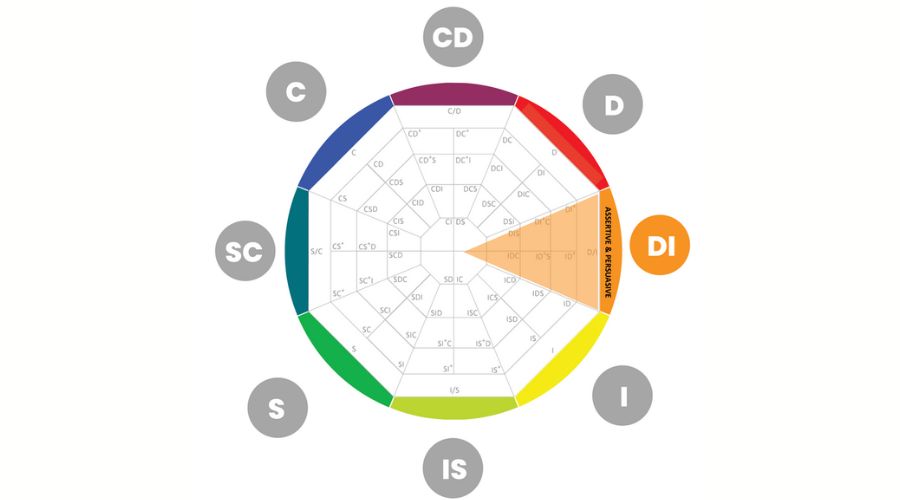
2. ID Blend (Influence – Dominance)
The ID blend combines enthusiasm with a strong drive to achieve results. These individuals often energize teams and encourage collaboration. In many discussions about DISC personality types explained, this blend shows how influence and leadership work together.
Common characteristics:
- Strong interpersonal communication skills
- Ability to motivate and inspire others
- Preference for active and collaborative environments
- Positive and engaging communication style
- Comfortable taking initiative when needed
3. IS Blend (Influence – Steadiness)
The IS blend represents a supportive and relationship-focused behavioral style. Individuals with this profile value cooperation, empathy, and strong interpersonal connections. These qualities often contribute to environments where DISC personalities work best together because trust and communication are prioritized.
Common characteristics:
- Friendly and approachable communication
- Strong listening and empathy
- Desire to support colleagues
- Preference for cooperative work cultures
- Positive attitude that strengthens team relationships
4. SI Blend (Steadiness – Influence)
The SI style combines stability with strong people skills. Individuals with this blend often work calmly and support team collaboration. This balance is useful in workplaces that rely on teamwork and clear DISC communication in remote team environments.
Common characteristics:
- Reliable and patient work style
- Focus on cooperation and team harmony
- Calm communication during challenges
- Strong relationship-building ability
- Supportive approach to teamwork
5. SC Blend (Steadiness – Compliance)
The SC pattern combines patience with analytical thinking. Individuals with this blend usually value accuracy, structure, and clearly defined processes. Within discussions of 12 DISC personality types, this blend represents professionals who value clear systems and detailed work.
Common characteristics:
- Careful attention to details
- Methodical approach to tasks
- Preference for organized systems
- Logical and steady problem solving
- Reliable performance and accuracy
6. CS Blend (Compliance – Steadiness)
The CS profile emphasizes precision supported by a stable and dependable working style. People with this combination often perform well in analytical roles that require consistency and attention to detail. Many discussions about Best jobs for CS personality types and CS DISC personality careers mention analytical and structured professions.
Common characteristics:
- Strong attention to data and accuracy
- Preference for clear processes and routines
- Careful and logical decision-making
- Reliable approach to responsibilities
- Consistent performance in structured work
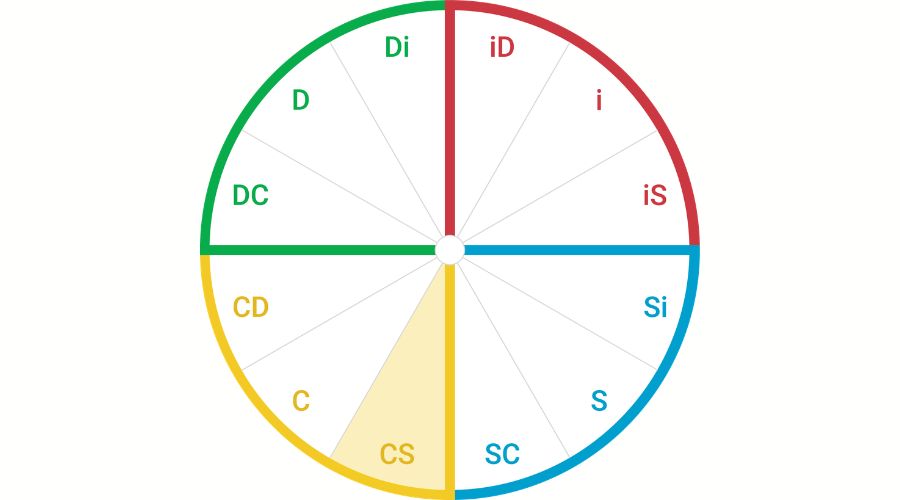
7. CD Blend (Compliance – Dominance)
The CD blend integrates analytical thinking with assertive leadership. Individuals with this profile tend to pursue measurable outcomes while maintaining high standards. When exploring what are disc behavioral style blends, this profile shows how strategy and precision can work together.
Common characteristics:
- Strong analytical reasoning
- Direct and decisive leadership style
- Focus on results and efficiency
- High expectations for quality
- Clear communication when solving problems
8. DC Blend (Dominance – Compliance)
The DC profile merges determination with structured thinking. People with this blend often pursue goals while relying on data and structure. Insights such as DISC personality percentages often show that this combination appears among professionals responsible for strategy, planning, or operational leadership.
Common characteristics:
- Strong focus on goals and outcomes
- Logical thinking before decisions
- High standards for performance
- Confidence in complex situations
- Structured approach to solving problems
Key Benefits of Understanding DISC Behavioral Style Blends
Understanding what are DISC behavioral style blends helps readers see how different DISC traits work together in real behavior. Many people do not show only one style. Instead, they display a mix of behavioral tendencies. Learning about these combinations makes personality patterns easier to interpret.
Below are the key advantages of learning DISC behavioral style blends:
- A clearer understanding of personality patterns: DISC blends show how Dominance, Influence, Steadiness, and Compliance interact. This makes it easier to understand why people react differently in the same situation.
- Better communication with different personality styles: When people understand DISC behavioral style blends, they can adjust their communication style. This helps reduce confusion and improves daily interactions in teams or workplaces.
- More accurate insight into behavioral tendencies: DISC blends reveal how multiple traits influence decision making, work habits, and social behavior. This helps readers recognize common behavior patterns in themselves and others.
- Stronger self-awareness and personal insight: Learning DISC blends allows individuals to see their natural preferences. They can better understand their strengths, working style, and how they respond to challenges.
- Better collaboration in professional environments: When people understand DISC personality combinations, teamwork becomes easier. Recognizing behavioral differences helps build trust and improves cooperation.
By understanding what are DISC behavioral style blends, readers gain practical insight into personality dynamics. This knowledge supports clearer communication, stronger relationships, and more effective teamwork.
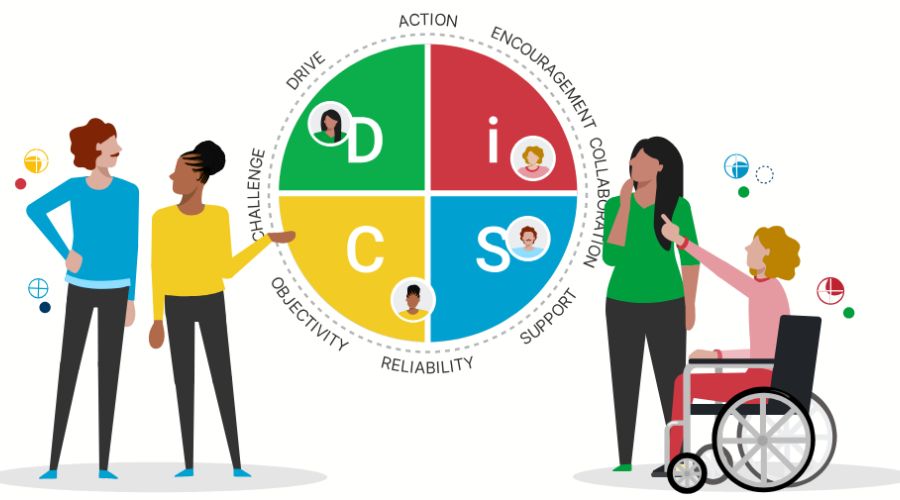
How DISC Behavioral Style Blends Influence Workplace Behavior
Knowing what are disc behavioral style blends helps explain why people behave differently at work, even when they share similar roles. In many situations, employees show a mix of behavioral traits rather than a single style. Recognizing these patterns helps teams improve communication, leadership, and collaboration.
Communication styles
Before examining workplace interaction, it is helpful to understand how blended behaviors influence the way people share ideas and respond to others.
People communicate differently depending on their DISC combination. When teams understand what disc behavioral style blends are, they can adjust their message and reduce confusion.
Example: An SC blend prefers calm and structured conversations. They focus on clarity and stability. This style helps maintain steady communication in teams that rely on clear processes.
Key communication patterns often include:
- DI individuals speaking confidently and motivating others
- SC employees maintaining a calm and supportive tone
- D-oriented blends focusing on direct and concise messages
- S-related blends encouraging patient and respectful discussion
Leadership approaches
Leadership behavior is also shaped by DISC combinations. Each blend creates a different way of guiding and influencing people.
Example: Leaders with a DI blend often inspire teams through energy and vision. They focus on progress and encourage employees to move quickly toward goals. Their approach works well in environments that require innovation and motivation.
Common leadership tendencies include:
- DI leaders motivating teams and encouraging initiative
- SC leaders protecting processes and maintaining stability
- D blends focusing on results and performance
- S blends supporting team harmony and consistency
Decision-making patterns
Decision behavior often reflects how DISC traits combine in a person. Some people move quickly, while others evaluate information carefully.
Examples:
- Professionals with strong D influence usually make fast decisions. They prefer action and focus on achieving results. This approach is useful in situations that require speed.
- Individuals with SC traits often analyze details before making a choice. They value stability and prefer careful evaluation.
Conflict resolution styles
Workplace conflict is normal, but DISC blends influence how people respond to disagreement.
Some employees address issues directly. Others prefer calm discussion and maintaining relationships. Knowing DISC behavioral style blends helps teams manage these situations with more awareness.
Typical responses to conflict include:
- D-related blends confronting problems directly
- SC blends resolving issues calmly and protecting team stability
- I blends encouraging open discussion and positive energy
- S blends focusing on harmony and cooperation
Team collaboration dynamics
Teamwork becomes stronger when different DISC blends support each other. Each style contributes unique strengths to group performance.
Examples:
- DI personalities often bring energy and momentum to projects. They encourage progress and motivate others to take action.
- SC employees contribute stability and organization. They help maintain structure and ensure processes remain consistent.
When teams understand what DISC behavioral style blends are, they can combine motivation, stability, and cooperation. This balance improves collaboration and supports long-term workplace performance.
How to Identify Your DISC Behavioral Style Blend
Understanding what are disc behavioral style blends starts with identifying how two DISC traits combine in one person. Most individuals show a mix of behavioral tendencies rather than a single style. Recognizing this combination helps clarify communication habits and work interactions.
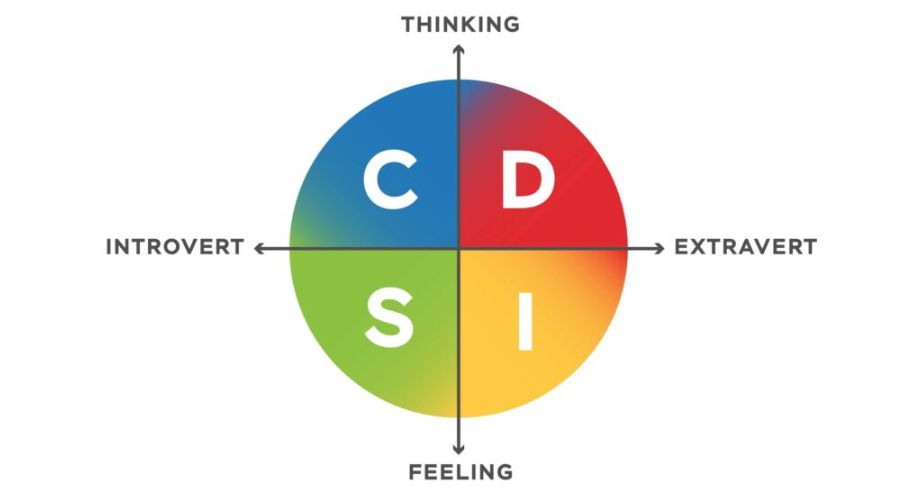
Take a Validated DISC Personality Assessment
The first step to determine DISC behavioral style blends is completing a reliable DISC personality assessment. A validated test measures how strongly each DISC dimension appears in your behavior.
A typical assessment will provide:
- Scores for the four DISC dimensions
- A behavioral profile based on your responses
- Insights into communication and work style
These results help identify which behavioral tendencies are most dominant.
Interpret Primary and Secondary Traits
After receiving the report, review the two strongest traits. This step helps clarify DISC blends in your personality profile.
Most DISC results highlight:
- Primary style – the dominant behavioral tendency
- Secondary style – the supporting behavioral influence
The combination of these two traits forms your behavioral style blend.
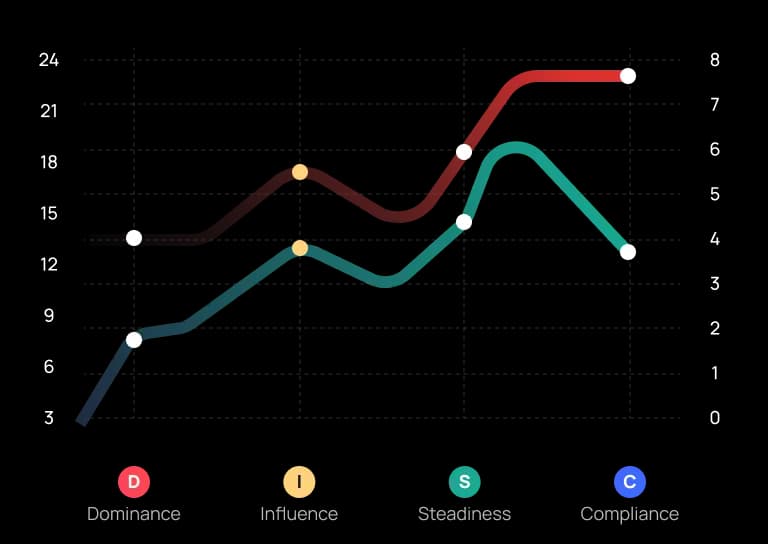
Understand Behavioral Graphs
Behavioral graphs make it easier to see what are DISC behavioral style blends in a visual format. These charts show how your behavioral tendencies appear in different situations.
Most reports include:
- A natural behavior graph showing instinctive tendencies
- An adapted behavior graph showing workplace adjustments
These visuals help explain how your behavioral pattern changes your personality across contexts.
Use Results to Improve Communication and Teamwork
Knowing DISC behavioral style blends helps individuals apply DISC insights in daily interactions. Understanding your behavioral combination supports clearer communication and better teamwork.
You can use DISC results to:
- Adjust communication with different personality styles
- Improve collaboration within teams
- Build stronger professional relationships
Conclusion
Exploring what are DISC behavioral style blends helps reveal why human behavior is rarely limited to a single personality category. Most individuals display a combination of DISC traits that shape how they communicate, solve problems, and collaborate with others. Recognizing these behavioral blends allows you to gain deeper self-awareness, adapt your communication style, and work more effectively with different personalities in professional environments.
FAQS
1. How are DISC behavioral style blends different from single DISC types?
DISC behavioral style blends show how two strong DISC traits appear in one personality profile. Instead of fitting into only one category, many people display a combination of tendencies. This explains why individuals with the same main DISC style may still communicate, respond to challenges, or make decisions differently.
2. Why are DISC behavioral style blends important in workplace communication?
Understanding DISC behavioral style blends helps teams recognize different communication preferences and work approaches. When people know how behavioral tendencies combine, they can adapt their communication style, reduce misunderstandings, and collaborate more effectively in professional environments.
3. Can a person’s DISC behavioral style blend change over time?
A person’s core DISC traits usually remain stable, but their expression may vary depending on environment or role. Workplace expectations, responsibilities, or team dynamics can influence how behavioral tendencies appear in daily interactions.


DISC Team is a content writing team for tracnghiemtinhcach.vn, focusing on the DISC model, communication styles, and teamwork. The team aims to explain concepts in accessible language, helping readers connect them with situations in their work and everyday lives.
View author profile

Don't Let Your Potential Stay Hidden!
Take the DISC test today and discover your unique 'YOU', with deep insights into your true personality and potential.
 Understand yourself
 Choose the right career
 Suggest effective communication
 Reduce negative emotions
Represents your instinctive behaviors and desires.
Shows the behavioral tendencies you think you should exhibit in specific situations.
Related articles
You may also be interested in
 DISCSep 28, 2026
How to Identify Your Strengths and Weaknesses at Work
Understand your strengths and weaknesses at work by reviewing your skills, past achievements, etc. Improve and align your strengths with career goals.
 DISCMay 29, 2026
DISC Profile Activities for Team Building, Communication, & Workplace
Discover how DISC profile activities enhance team collaboration and communication. Apply practical exercises to build self-awareness and apply at work.
 DISCMay 29, 2026
DISC Assessment for Hiring: How to Use DISC to Hire Better Candidates
Learn how to use DISC assessment for hiring responsibly. Discover how DISC helps evaluate work style, team fit, communication, onboarding, and hiring decisions.
