


Table of content
Sensory vs Intuitive: A Complete Guide to How We Take In Information
Understand the core of sensory vs intuitive and why it influences every choice you make. Discover how each style boosts clarity, confidence, and connection.
Table of content
Every person leans toward a unique way of taking in information, and the sensory vs intuitive contrast explains much of this difference. Sensors stay grounded in clear facts and present details, while intuitives connect ideas and explore stronger possibilities. In this guide, you’ll discover how each style influences problem-solving, work performance, and daily interactions and how understanding both can help you navigate people and situations with greater confidence.
What Are “Sensing” and “Intuition” in Personality Types?
In the 16-type system, the sensory vs intuitive scale shows how you prefer to take in information. Everyone can use both styles, but one feels more natural. The second letter in your type reveals this preference: Sensing (S) or Intuition (N).
People with a sensing style focus on direct facts. Those with an intuitive style focus on ideas and patterns. Knowing the difference helps you understand how you learn and process experiences.
What Is Sensing (S)?
In personality models, the Sensing preference describes people who trust real-world facts and clear details. They notice what is right in front of them and prefer information they can confirm through experience. This is the core of the sensing personality meaning. They focus on what is concrete, not on ideas that feel vague or uncertain.
Because of this, the sensing personality definition highlights a practical and present-focused way of understanding information. This preference also plays a key role when comparing sensory vs intuitive styles.
People who prefer Sensing often share a few common traits. These traits show how they gather and use information in daily life. They include:
- Choosing facts over abstract ideas
- Paying attention to what is happening now
- Using clear and simple language
- Relying on experience to guide decisions
- Noticing changes in their surroundings quickly
- Learning best through direct practice
- Enjoying conversations about real events and daily topics

What Is Intuition (N)?
Intuition (N) refers to a mental orientation that interprets information through concepts, impressions, and underlying meanings rather than concrete data. Within the sensory vs intuitive spectrum, intuitive individuals prioritize insights that form patterns or reveal overarching themes. They absorb information holistically, focusing on possibilities and deeper significance instead of literal details.
This preference explains what is an intuitive person in the context of personality theory - they lean toward interpretation, integration, and long-term meaning when processing new input.
People with an intuitive preference often display a forward-thinking mindset and rely on internal interpretations to guide their understanding. Common traits include:
- A tendency to explore ideas beyond the obvious
- A strong interest in larger frameworks and future implications
- Imaginative thinking and curiosity about new directions
- A preference for conceptual reasoning instead of step-by-step detail
- Comfort with abstract discussions, symbolic language, and figurative expression
- Motivation to experiment with unconventional solutions
- Greater attention to potential outcomes rather than immediate facts
Key Differences Between Sensory and Intuitive Types
Below is a clear comparison table outlining how Sensing and Intuition differ across major cognitive and behavioral dimensions.
Dimension | Sensing (S) | Intuition (N) |
| Information Gathering | Prefers concrete facts, direct observations, measurable data | Relies on patterns, concepts, possibilities, and symbolic meaning |
| Thinking Focus | Centers on practical details, present realities, and what is immediately relevant | Focuses on connections, future outcomes, and overarching ideas |
| Learning Approach | Learns best through hands-on practice, real examples, and step-by-step instruction | Learns through abstract theories, big-picture models, and conceptual exploration |
| Communication Style | Communicates clearly, directly, and relies on specifics and tangible details | Communicates with metaphors, ideas, and broad insights, often focusing on implications |
| Problem-Solving Method | Uses proven methods, consistent routines, and structured processes | Uses innovative strategies, brainstorming, and novel interpretations |
| Decision-Making Style | Chooses based on facts, evidence, and practicality | Chooses based on intuition, patterns, and long-term vision |
| Work Strengths | Accuracy, reliability, process consistency | Creativity, strategic thinking, innovation |
| Learning Environment Preference | Stable, predictable settings with clear instructions | Flexible, idea-driven environments with room for imagination |
| Motivation Drivers | Certainty, clarity, realistic milestones | Possibility, exploration, and future-oriented thinking |
| Relationship Perspective | Focuses on present experiences and actionable plans | Engages with hypothetical scenarios, intentions, and long-term ideas |
Interacting With Sensing and Intuitive People
When you understand how people take in information, it becomes easier to communicate with them. This is true when learning about bold sensory vs intuitive styles. Many readers want to know what is the difference between intuitive and sensory people, and the best way to see it is through how they speak, listen, and react in daily life. The tips below will help you work with both groups simply and effectively.
1. Tips for Interacting With Sensing Types
People with a Sensing style focus on facts, clear details, and the present moment. They want information they can check or see. To connect with them better, keep these points in mind:
- Be clear and direct: Sensing personalities like simple and well-structured messages. Show your main point early so they know where the talk is going.
- Share only what matters: They enjoy useful and relevant details. Extra talk can distract them, so keep your message short and focused.
- Give real examples: Sensing people trust what they can observe. Use real-life cases or simple data to support your ideas. This helps them feel confident in what you say.
- Stay in the present. Sensing types prefer facts over guesses. Keep the talk grounded in what is true now. This also helps anyone trying to understand the intuition and sensing difference in action.
- Avoid long theory. They can follow ideas, but theory without proof will not hold their attention. Keep things practical.
These steps support smoother teamwork and clearer communication in any setting.

2 Tips for Interacting With Intuitive Types
Intuitive personalities think in patterns and ideas. They enjoy new concepts, big themes, and future possibilities. To build strong connections with them, try the tips below:
- Give space for ideas. Intuitive people often share thoughts in a free and open way. Let them explore their ideas without rushing them.
- Keep your message simple. They want the “why” more than the small parts. Share the meaning behind your point, not every detail.
- Skip small talk. Intuitive personalities enjoy deep topics. Simple chat feels empty to them. Move toward ideas that have purpose and depth.
- Stay open to new views. They value curiosity and creativity. If you judge too fast, they may pull back. An open mind builds trust and helps during moments that need calm conflict resolution styles.
- Explore bigger ideas. Intuitive types enjoy complex or symbolic topics. Use simple analogies or short metaphors to make your point. This often fits well for people who lean toward a right-brained thinking style.
These tips make it easier to work, talk, and share thoughts with Intuitive people in any sensory vs intuitive situation.
Sensory vs Intuitive in the Workplace
People exhibit different strengths at work depending on how they process information. The sensory vs intuitive preference shapes how they solve problems, plan tasks, and stay motivated.
Sensing Types at Work
Sensing types prefer to work with clear steps and visible results. They stay engaged when they can see what they have built or completed.
XSXJ types work best in steady and predictable roles. They like order and trust proven methods. Their focus is detail, accuracy, and follow-through. This style reflects a left-brained person who values structure.
They perform well in jobs where they can rely on facts and routine. They also avoid unnecessary risks and prefer tasks with clear rules.
XSXP types, however, enjoy action and hands-on tasks. Long hours at a desk drain them. They adapt quickly and think fast in changing situations. This makes them strong in active or high-energy environments.
Sensing personalities may struggle in roles that require heavy abstract thinking. They may also feel less motivated when work involves long-term strategy or theory-based planning.
They work best when their roles include:
- clear instructions
- step-by-step tasks
- practical outcomes
These preferences help show what is the difference between sensation and intuition in real work settings.
Intuitive Types at Work
Intuitive types excel when work encourages ideas, patterns, and future thinking. They stay motivated when they can explore concepts and long-term possibilities.
XNXP personalities thrive in flexible environments. They enjoy brainstorming and looking at problems from new angles. Their creativity helps them stand out in roles linked to popular personality fields like strategy or analysis.
XNXJ personalities prefer structure but still need independence. They are strong at planning, vision-setting, and organizing big goals. They often look ahead and connect ideas that others may not see.
Intuitive types may struggle when work is repetitive or too rule-heavy. They can create ideas easily, but long execution phases may feel draining. Too many limits can also lower their motivation and performance.
Intuitive types fit well in roles that ask for:
- long-term planning
- creative problem-solving
- new ideas and exploration
These traits also show what is the difference between feeling and sensing during decision-making at work.

Strengths and Limitations of Each Personality Preference
Each style in the sensory vs intuitive spectrum brings unique advantages. Both also face predictable challenges. Understanding these traits helps people use their strengths well and manage blind spots with clarity.
Strengths & Limitations of Sensing Personality
Sensing types rely on real-world facts and direct experience. This gives them many practical strengths, but it also leads to certain challenges in situations that demand broader insight or abstract thinking. The sections below outline both sides clearly.
Sensing Personality Strengths
Sensing types excel in situations that require accuracy, structure, and attention to concrete facts. They value reliability and respond well to tasks with clear steps.
Key strengths include:
- Strong focus on detail and accuracy
- Steady follow-through and consistency
- Practical judgment based on direct experience
These traits make them dependable in roles that require precision and hands-on problem-solving.
Sensing Personality Limitations
While skilled with facts, sensing types may struggle when the situation demands abstract thinking. They can also resist change if it feels uncertain.
Common limitations include:
- Difficulty seeing long-term patterns
- Discomfort with untested ideas
- Tendency to rely too heavily on past methods
These limits are not weaknesses but natural tendencies within their workplace personality style.

Strengths & Limitations of Intuitive Personality
Intuitive types focus on ideas, patterns, and future possibilities. These traits help them think creatively, yet they can also cause gaps when details or concrete steps are required. The next parts explain their main pros and cons.
Intuitive Personality Strengths
Intuitive types thrive in environments that reward imagination and future-oriented planning. They look for meaning, connections, and new possibilities.
Their typical strengths include:
- Ability to generate innovative ideas
- Strong pattern recognition and conceptual thinking
- Comfort with change and uncertainty
These qualities help them excel in strategy, vision-building, and creative problem-solving.
Intuitive Personality Limitations
Despite their strengths, intuitive types may overlook practical needs or skip essential details. This can create gaps in execution.
Some frequent limitations are:
- Inattention to concrete facts
- Jumping to conclusions without full information
- Difficulty maintaining focus on routine or repetitive tasks
These challenges are common among those who rely more on insight than on direct observation.
No preference is superior. The real advantage comes when individuals recognize both sides of the sensory vs intuitive divide and use strategies to stay balanced. This awareness supports better teamwork, clearer communication, and improved decision-making.
Is Being Intuitive Better Than Being Sensing?
When exploring sensory vs intuitive, many people wonder whether one approach offers an advantage. In reality, neither style is “better.” They simply reflect different ways of noticing and processing information. To make this clearer and easier to read, here’s the idea broken down into simple points:
- These two preferences are not in a competition. Each reflects a natural way of understanding the world.
- Misunderstandings happen because people interpret information differently, not because one side lacks ability.
- Intuitive individuals may feel sensors focus too much on the present. Sensors may feel intuitive drift into ideas that seem far from reality. These views usually come from not seeing how the other style thinks.
- Everyone can use both sensing and intuition. Most people prefer one, but they can shift toward the other when the situation calls for it.
- The real value comes from recognizing how these styles work and respecting both approaches.
In the end, being intuitive is not better than being sensing. The key is understanding sensory vs intuitive differences so you can communicate better, avoid confusion, and work more effectively with the people around you.
How to Identify Your Own Preference: Free Personality Test
Finding out whether you identify more with sensing or intuition starts with observing how you naturally take in information. A simple self-reflection test can help you confirm which style feels more familiar and how it shapes your daily choices.
1. Notice how you process information in daily life
Think about the type of details you remember best. If you recall facts, steps, and what you see or hear, you may lean toward sensing. If you focus on ideas, patterns, or meaning, intuition may be stronger. This reflection is similar to how people compare mental habits in the left-brain vs right-brain model- each style highlights a different way of taking in information.
2. Observe your reaction when facing new situations
In unfamiliar settings, sensing types rely on what is concrete and familiar. Intuitive types look for themes or future outcomes. Watching your instinctive reaction can reveal which side feels natural without pressure or effort.
3. Take a free, general personality test
A simple online personality assessment can help you confirm your position on the sensing–intuition scale. These tests present short questions and compare your choices to reveal which way you tend to think. They also offer a clear explanation of how that preference shows up in learning, communication, and decision-making.
Take an online DISC personality test to unlease your full potential today!
Conclusion
Exploring the sensory vs intuitive spectrum gives you more than a label - it offers a clearer view of how people think, learn, and make choices. Whether you lean toward concrete facts or big-picture ideas, each style brings strengths that matter in real life. When you understand both sides, you communicate better, build stronger relationships, and work with more purpose. The real power comes from using your natural preference while learning to tap into the other when it counts.
FAQs
1. Can someone switch between Sensing and Intuition?
Yes. People can shift depending on the task, mood, or environment. Most have a preferred style, but they can use the other when needed. Training, practice, and self-awareness make this easier, especially in work settings that require both practical detail and big-picture thinking.
2. Why do Sensing and Intuitive people misunderstand each other?
They focus on different kinds of information. Sensing personalities look for direct facts, while intuitive personalities explore deeper meaning or future possibilities. When each side expects the other to think the same way, confusion can happen. Understanding this difference improves communication.
3. Are Sensing types less creative than Intuitive types?
Not at all. Sensing types are created through hands-on skills and real-world experience. Their creativity shows in practical solutions and improvements. Intuitive types create through ideas and connections. Both forms of creativity are valuable - just expressed differently.
4. Do Intuitive personality types struggle with routine tasks?
They can, especially if the task feels repetitive or lacks meaning. Intuition prefers variety and long-term vision. Clear structure and short steps can help them stay focused while keeping motivation steady.


Don't Let Your Potential Stay Hidden!
Take the DISC test today and discover your unique 'YOU', with deep insights into your true personality and potential.
 Understand yourself
 Choose the right career
 Suggest effective communication
 Reduce negative emotions
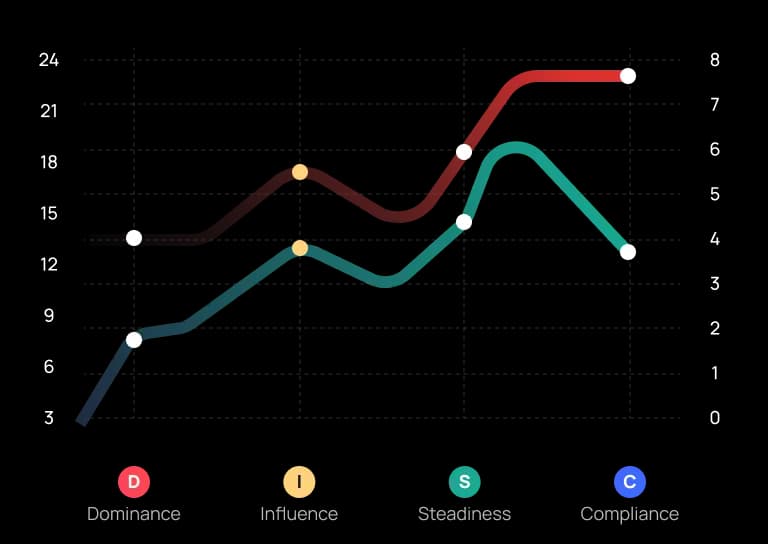
Represents your instinctive behaviors and desires.
Shows the behavioral tendencies you think you should exhibit in specific situations.
Related articles
You may also be interested in
 Self ExplorationDec 17, 2025
What Are the Dynamics of a Team? Understanding How Teams Really Work
Discover what are the dynamics of a team and how they impact team performance. Learn how communication, roles & personality differences boost collaboration.
 Self ExplorationDec 16, 2025
100+ Team Building Questions to Build Trust & Collaboration at Work
Explore effective team building questions to boost connection, trust, and collaboration in your team. Engage everyone and strengthen your team's dynamics today!
 Self ExplorationDec 10, 2025
How to Profile a Person: A Clear Step-by-Step Guide to Reading People
Learn how to profile a person step-by-step. Master practical techniques to read behavior, understand motives, and identify personality patterns accurately.
