


Table of content
What Is the Average IQ? What Does It Really Mean for Intelligence
Learn what the average IQ is and how IQ scores are measured. Discover global IQ averages and what your score may reveal about intelligence and potential.

Table of content
Wondering What is the average IQ and how your score compares to others? This article explains the meaning of IQ scores, the typical score range, and how psychologists calculate and interpret intelligence results. Explore global IQ averages, key factors that influence scores, and the real meaning behind IQ results. Discover how intelligence testing works and take an IQ test to see where you stand.
What Is the Average IQ?
Many readers ask what is the average IQ to understand how intelligence scores compare across the population. In modern psychology, IQ tests are standardized so the midpoint stays at 100. This score represents the average IQ of a person when compared with others in the same age group.
Experts estimate the average IQ by analyzing large datasets from standardized tests. These results show that most people score close to the center rather than at extreme levels. An IQ test measures several mental abilities, including reasoning, memory, and pattern recognition. Because the scoring system is standardized, it becomes easier to identify the typical level of intelligence in a population.
The Typical IQ Score Range
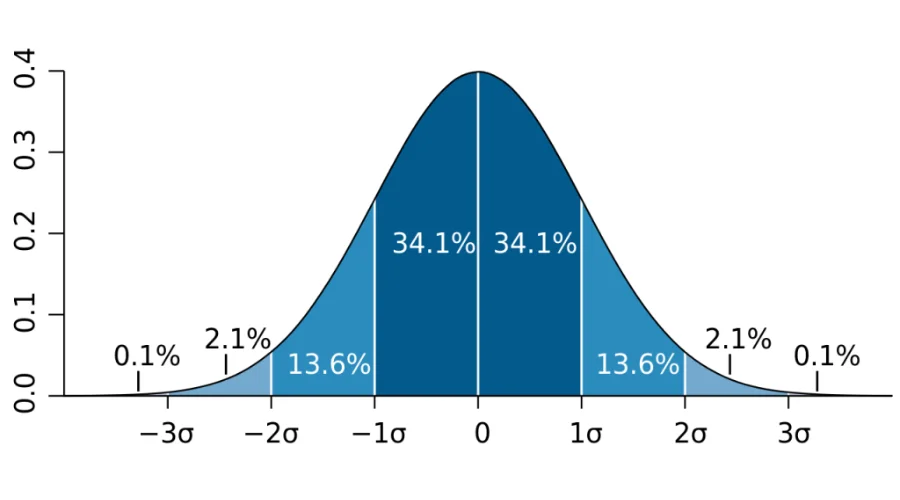
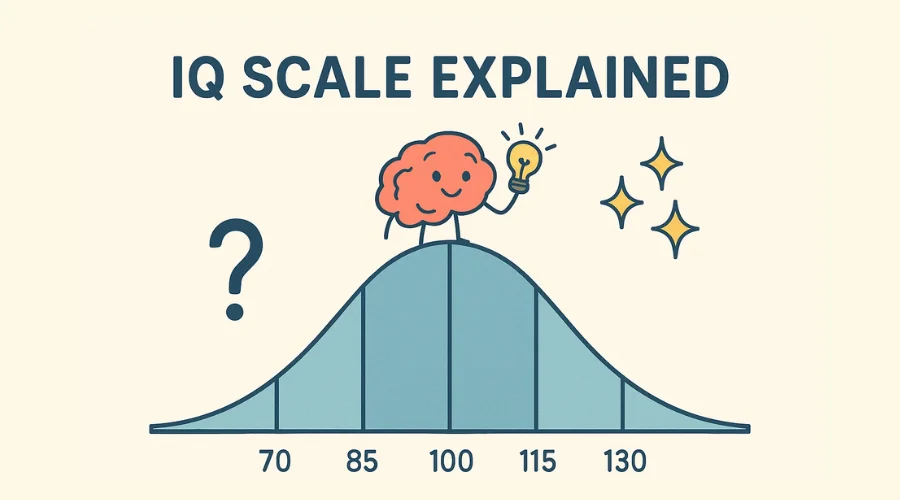
To better understand what is the average IQ, it is useful to look at the range where most scores fall. IQ results follow a statistical pattern known as a normal distribution.
Most people fall within a predictable band around the midpoint.
- Around 68% of people score between 85 and 115, which reflects the common average IQ level in the population.
- A score close to 100 represents the center of the distribution.
- Scores above 115 are considered above average, while results below 85 fall below the typical range.
This score range is commonly used when explaining what is a normal IQ in psychological research and educational testing.
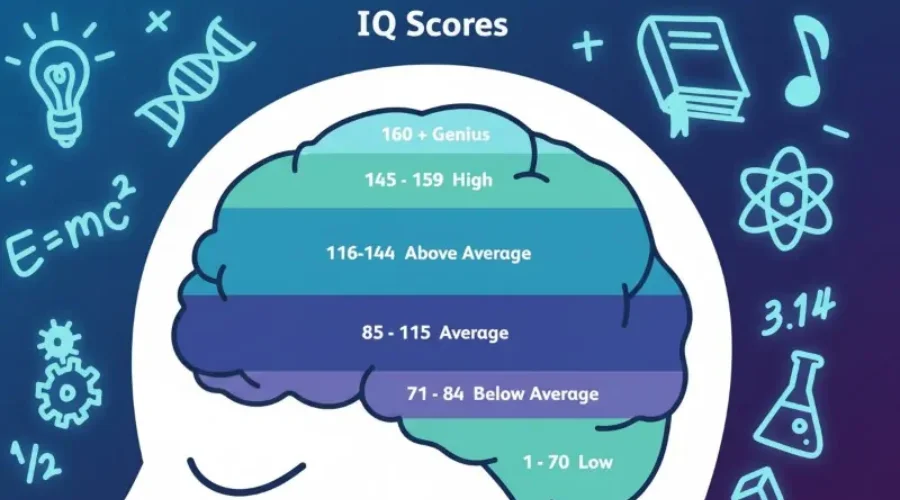
IQ Classification Levels
Psychologists divide IQ scores into categories so the results are easier to interpret. These levels help show how a person's score compares with the broader population.
Common IQ classifications include:
- Below 70 – Very low cognitive performance
- 80–89 – Below average intellectual ability
- 90–109 – Average intelligence range
- 110–119 – Above average cognitive ability
- 120–129 – Very high intellectual ability
Scores above 130 are sometimes discussed when people ask what iq is considered genius, but this range represents only a small portion of the population. Most individuals remain close to the midpoint, which is why the concept of what is the average IQ continues to center around the score of 100.
Average IQ Scores Around the World
Knowing the average IQ helps explain how intelligence scores are distributed across populations. Standardized tests evaluate abilities such as reasoning, language understanding, and problem-solving. Globally, the midpoint of these scores is set at 100, representing typical cognitive performance. The following sections outline IQ averages in the United States and compare them with results from other countries.
1. Average IQ in the United States
The table below presents the commonly used IQ classification ranges applied in the United States. These categories help explain how cognitive scores are interpreted when evaluating what is the average IQ and how different score levels are grouped.
IQ Score Range | Classification | Traits |
| Below 70 | Extremely Low | Severe limitations in intellectual ability |
| 70–79 | Very Low | Significant limitations in intellectual functioning |
| 80–89 | Below Average | Mild challenges in cognitive processing |
| 90–109 | Average | Typical intellectual performance |
| 110–119 | High Average | Above-normal cognitive capability |
| 120–129 | Very High | Strong reasoning and analytical skills |
| Above 130 | Extremely High | Exceptional intellectual capacity |
2. Average IQ by Other Country
Researchers have also compared intelligence test averages across multiple nations. The following table highlights several countries and their reported national scores, providing a broader perspective when discussing the average IQ globally.
Country | Average IQ |
| Argentina | 93 |
| Botswana | 71 |
| China | 105 |
| Germany | 99 |
| India | 82 |
| Malaysia | 92 |
| Nigeria | 69 |
| Norway | 100 |
| South Korea | 106 |
| Turkey | 90 |
| United Kingdom | 100 |
| United States | 98 |
Factors That Can Influence IQ Scores
Several biological and environmental elements can affect intelligence test results. When researchers study what is the average IQ, they often look at many conditions that shape cognitive development. These influences help explain some important facts about IQ, including why intelligence scores are different from person to person.
- Genetics: Heredity plays a key role in intelligence. Scientists estimate that genetic traits may explain about half of the differences in intellectual ability among individuals. However, no single gene controls intelligence. Instead, many genes work together to influence brain growth and thinking ability..
- Socioeconomic status: Family income can affect cognitive development. Children from higher-income households often perform better on IQ tests. They usually have access to better schools, learning materials, and educational support. These resources help children build stronger thinking skills.
- Parent education: The education level of parents also matters. Studies show that children of well-educated parents tend to score higher on intelligence tests. Parents with more education often provide learning support at home. This may include reading, problem-solving activities, and academic guidance.
- Geographic location: Where a child grows up can influence intellectual development. On average, children in cities or towns often score higher on IQ tests than those in rural areas. Urban areas usually offer more schools, libraries, and learning programs that support cognitive growth.
- Malnutrition: Proper nutrition during infancy is important for brain development. Research shows that moderate or severe malnutrition in early childhood can lead to lower IQ scores later in life. Good nutrition supports memory, learning ability, and overall cognitive health.
- Low birthweight: Birth conditions may also affect later intelligence. Studies show that babies born with low birth weight or born prematurely may have slightly lower average intelligence scores as they grow older.
- Physical activity: Regular exercise supports healthy brain function. Children who are active each week often perform better on cognitive tests than those who are less active. Healthy habits such as exercise are often discussed in research on ways to increase IQ and support stronger cognitive ability when studying what the average IQ is.
How IQ Scores Are Calculated?
To understand what is the average IQ, it is important to know how psychologists determine and interpret intelligence scores. Modern research explains how are IQs measured through standardized testing methods that compare results across large populations.
Historical Mental Age Method
In the early development of intelligence testing, researchers used a formula that compared mental development with actual age.
This method worked as follows:
- A person’s mental age was estimated through cognitive tasks in an IQ test.
- That mental age was divided by the individual’s chronological age.
- The result was multiplied by 100 to produce an IQ score.
This approach was first introduced by Alfred Binet and Theodore Simon during the early stage of intelligence measurement. It helped researchers begin identifying what is the average human IQ within school-age populations.
Although the formula was important historically, modern intelligence testing no longer relies on this calculation. Today, psychologists use more reliable statistical models to determine what is the average IQ across different age groups.
Modern Standard Score Method
Modern intelligence assessments compare an individual’s performance with others in the same age group. This method is used in widely recognized evaluations such as the Wechsler scales and the Stanford-Binet intelligence tests.
Psychometricians apply a process called standardization to ensure accurate comparison. This process includes several steps:
- Administering the IQ test to a large representative population sample
- Collecting and analyzing score distributions
- Establishing statistical norms used to interpret future test results
These norms allow researchers to determine what is the average IQ for an adult and what is the average IQ for a teenager within the general population.
In this system, the center point of the distribution is fixed at 100. This value represents what is the average IQ. Because the mean and median are both set at this number, half of the population scores above it and half scores below it.
Score Distribution and Rare Results
Most people fall near the center of the IQ distribution. About 95 percent of individuals score between 70 and 130.
Only a small portion of the population falls outside this range. For example:
- Scores above 130 often lead to discussions about what is genius level IQ.
- Extremely rare results may approach the highest IQ levels recorded in testing history.
Understanding this distribution helps clarify the average IQ and why most people fall within a similar range.
A score close to 100 generally reflects the typical cognitive level in standardized testing. Because most individuals fall within one standard deviation of this value, it represents the most common result seen in intelligence measurement.
How IQ Is Measured in Modern Intelligence Testing
Understanding what is the average IQ begins with knowing how intelligence is measured through standardized psychological testing. Modern assessments evaluate several cognitive abilities instead of relying on a single skill.
Psychologists usually examine two main types of intelligence:
- Crystallized intelligence refers to knowledge and skills developed through education and life experience. It often increases with age because people continue to gain knowledge over time.
- Fluid intelligence refers to the ability to reason, solve new problems, and understand abstract ideas.
Another related concept often discussed is IQ or EQ. IQ measures cognitive ability and logical thinking, while EQ relates to understanding emotions and social interactions.
Although people often describe low, average, or high IQ, experts note that there is no single universal intelligence test used everywhere. Different tests are designed for different age groups and purposes.
Most Commonly Used IQ Tests
Several standardized assessments are commonly used to evaluate intelligence and study what is the average IQ. Each test measures cognitive ability using different scoring methods.
Common IQ tests include:
- Wechsler Adult Intelligence Scale (WAIS): measures verbal comprehension, processing speed, perceptual reasoning, and working memory.
- Wechsler Intelligence Scale for Children (WISC-V): designed for children aged 6–16 to measure overall cognitive ability.
- Stanford-Binet Intelligence Scales: measures general intelligence, reasoning ability, and knowledge-based thinking.
- Kaufman Assessment Battery for Children (K-ABC): evaluates problem-solving ability without focusing on academic knowledge.
- Cognitive Assessment System (CAS): measures reasoning, attention control, and mental processing ability.
These tests provide reliable data that helps researchers understand the average IQ in different populations.
Abilities Typically Assessed in IQ Tests
IQ tests include several subtests designed to measure different cognitive abilities. These abilities help psychologists evaluate intellectual performance.
Common abilities assessed include:
- mathematical ability
- language skills
- memory
- reasoning ability
- information processing speed
- verbal comprehension
- perceptual organization
- working memory
Limitations and Controversies Surrounding IQ Testing
IQ testing is widely used in psychology and education. However, researchers highlight several limitations and debates related to these assessments.
Key limitations of IQ tests
- IQ tests measure only certain cognitive abilities such as reasoning and memory. They do not evaluate creativity, emotional intelligence, or social awareness.
- The number used to describe what is the average IQ reflects performance on standardized tasks, not a complete picture of intelligence.
- Environmental conditions such as education, nutrition, and health strongly influence cognitive performance.
- Cultural background and language differences may create testing bias in some assessments.
Historical controversies in intelligence research
- Early intelligence studies were used to support political movements such as racial segregation and eugenics.
- The book The Bell Curve revived debates about whether genetic factors explain differences in the average IQ across groups.
- Modern research shows that intelligence develops through both genetic influence and environmental conditions.
Ongoing debates about global IQ differences
- Some studies report variations in IQ averages between nations.
- Researchers link these patterns to literacy levels, education quality, and socioeconomic development.
- The Flynn effect shows that IQ scores increased globally during the twentieth century, proving that environmental factors can change averages over time.

Understanding Personality and Intelligence Through IQ Test
Understanding Personality and Intelligence Through IQ Test
Many people search for what is the average IQ to better understand their thinking ability. An IQ test helps measure how a person solves problems, recognizes patterns, and processes information. The result can show how your score compares with the general population.
Although IQ tests focus on cognitive ability, they can still offer insight into how someone approaches tasks. For example, people who score well in logical sections often think in a structured way. Others may rely more on creativity or practical thinking. Because of this, IQ results can help you reflect on how you learn and analyze information.
If you want to explore your score and understand the average IQ, you can take a reliable assessment online. A structured test helps you see how your reasoning skills perform under standard conditions.
You can try the official assessment here!
Taking an IQ test can help you:
- compare your result with the global average IQ score
- understand your strengths in reasoning and problem solving
- learn more about how intelligence tests measure thinking ability.
Conclusion
Understanding what is the average IQ helps you see how intelligence scores are interpreted in psychology and education. An IQ score reflects performance in reasoning, memory, and problem-solving tasks rather than defining a person’s full potential. By learning the average IQ, the typical score range, and the factors that influence cognitive development, you can better understand how intelligence testing works. If you are curious about your own results, taking an IQ test can provide useful insight into your thinking patterns and analytical ability.
FAQs
1. What is the average IQ score worldwide?
The global average IQ score is generally set at 100 in standardized intelligence tests. This number represents the midpoint of the distribution used in modern psychology. Most people score between 85 and 115, which is considered the typical cognitive range. This system helps researchers compare intelligence levels across age groups and populations.
2. What IQ score is considered above average?
An IQ score above 115 is usually considered above the typical range. In most standardized tests, scores between 90 and 109 represent the average range, while scores from 110 to 119 indicate higher cognitive ability. Results above 130 are rare and are often associated with exceptional intellectual performance.
3. Can IQ scores change over time?
IQ scores can change due to environmental and developmental factors. Education quality, nutrition, learning opportunities, and mental stimulation can influence cognitive development. Research such as the Flynn effect also shows that average IQ scores have increased over time in many countries due to improvements in education and living conditions.


Don't Let Your Potential Stay Hidden!
Take the DISC test today and discover your unique 'YOU', with deep insights into your true personality and potential.
 Understand yourself
 Choose the right career
 Suggest effective communication
 Reduce negative emotions
Represents your instinctive behaviors and desires.
Shows the behavioral tendencies you think you should exhibit in specific situations.
Related articles
You may also be interested in
 DISCSep 28, 2026
How to Identify Your Strengths and Weaknesses at Work
Understand your strengths and weaknesses at work by reviewing your skills, past achievements, etc. Improve and align your strengths with career goals.
 DISCMay 29, 2026
DISC Profile Activities for Team Building, Communication, & Workplace
Discover how DISC profile activities enhance team collaboration and communication. Apply practical exercises to build self-awareness and apply at work.
 DISCMay 29, 2026
DISC Assessment for Hiring: How to Use DISC to Hire Better Candidates
Learn how to use DISC assessment for hiring responsibly. Discover how DISC helps evaluate work style, team fit, communication, onboarding, and hiring decisions.
