


Table of content
What Is A High IQ? Meaning, IQ Levels (116–145) & What Qualifies as High?
What qualifies as a high IQ? Learn the meaning of IQ levels, what scores like 116, 130, or 131 mean, and how high IQ is classified in real life.
A high IQ generally refers to an intelligence score that is significantly above the population average. On most standardized IQ tests, scores of 116 or higher are considered high, while an IQ of 130 or above places a person in the top 2% worldwide. Understanding what qualifies as a high IQ and what different IQ levels actually mean helps clarify how intelligence is measured and interpreted in real life.
What Is A High IQ?
IQ, or Intelligence Quotient, is a standardized score used to measure cognitive ability relative to the general population. It is commonly assessed through well-established tests such as the Stanford-Binet Intelligence Scale and the Wechsler Adult Intelligence Scale (WAIS).
Rather than reflecting absolute intelligence, IQ scores are statistical comparisons, where the population average is set at 100, and scores are distributed along a bell curve. This is why terms like “high IQ” are defined by ranges, not by a single fixed number.
IQ scores are typically grouped into ranges to explain what each level means in practical terms:
- 116–130 (Very Smart): Clearly above average intelligence, often associated with fast learning and strong analytical thinking.
- 131–145 (Extremely Smart): Considered very high, placing individuals in the top 2% of the global population.
- Above 145 (Genius-level): Exceptionally rare scores linked to extraordinary intellectual ability.
IQ Classifications And Their Meanings
IQ classifications explain what different score ranges actually mean in real-life cognitive ability. Rather than labeling intelligence as simply “high” or “low,” these ranges help show how an individual’s reasoning, learning speed, and problem-solving skills compare to the general population.
IQ 116–130: Very Smart
An IQ score between 116 and 130 is considered above average and is often described as “very smart.” Scores in this range place individuals well above the population mean of 100, indicating strong learning ability, analytical thinking, and efficient problem-solving skills.
This classification applies equally across genders, meaning an IQ score of 116 in females or males reflects the same level of cognitive ability and relative standing.
Common traits associated with this IQ range include:
- Fast learning and strong comprehension
- Logical and structured problem-solving
- Consistent performance in academic and professional settings
IQ 131–145: Extremely Smart
An IQ score of 131 or higher is considered extremely high. Individuals in the 131–145 range fall within the top 2% of the global population, indicating exceptional reasoning ability, abstract thinking, and advanced cognitive flexibility. Common traits of this group include:
- Strong abstract thinking: Able to think beyond conventional boundaries
- Highly creative: Excel in roles requiring innovative solutions
- Example professions: Scientists, surgeons, theoretical researchers, engineers
IQ Above 145: Genius
IQ scores above 145 are classified as genius-level intelligence and are extremely rare. This range represents a very small fraction of the population and is typically associated with extraordinary reasoning capacity, original thinking, and the ability to generate groundbreaking ideas across fields such as science, technology, and the arts. Key traits include:
- Groundbreaking thinkers: Innovate with original theories or ideas
- Leaders in their fields: Often become pioneers in science, art, or technology
- Example figures: Albert Einstein (IQ 165-200), Leonardo da Vinci (IQ around 230)
Understanding these IQ classifications provides a clearer framework for why certain scores, such as 116 or 131, are considered high — and how they compare to the population average.
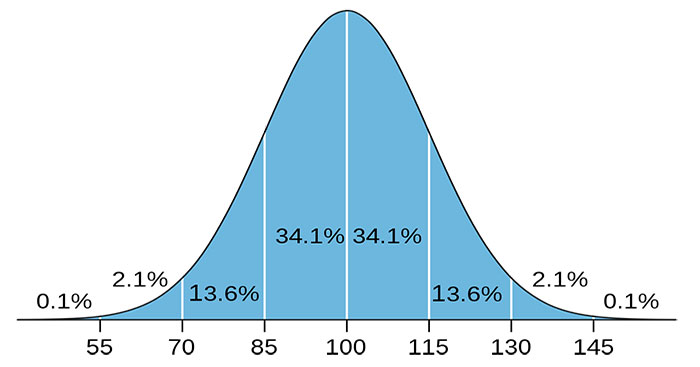
Summary Table of IQ Classifications
IQ Range | Classification | What It Means | Population Context | Example Professions |
116–130 | Very Smart | Clearly above average intelligence, strong learning and reasoning ability | Above the average population (top ~16%) | Teachers, Data Analysts, and Engineers |
131–145 | Extremely Smart | Very high IQ with advanced abstract thinking and problem-solving skills | Top 2% of the global population | Scientists, Surgeons, Theoretical Researchers |
Above 145 | Genius-Level | Exceptionally rare intelligence with extraordinary cognitive capacity. | Less than 0.1% worldwide | Nobel Laureates, Top Scientists, Innovators |
These classifications help explain what qualifies as a high IQ by placing each score range in the context of the overall population. On a broader scale, average IQ levels can also vary across regions and countries.
Why 116 Or Higher Is A High IQ Score?
An IQ score of 116 or higher is considered high because it places individuals well above the average population. Statistically, this score falls within the top 16% worldwide, indicating a clear cognitive advantage over most people.
Here’s why an IQ of 116 or more is viewed as a high IQ score:
- Above-average population ranking: An IQ of 116 already places an individual ahead of approximately 84% of the global population, making it a meaningful benchmark for what qualifies as a high IQ.
- Stronger reasoning and learning ability: People in this range typically demonstrate faster learning speed, more effective problem-solving skills, and stronger critical thinking compared to the average IQ range.
Average IQ vs. High IQ
From a measurement standpoint, IQ tests are standardized to compare cognitive ability across populations, and understanding facts about IQ helps clarify how intelligence scores are distributed and interpreted.
- The average IQ score ranges from 85 to 115, where most people are able to solve problems at a standard cognitive level.
- An IQ score of 116 or higher marks the transition from average to high intelligence, reflecting advanced cognitive processing rather than normal variation.
In other words, while individuals within the average range can solve problems effectively, an IQ of 116+ indicates a measurable shift in how efficiently cognitive tasks are handled, particularly as complexity increases.
Significance of an IQ Score Above 116
Individuals with an IQ of 116 or above often excel in environments that require logical reasoning, analytical thinking, and creativity. This level of intelligence supports better decision-making and more efficient handling of complex tasks, both academically and professionally.
More than just a number, an IQ of 116+ reflects how effectively the brain processes information, applies reasoning, and responds to cognitive demands in real-world scenarios.
Mensa Entry Standard (IQ ≥ 130)
Mensa International admits individuals who score in the top 2% of the population, corresponding to an IQ of 130 or higher.
While Mensa represents an exceptionally high threshold, an IQ of 116 should not be underestimated, as it already signals a strong cognitive advantage even below the genius-level range.
While higher IQ scores indicate stronger reasoning ability, understanding how IQ is calculated provides clearer insight into what these numbers actually represent. Although IQ tests measure important cognitive abilities, they do not capture every aspect of intelligence. For a broader perspective, it helps to understand the distinction between IQ vs EQ
How Is IQ Measured?
IQ is measured through standardized intelligence tests that compare an individual’s cognitive ability against the general population. Rather than measuring knowledge or education, these tests focus on core mental skills such as problem-solving, logical reasoning, and memory capacity. Here's how IQ is typically measured:
1. Standardized IQ Tests
IQ is primarily measured using well-established standardized tests that have been carefully designed and tested for accuracy. The most common IQ tests include:
- Stanford-Binet Intelligence Scale: One of the most widely recognized IQ tests, it measures cognitive abilities through questions related to verbal reasoning, quantitative reasoning, and abstract thinking.
- Wechsler Adult Intelligence Scale (WAIS): This test is commonly used for adults and includes a variety of subtests that assess verbal comprehension, perceptual reasoning, working memory, and processing speed.
- Raven's Progressive Matrices: A non-verbal IQ test that evaluates abstract reasoning and the ability to recognize patterns. It’s often used in both academic and clinical settings to assess general intelligence.
Together, these standardized tests are designed to measure general intelligence in a consistent and reliable way across different age groups and populations.
2. IQ Scales and Scoring
IQ scores are calculated using a statistical model known as the normal distribution, which explains how intelligence levels are spread across the population.
The most common scale used is the normal distribution, also known as the bell curve, where:
- Average IQ: A score of 100 is considered the average IQ, with most of the population (68%) scoring within 15 points of this average (between 85 and 115).
- High IQ: Scores above 115 are considered above average, with individuals in the top 16% of the population. A score of 130 or higher typically qualifies as high, and individuals in this range are often part of groups like Mensa (for the top 2%).
- Genius IQ: A score above 145 is considered genius level, representing less than 0.1% of the population.
Because IQ scores are based on population-level comparisons, average intelligence levels can also be examined across regions and nations, as explored in discussions about the smartest country in the world.
3. Cognitive Areas Assessed
IQ tests evaluate various areas of cognitive ability, including:
- Logical Reasoning: The ability to solve problems and make decisions based on patterns and logic.
- Verbal Comprehension: Measures how well a person can understand and reason using concepts expressed in words.
- Working Memory: The ability to hold and manipulate information mentally over short periods.
- Perceptual Reasoning: Evaluates the ability to think and reason using visual information, such as recognizing patterns or understanding spatial relationships.
Although IQ tests focus on cognitive abilities, intelligence can also be viewed through other dimensions, including emotional, social, and adversity intelligence, as outlined in frameworks such as IQ, EQ, SQ, and AQ.

How To Check Your IQ
IQ scores can fluctuate over time, particularly during key developmental stages such as adolescence. While they tend to stabilize in adulthood, checking your IQ periodically can help provide a more accurate picture of your cognitive abilities. Here’s how you can check and monitor your IQ:
1. Take a Reliable IQ Test
To get an accurate measurement of your IQ, you should take a reliable and standardized IQ test. Various tests are available online, but it’s important to choose one that is scientifically validated and widely accepted. Popular options include:
- Stanford-Binet Test
- Wechsler Adult Intelligence Scale (WAIS)
Additionally, you can check your IQ using international-standard picture-based tests, such as those on IQ Test by discpersonalities.com. Our method uses visuals to assess your logical thinking, analysis, and pattern recognition. It's a non-verbal test, suitable for everyone, offering a fun and accurate way to explore your brain's potential.
2. Track Your IQ Score Over Time
IQ scores can fluctuate, especially during adolescence when cognitive abilities are still developing. It’s a good idea to take an IQ test periodically to monitor how your score evolves. This will allow you to track improvements or identify areas of cognitive growth.
Things To Note When Taking An IQ Test
- Don't worry about a low score: IQ is only one of many things that affect success. Emotional intelligence (EQ), adversity quotient (AQ), and soft skills are just as important in life and work.
- Choose reliable tests: Avoid inaccurate or entertainment-focused tests. Pick trustworthy platforms, such as picture IQ tests from discpersonalities.com or those designed by Mensa.
IQ tests are just one way to assess cognitive ability, and they do not capture all aspects of human intelligence. To better understand how IQ works and how it influences different areas of life, exploring key insights and research around IQ can provide valuable context.
Clever Ways To Boost Your IQ
While IQ is partly influenced by genetics, certain habits and mental exercises can help strengthen cognitive skills over time. To support overall intellectual development, consider the following practical approaches:
- Study and practice science and math to stimulate your brain.
- Practice critical thinking; always analyze and find creative solutions.
- Choose creative games like chess, Sudoku, and puzzles for fun.
- Learn new languages and read books daily.
- Stay physically and mentally healthy.
If you want practical, research-backed ways to strengthen your thinking skills and build better mental habits over time, exploring how to increase IQ can offer helpful guidance.
But does improving your IQ automatically lead to greater success, or does achievement depend on more than cognitive ability alone?

Does A High IQ Determine Success?
A high IQ can be an advantage, but it does not guarantee success in life. Success also depends on:
- EQ (Emotional Intelligence): The ability to communicate, manage emotions, and build relationships.
- AQ (Adversity Quotient): The ability to adapt and stay strong in tough times.
- Soft skills and effort: These grow through real-world experience.
Example: Steve Jobs wasn’t known for having an exceptionally high IQ, yet he achieved remarkable success thanks to his creativity, persuasive communication, emotional awareness, and relentless determination. This illustrates that factors like emotional intelligence and interpersonal skills can be just as influential as cognitive ability when it comes to real-world achievement
Figure All Out: What is the difference between IQ and EQ? And which matters more?
While IQ is a crucial aspect of cognitive abilities, it’s not the only factor that determines success in life. IQ, EQ, SQ, and AQ all play a role in how we manage challenges, emotions, relationships, and personal growth. Understanding how these intelligence types interact can give you a more complete picture of your capabilities.
Final Thoughts
Tracking and understanding your IQ is not just about the number—it’s about recognizing your cognitive strengths and areas for improvement. Whether you have an IQ of 116 or above, it’s important to remember that IQ tests are just one measure of intellectual ability. Success in life is shaped by a combination of factors, including emotional intelligence (EQ), creativity, and perseverance.
By regularly testing and tracking your IQ, you can gain valuable insights into how your intellectual abilities evolve over time. With this knowledge, you can focus on enhancing your cognitive strengths and work on areas that need development.
Ultimately, IQ is just one tool in understanding your potential. Don’t stress over the number—use it as a guide to unlock your full capabilities and continue growing mentally and intellectually.
Frequently Asked Questions (FAQs)
Q1. Is an IQ of 131 considered high?
Yes, an IQ score of 131 is considered very high. It places an individual in the top 2% of the population, a range often associated with exceptional cognitive ability.
People with IQ scores around 131 typically demonstrate advanced abstract thinking, strong analytical skills, and the ability to solve complex problems efficiently.
Q2. What is a high IQ for an adult?
For adults, an IQ score of 116 or higher is generally considered high. At this level, individuals tend to understand abstract concepts more easily, learn faster than average, and demonstrate strong reasoning and problem-solving abilities.
Adults with high IQ scores often show advanced creativity, allowing them to generate innovative ideas and approach complex challenges with effective solutions.
Q3. What is a high IQ for a child?
In general, a child is considered to have a high IQ if they score above 115, while scores of 130 or higher are often classified as gifted. Besides test scores, there are telltale signs that may indicate above-average intelligence, such as:
- They are curious about just about anything and usually ask questions that might seem weird to adults.
- They might be very energetic since their mind races with thoughts and ideas.
- They remain focused longer than an average kid. This helps them learn and retain information better.
- They are sharp with vocabulary. They can describe things in detail with accurate words.
- They are creative thinkers who come up with effective solutions to problems.
Q4. What qualifies as a high IQ?
A high IQ is generally defined as a score significantly above the population average of 100. Most experts consider scores of 116 and above to be high, as they indicate stronger-than-average reasoning and learning ability.
IQ levels above 130 are much rarer and are often classified as exceptionally high due to their limited occurrence within the general population.
Q5. What is EQ vs IQ?
IQ and EQ measure different but equally important aspects of intelligence. IQ focuses on cognitive abilities such as logical reasoning, problem-solving, and learning capacity, while EQ relates to understanding emotions, managing relationships, and navigating social situations effectively.


Don't Let Your Potential Stay Hidden!
Take the DISC test today and discover your unique 'YOU', with deep insights into your true personality and potential.
 Understand yourself
 Choose the right career
 Suggest effective communication
 Reduce negative emotions
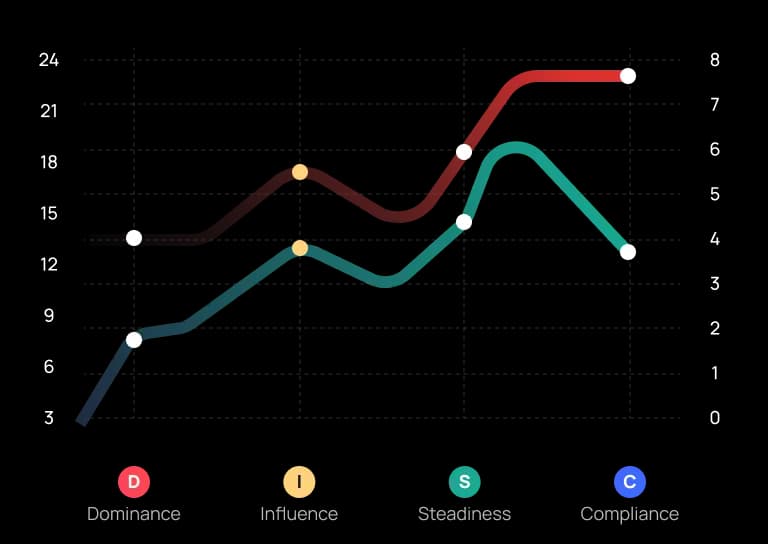
Represents your instinctive behaviors and desires.
Shows the behavioral tendencies you think you should exhibit in specific situations.
Related articles
You may also be interested in
 IQ, EQSep 16, 2026
How to Improve Emotional Intelligence: 9+ Practical Strategies
Learn how to improve emotional intelligence with practical strategies for self-awareness, self-regulation, empathy, communication, and better relationships.
 IQ, EQSep 16, 2026
10+ Emotional Intelligence Activities for Teams & Leaders
Try practical emotional intelligence activities that build self-awareness, empathy, emotional regulation, communication, and team resilience.
 IQ, EQSep 16, 2026
Average IQ by Age: What's Normal at Every Age
IQ is pinned to 100 at every age because it ranks you against your peers, not raw ability. See the full average IQ by age chart and what your score means.
