


Table of content
What Is Self-Awareness and How Can You Develop It?
Discover what self-awareness means, how it shapes your thoughts and behavior, and practical ways to make better decisions and more.
Table of content
What Is Self Awareness and How It Works
The question “what is self awareness” points to a little distance that lets you examine your inner experience and behavior before habit takes control. Stephanie M. Carlson, PhD, presents self-awareness as a deliberate means of thoughtfully examining those aspects of yourself. A pause before acting matters. The brain systems involved become stronger and more efficient (with practice). Without that pause, executive function networks cannot easily override automatic impulses or guide goal-directed decisions.
In practical terms, asking what is self awareness means noticing your inner responses and behavior as they arise, a baseline for understanding what emotional intelligence means in daily life. It gives you an internal monitor and a way to reflect. That reflection belongs before your response. It leaves more room for thoughtful choices than automatic reactions.
Environmental awareness
What awareness notices
Awareness begins with what perception brings in, as consciousness collects information from the world around you. Those details shape the way you experience life.
Paying attention
Awareness covers what you notice in your life, so it asks you to attend to your surroundings. That means noticing what's there each day, each hour, and each minute.
Scanning your surroundings
Lift your eyes from this blog post and slowly scan the space around you. Describe the details you noticed. Awareness receives the world; self-awareness directs that attention back at you.
Objective self-observation
These habits let you inspect your behavior as though you were watching somebody else.

- Reality over self-story: Focus on the reality of your behavior instead of the story you tell yourself about yourself.
- Another person’s view: Notice the different parts of yourself as if someone else were observing you.
- Checking assumptions: You may see yourself as punctual, while your appointments show that you are often late.
- Pausing before reacting: “Don’t believe everything you think.” Pause after a stimulus to “interrupt the reflexive response.”
Alignment with internal standards
Internal standards
Self-awareness asks whether your inner life and conduct fit your internal standards. Looking inward helps manage emotions and bring your behavior in line with your values. It also lets you judge yourself objectively and understand correctly how other people perceive you.
Rational thought and feelings
Your feelings can point to your ideals, while reason still matters. Effective decisions need your gut and your brain together, so pay attention to both when you choose.
Looking inward
Examining yourself helps you clarify your values, thoughts, feelings, behaviors, strengths, and weaknesses.
The self-reflection distinction
Reflection and action
Self-reflection has a place, but it covers only part of self-awareness. Reflection must connect with feedback and action, because your thoughts become visible in your behavior and relationships.
Reviewing what happened
Self-reflection means reviewing what happened and asking, “What is working, and what isn't?” The answers show you how to make things work better.
Staying on the road
Self-reflection studies the travel map in your head. Self-awareness checks whether your car is truly staying on the road.
Self-awareness helps you track your actions. Self-monitoring lets you identify what needs doing and correct mistakes. That work is the practice.
Everyday Examples of Self-Awareness
Notice an ordinary thought, a physical sensation, or a conversation with someone else.
Cognitive patterns
Cognitive Behavioral Therapy connects thoughts to emotions and emotions to behavior; these patterns make assumptions and self-talk easier to notice, while unhelpful thoughts become recognizable.
- Recognizing your emotions and labeling them accurately.
- Acknowledging your biases and prejudices.
- Learning which unhelpful or destructive thoughts are common for you, then recognizing them when they arrive. In Cognitive Behavioral Therapy, thoughts trigger emotions, which trigger behaviors.
- Recognizing patterns in self-talk, including your inner monologue and how you talk to yourself in your mind.
Your jaw may tighten, or worry about tomorrow may pull you away from what’s happening now. The body can carry a thought.
Carlson says regular self-assessment means saying aloud and questioning the rules or steps guiding what you’re doing. She also points to the bumper sticker, “Don’t believe everything you think.”
Carlson’s other suggestion is psychological distancing: look at the situation through an outsider’s eyes, or through the eyes of your “future self.”
Somatic cues
The amygdala, also called the primitive brain, can work like a danger radar and react before you name a negative emotion, giving your body an early signal.

- Some people feel a sensation in the pit of their stomach or a tingling in their chest.
- The amygdala, also called the primitive brain, was the first part of the brain to develop in humans. It functioned as a kind of radar that signaled the need to run away or fight back. Because it is skilled at anticipating danger, it reacts before we can name a negative emotion. The heart races, the stomach tightens, and the neck muscles tense up.
- Your stomach may lurch when you realize you forgot to study for an important test, or your heart may flutter when you see someone you are attracted to. These are also examples of private self-awareness.
Non-verbal habits
Body language during interactions
In an interaction, body language and other non-verbal cues can reveal your habits. The exercise helps team members notice those tendencies, while group members may read the same signals differently.
Receptive signals
Let your tone of voice and physical presence signal that you’re receptive.
Personal blind spots
Look for discrepancies, since blind spots may need attention.
Column A: How I see myself
Column B: How others see me
Leaders face unique challenges while building self-awareness, which influences overall personality in the workplace. A feedback vacuum around higher-ups can create an oblivious state called “CEO disease,” and people may feel reticent to share their opinions. Personal perceptions can fill that gap. Seek honest feedback from many sources. Otherwise, personal perceptions can grow too strong.
The Main Types of Self-Awareness
Internal self-awareness
Inner awareness tracks your thoughts and feelings, plus the effect experiences have on your emotional state. It includes emotional intelligence and the ability to notice these inner experiences.

External self-awareness
Recognizing how other people see you can expose blind spots and beliefs about yourself that you hold but aren't true.
The Self-Awareness Gap
Confidence can make self-awareness look widespread. In fact, only 10 to 15 percent of the population meet its criteria. Introspection may look useful, yet it can deepen the illusion of competence. In a study of 5,000 participants, researchers found that people who examine the causes of their thoughts, feelings, and behavior are less self-aware than people who don't. Their advice is to change the questions. “Why do I feel so terrible?” can feed unhelpful rumination. “What situations make me feel terrible, and what do they share?” can point to patterns.

More power can leave leaders more sure of themselves while empathy and openness fade. Ask trusted people for candid feedback. Bring in views from outside your group or organization, and admit your mistakes.
Self-knowledge matters because buried emotions may turn inward or come out as blame toward others. The VIA assessment can help show your strongest qualities, but no tool can replace facing uncomfortable feedback.
Why Self-Awareness Is Important
Better choices start when insight changes what you do. Self-awareness supports happiness and job satisfaction, while helping people understand social control and recognize their growth and effectiveness. Leaders should learn how others see them, then make room for and include others. When an approach fails, professionals can change course without getting defensive, keeping their work relevant and effective as workplaces change.

Notice your thought patterns and triggers. They can support healthier coping and better stress management, helping prevent burnout; staying calm under stress is one of the traits of people with high EQ. Look for underlying causes, then make deliberate course corrections instead of reacting automatically.
Self-awareness supports emotional intelligence, helping you express feelings in healthy ways, listen closely, show empathy, and communicate honestly. When you understand your behavior and its impact, you can build stronger relationships and sustain professional ones through consistent behavior, building trust and strengthening interpersonal skills at work.
Self-Awareness vs Self-Consciousness: Psychological Risks
When you notice how your behaviour affects other people, self-awareness can bring clarity; self-consciousness can turn into anxious worry about how they see you. When you reflect, ask what rather than why. Test your assumptions with feedback from people you respect and who have your best interests at heart. Why-questions can pull your attention toward weaknesses and insecurities, while what-questions are more constructive, so balance introspection with feedback. Excessive self-consciousness may reflect social anxiety disorder. Persistent symptoms warrant discussion with a doctor or mental health professional.

Self-Observation Strategies
Deliberate practice can make self-awareness stronger. Looking inward helps you inspect your behavior and beliefs, but it only earns its keep when reflection becomes accurate and useful. When you hear yourself think, “Why does this always happen to me?” stop and ask, “What set off my reaction, and what small change can I make now?” Your explanation may feel very, very convincing and still be wrong. A trigger remains.
Start a self-awareness journal and give this shift a regular place to happen. Spend ten or fifteen minutes every day for two weeks writing about how you think and act. Use prompts like “What did I do well today?” and “How did I respond?” Your notes can show where to improve, track progress, uncover patterns, and reinforce learning.

Notice your body when an emotion begins. Somatic tracking can capture information your thoughts miss, and repeated practice with those physical signals can help you identify what you’re feeling in the moment.
Small behavior changes can put space between a reaction and a response. If criticism makes your heart race and leaves you feeling threatened, pause before you answer. Listen to the person, then search for the useful point. You may respond in a more productive, mutually satisfying way.
External Perspective Gathering
Outside perspectives can sharpen your self-assessment after criticism has cooled. Ask each person how they'd like you to behave, and get candid feedback. Then choose a situation and draw two columns. In one, record your own attitude and behavior. In the other, have a feedback partner describe how you come across to them. Compare both columns very, very carefully. A coach, mentor, or peer can help you see yourself more objectively. Professional coaching offers tailored guidance on your strengths and areas for growth; taking a workplace DISC assessment can also identify your personal communication style.

Frequently Asked Questions
Can self-awareness be learned?
Self-awareness has no set ceiling: anyone can develop it over time, although some people naturally start with more. Continued practice can help everyone else build a stronger level of it for themselves.
What Are the Signs of Self-Awareness?
Self-awareness appears in how someone handles behavior, adapts to circumstances, works out what a situation requires, and changes direction. These habits help you respond to what is happening instead of repeating old behavior. Your behavior changes.
What are the four keys to self-awareness?
Mindfulness, Self-compassion, Reflection, and Feedback are four keys commonly associated with self-awareness.
- Mindfulness: Become more aware of yourself in the present.
- Self-compassion: Build that awareness without passing judgment on yourself.
- Reflection: Consider what you have learned so you can improve yourself.
- Feedback: Use what others share to improve yourself, achieve your goals, and reach your full potential.
What are the five elements of self-awareness?
The five elements address inner experience and include Consciousness, Self-knowledge, Emotional intelligence, Self-acceptance, and Self-reflection.
- Consciousness: Awareness of your internal experiences, including your emotions and thoughts.
- Self-knowledge: Understanding who you are, including your beliefs, values, and motivations.
- Emotional intelligence: The ability to understand and manage emotions.
- Self-acceptance: Accepting who you are while showing yourself compassion and kindness.
- Self-reflection: Thinking deeply about your feelings, thoughts, and goals to gain a better understanding of who you are and your place in the world.
Self-Awareness in Emotional Intelligence
Self-awareness lets you notice your emotions, which matters. Emotional intelligence adds empathy and compassion to your response, enabling someone with a high EQ to respond effectively; quotient testing highlights the difference between IQ and EQ.
What is the self-awareness gap?
The self-awareness gap points to genuine self-awareness being uncommon, because many people let emotion-driven interpretations shape their view of circumstances.
“ It remains uncommon because many of us view our circumstances through emotion rather than examining them clearly.”
To understand what is self awareness in practice, treat self-awareness as something practical: notice your inner experiences, identify your values and motivations, and compare them with your behavior. Apply Mindfulness, Self-compassion, Reflection, and Feedback to see the gap between your self-assessment and your actions. Emotional intelligence supports an empathetic, compassionate response to emotions. Keep the process concrete by paying attention, questioning assumptions, hearing feedback, and changing your actions accordingly.


Don't Let Your Potential Stay Hidden!
Take the DISC test today and discover your unique 'YOU', with deep insights into your true personality and potential.
 Understand yourself
 Choose the right career
 Suggest effective communication
 Reduce negative emotions
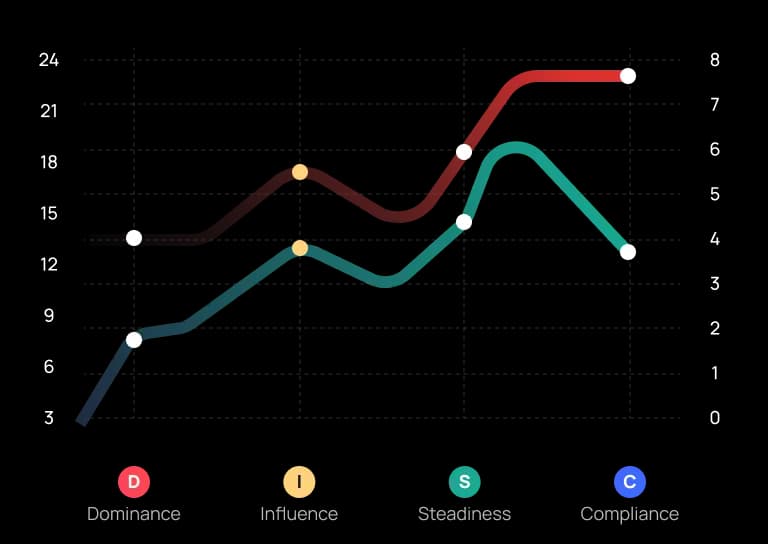
Represents your instinctive behaviors and desires.
Shows the behavioral tendencies you think you should exhibit in specific situations.
Related articles
You may also be interested in
 Self ExplorationSep 16, 2026
Introvert vs Extrovert: Which One Are You?
Are you an introvert, extrovert, or ambivert? See how energy, behavior, and environment shape your personality style, with traits and subtypes.
 Self ExplorationDec 17, 2025
What Are the Dynamics of a Team? Understanding How Teams Really Work
Discover what are the dynamics of a team and how they impact team performance. Learn how communication, roles & personality differences boost collaboration.
 Self ExplorationDec 16, 2025
100+ Team Building Questions to Build Trust & Collaboration at Work
Explore effective team building questions to boost connection, trust, and collaboration in your team. Engage everyone and strengthen your team's dynamics today!
