


Table of content
What Is an Extrovert? Meaning, Traits, and Types
Understand what an extroverted person is like, how extroverts and introverts differ, and what an extroverted introvert means. Try the free DISC test.
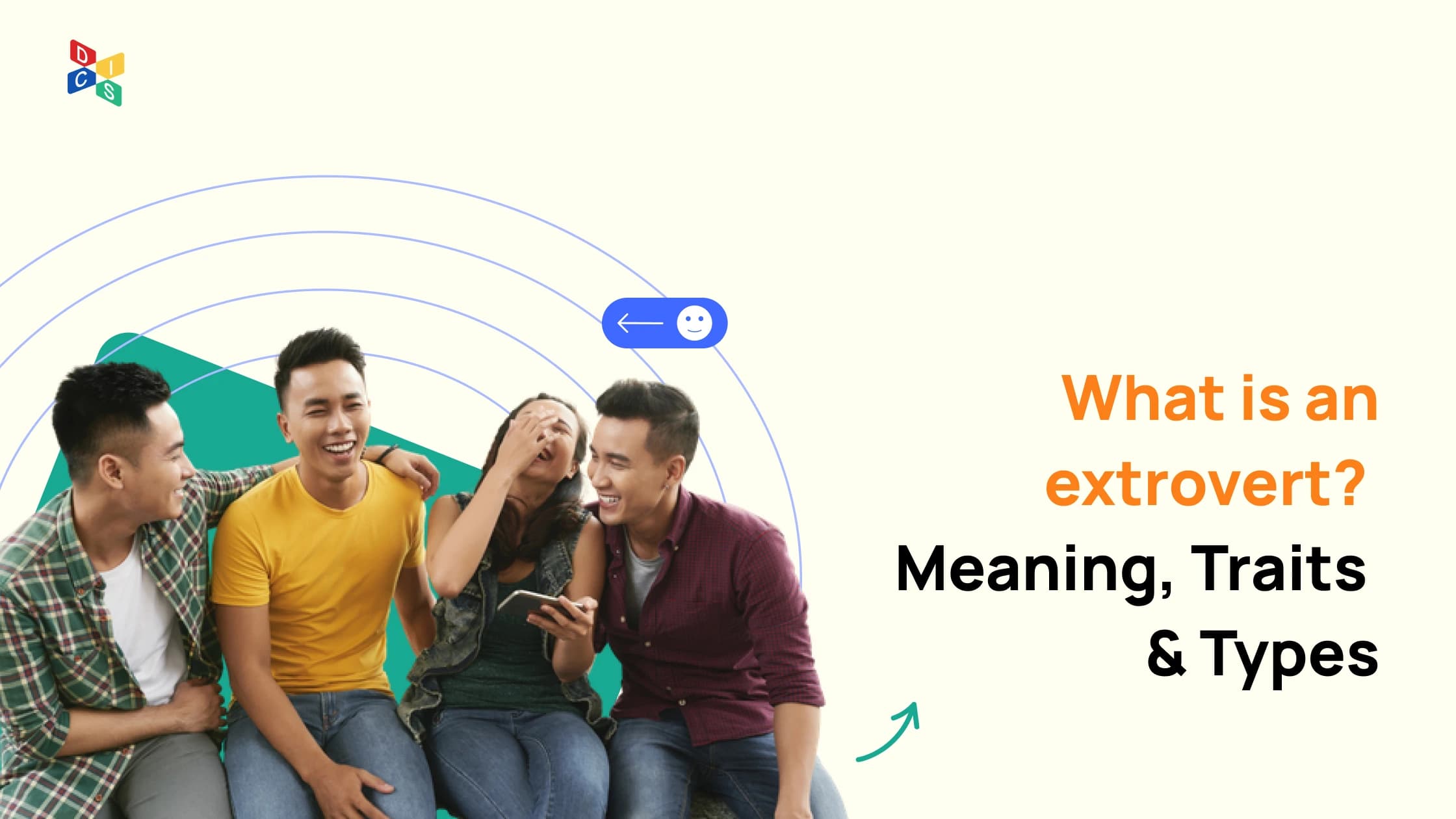
Table of content
An extrovert is a person who draws energy from the outside world, especially from conversation, shared activity, and time with other people. When you ask What is an extrovert? the short answer is someone whose attention naturally moves outward, who often thinks while talking, and who feels recharged after a lively day instead of drained by it. Psychologists treat extroversion as a personality trait that runs along a spectrum, so very few people are fully extroverted or fully introverted. Below, you will learn what an extroverted person looks like, which traits and types exist, and how extroverts differ from introverts. You will also see what an extroverted introvert is and how a free DISC personality test can show where you sit on the spectrum.
What Is an Extrovert and What Is an Extrovert Person Like?
An extrovert is a person whose energy and attention flow mainly toward the outside world. An extrovert person tends to feel at ease in groups, starts conversations readily, and feels recharged after social time. In psychology, extroversion is a trait measured in degrees, so it describes a tendency and not a fixed label.
Psychologists often write extraversion, which is the spelling Carl Jung used, while everyday dictionaries accept extrovert as well. Both words describe the same idea, and this guide uses them interchangeably. The terms sit on one scale with introversion at the opposite end, a scale that extraversion and introversion research describes as a central dimension of human personality.
In daily life, an extrovert is often the one who greets new colleagues, fills a quiet pause in a meeting, or suggests plans for the weekend. Extroverts usually enjoy variety, act on ideas quickly, and process their thoughts out loud. Hans Eysenck proposed that extroverts need more outside stimulation to feel alert, which is one popular explanation for why they seek out company and activity.
None of this makes an extrovert better or worse than anyone else. It simply describes where a person finds energy and how they prefer to engage with other people. Many extroverts also value quiet time, and many people who seem outgoing in public are more mixed than they look.

What Is an Extrovert Personality Type?
An extrovert personality type is a pattern in which a person's attention, motivation, and energy point outward. Different systems describe it in different ways, since Jung called it an attitude, the Big Five measures it as a trait, and the Myers Briggs system labels it with the letter E. Modern researchers mostly prefer the trait view.
Jung's Original Idea
The term entered psychology through Carl Jung, who described extraversion as interest directed toward the external object. His book Psychological Types appeared in German in 1921 and in English in 1923. Jung framed extraversion as the direction of psychic energy, which is a broader and more abstract idea than the sociable image most people hold today.
The Big Five Trait View
Current personality research mostly relies on the Big Five personality traits, where extraversion is one of five continuous dimensions. It is usually linked with gregariousness, assertiveness, excitement seeking, warmth, activity level, and positive emotions. Because scores fall along a scale, most people land somewhere between the two ends and not at an extreme.
How DISC Relates to Extroversion
DISC describes behavior style through four patterns, which are Dominance, Influence, Steadiness, and Conscientiousness. People with strong Influence or Dominance styles often look outgoing, because both styles involve visible energy and quick action. DISC does not measure extraversion directly, so treat the connection as a useful clue and not as a verdict.
What Are the Main Traits of an Extrovert?
The main traits of an extrovert include gaining energy from people, talking through ideas, seeking stimulation, acting quickly, keeping a wide social circle, and showing visible enthusiasm. Not every extrovert shows every trait, and the strength of each one varies with mood, setting, and stress.
Gains Energy From Social Contact
Extroverts usually feel more alive after a conversation, a team lunch, or a group activity. A long stretch alone can leave them restless or bored. Their social time works like a recharge, whereas an introvert often needs the opposite to recover.
Thinks Out Loud
Many extroverts clarify their ideas by speaking them. A brainstorm, a phone call, or a quick chat can help an extrovert reach a decision that silent reflection leaves unfinished. Colleagues sometimes mistake early talking for a final position, so it helps to ask whether an idea is a draft or a decision.
Seeks Stimulation and Variety
Extroverts are often drawn to new places, new people, and busy schedules. Eysenck's arousal theory links this habit to a need for more outside stimulation. A varied day with plenty of interaction tends to keep them focused and motivated.
Acts Quickly
An extrovert often prefers to try something and adjust afterwards instead of waiting for every detail. Fast action can produce momentum on a team, although it may skip careful review if nobody slows the pace. Pairing an extrovert with a detail-minded partner often balances the two styles.
Keeps a Wide Social Circle
Extroverts usually collect many acquaintances, friends, and contacts across work and personal life. They tend to introduce people to each other and organise gatherings. Depth still matters to them, but they often enjoy breadth of connection as well.
Shows Enthusiasm and Positive Emotion
Research summaries report that extroverts experience more positive emotions on average. They commonly express excitement through voice, gesture, and humour, which makes their mood easy for others to read. Visible enthusiasm can lift a room, and it can also hide private worries that an extrovert has not yet mentioned.
What Is an Extrovert vs Introvert?
What is an extrovert vs introvert in practical terms? The difference lies mainly in where each person gains and spends energy. Extroverts recharge through interaction and activity in the outside world, while introverts recharge through quiet time and reflection. Neither style is better, and most people show a blend of both depending on the situation.
| Area | Extrovert | Introvert |
|---|---|---|
| Energy source | Gains energy from people and activity | Gains energy from solitude and reflection |
| Social preference | Enjoys larger groups and new faces | Prefers smaller groups and familiar people |
| Thinking style | Talks ideas through while forming them | Reflects privately before speaking |
| Communication | Expressive, quick to respond | Measured, prefers to prepare |
| Recovery after a busy day | Often wants to keep socialising | Often wants quiet time alone |
| Common risk | Talking over others or acting before reflecting | Staying silent when input is needed |
Introversion is not the same as shyness. Susan Cain, author of Quiet, separates introversion, which is a preference for lower stimulation, from shyness, which is a fear of social judgment. An introvert can speak confidently on stage, and an extrovert can feel nervous at a party.
Researchers also find a large overlap in actual behaviour. A study by Fleeson and Gallagher in 2009 found that extroverts often act in introverted ways and introverts often act in extroverted ways. The gap was small, with extroverts acting moderately extroverted roughly 5 to 10 per cent more often.
Extroversion and introversion describe a tendency, not a cage. People move along the scale depending on the setting, the company, and how much energy they have left.
What Is an Extroverted Introvert?
An extroverted introvert is a person whose core preference leans introverted but who acts outgoing in many social settings. They enjoy people and can be lively in conversation, yet they need solitude afterwards to recover. The label is informal and describes a middle position on the spectrum.
Signs of an extroverted introvert include being described by friends as sociable while privately feeling drained after events, enjoying small gatherings more than large ones, and needing a planned break during long social days. They often have a few deep friendships and a talent for one-to-one conversation, but a small appetite for constant group activity.
Psychologists usually place this pattern under ambiversion, which describes people near the middle of the scale who show characteristics of both ends. The word ambivert is credited to Kimball Young in 1927, and interest in the idea grew after later popular research. The opposite pattern, sometimes called an introverted extrovert, describes an outgoing person who still needs occasional quiet.
If this sounds like you, plan your week around energy instead of labels. Schedule recovery time after demanding events, say yes to social plans that feel meaningful, and decline the ones that add noise.
What Are the Types of Extroverts?
Extroverts come in several styles, because outgoing energy can be directed toward people, goals, ideas, or care for others. The groups below are informal ways to describe behavior, borrowed from the DISC framework, and they are not formal clinical categories.
The Enthusiastic Connector
Connectors are warm, talkative, and quick to build rapport. They tend to remember names, celebrate others, and keep a group mood positive. Their challenge is following through on details, since new conversations often compete with unfinished tasks.
The Driving Leader
Driving leaders channel outward energy into goals, speed, and results. They speak directly, make decisions quickly, and enjoy taking charge. Their challenge is listening long enough, because impatience can make teammates feel unheard.
The Supportive Companion
Supportive companions are sociable but calm and loyal. They put effort into keeping relationships steady and often act as the glue in a team or family. Their challenge is speaking up for their own needs, since they may prioritise harmony over honest disagreement.
The Analytical Talker
Analytical talkers enjoy discussing facts, plans, and ideas with other people. They use conversation to test logic and sharpen standards. Their challenge is warmth under pressure, as strong opinions can sound like criticism to people who prefer a gentler tone.
How Do You Know If You Are an Extrovert?
You can tell if you are an extrovert by noticing where you gain energy, how you handle social time, and how you think through problems. No single sign is conclusive, so look for a consistent pattern across work, friendships, and rest. A structured test adds a more organised view of your tendencies.
- Notice how you feel after a full social day. If you feel energised and want more company, that points toward extroversion.
- Pay attention to how you solve problems. If talking to someone usually helps you decide, you probably process outwardly.
- Observe your reaction to time alone. If a long quiet weekend leaves you restless, that is another extroverted signal.
- Ask people who know you well. Friends and coworkers often describe your social style more accurately than you expect.
- Take a structured assessment such as the free DISC test on DISC Personalities, and compare the result with your own observations.
Be careful with online quizzes, because answers shift with mood and context. Treat any result as a starting point for reflection and notice whether it matches your real habits. If your results sit in the middle, you may be an ambivert, which is common and perfectly normal.
What Are Common Myths About Extroverts?
Common myths say that extroverts never need quiet, always talk too much, are natural leaders, or have strong social skills. Research and everyday experience show a more varied picture. Extroversion describes where energy comes from, not how skilled, confident, or kind a person is.
Extroverts Never Need Time Alone
Even highly extroverted people need rest, reflection, and private time. They may need less of it, or they may take it in the form of a walk or a hobby rather than a silent room. Ignoring this need can lead to fatigue and irritability.
Extroverts Are Always Confident
Being outgoing is different from feeling sure of yourself. An extrovert can doubt their abilities, worry about rejection, or feel anxious about a big presentation. Their ease in conversation sometimes hides how much effort they put in.
Extroverts Make Better Leaders
Extroverts often become visible leaders, but visibility is not the same as effectiveness. Introverted leaders frequently listen carefully and give their teams room to contribute. Good leadership depends on skills such as clarity, fairness, and listening, which people of any style can develop.
Extroversion Means Good Social Skills
An extrovert likes social contact, whereas social skill means reading cues, listening, and responding with care. The two often travel together but they are separate. An extrovert who talks constantly without listening can damage trust as easily as anyone else.
How Do Extroverts Show Up at Work and in Relationships?
Extroverts at work usually bring energy to meetings, networking, and collaborative projects, and in relationships they bring openness and shared activity. They perform well when their strengths are matched with space to listen and reflect. Understanding this style helps teams and partners communicate with less friction.
At Work
Extroverts often thrive in roles with frequent contact, such as sales, teaching, customer service, event planning, and team leadership. They tend to speak up early in meetings and build relationships across departments. A useful habit for them is pausing to invite quieter colleagues before closing a discussion.
A strong team uses the outward energy of its extroverts and the careful thinking of its introverts. Meetings improve when both groups get a fair chance to contribute.
In Relationships
Extroverted partners and friends usually enjoy shared outings, spontaneous plans, and open conversation. They may feel hurt when a partner withdraws without explanation. Agreeing on how much social time and alone time each person needs prevents misunderstandings, especially when one person leans introverted.
How to Communicate With an Extrovert
Give an extrovert room to talk through ideas, and ask direct questions to find out what they actually want. Be honest when you need quiet, and say so kindly rather than going silent. Short check ins work well, since extroverts generally respond to warmth, clarity, and a quick reply.
Frequently Asked Questions About Extroverts
What is an extrovert person like?
An extrovert is usually outgoing, expressive, and energised by being around others. They tend to start conversations easily, enjoy group activities, and think while talking. They may also be action-oriented and optimistic. Each person differs, so these traits describe a general tendency and not a fixed profile.
What is an introverted person?
An introverted person gains energy from quiet time and reflection rather than from large social events. They often prefer smaller groups, think before speaking, and value deep conversations. Introversion is not shyness or dislike of people, and many introverts enjoy company when it feels meaningful and well-paced.
How do I know if I'm an extrovert?
You may be an extrovert if social time energises you, talking helps you think, and long stretches alone leave you restless. Check for a steady pattern over several weeks, ask people close to you for their view, and consider taking a free DISC test to reflect on your tendencies.
What is the difference between an extrovert and an introvert?
The main difference is where each person gains and spends energy. Extroverts recharge through people and activity, while introverts recharge through solitude and reflection. They also differ in communication style, group size preference, and pace of thinking. Both styles exist on a spectrum, and many people sit somewhere in the middle.
What is an extroverted introvert?
An extroverted introvert is someone who is mainly introverted but acts outgoing in many situations. They can enjoy parties, speak confidently, and make friends easily, yet they need alone time to recover afterwards. The label is informal and usually fits people near the middle of the spectrum.
What is an extrovert personality type?
An extrovert personality type is a pattern where attention and energy point toward the outside world. In the Big Five model, it is a continuous trait called extraversion, and in Myers-Briggs it is the letter E. Most researchers view it as a spectrum rather than two separate boxes.
Can an introvert act like an extrovert?
Yes, because behaviour is flexible. Research on everyday behaviour shows that introverts often act in extroverted ways, especially when a role or goal calls for it. The effort can feel tiring, so it helps to plan recovery time after demanding social situations and to choose settings that feel comfortable.
Is being an extrovert good or bad?
Extroversion is neither good nor bad. It carries strengths such as social energy, quick action, and strong networks, as well as risks such as talking over others or acting before reflecting. A balanced approach is to understand your own style and build habits that balance its strengths and blind spots.
Final Thoughts on What Is an Extrovert
An extrovert is someone who gains energy from the outside world, yet the label never tells the whole story about a person. Traits shift with context, many people sit near the middle of the spectrum, and every style brings real strengths when it is understood and used with care. Use the signs in this guide to observe your own habits for a few weeks, and notice where you gain energy and where you lose it. If you would like a clearer picture of your behaviour style, you can take the free DISC test on DISC Personalities and use the result to start a conversation about how you work and communicate. For questions about the tests or the business suite, contact the DISC Personalities team through the details below.
- Website: DISC Personalities
- DISC Test: Take the free DISC test
- Email: Write to admin@discpersonalities.com
- Phone: Call (+84) 286 270 5825



DISC Team is a content writing team for tracnghiemtinhcach.vn, focusing on the DISC model, communication styles, and teamwork. The team aims to explain concepts in accessible language, helping readers connect them with situations in their work and everyday lives.
View author profile

Don't Let Your Potential Stay Hidden!
Take the DISC test today and discover your unique 'YOU', with deep insights into your true personality and potential.
 Understand yourself
 Choose the right career
 Suggest effective communication
 Reduce negative emotions
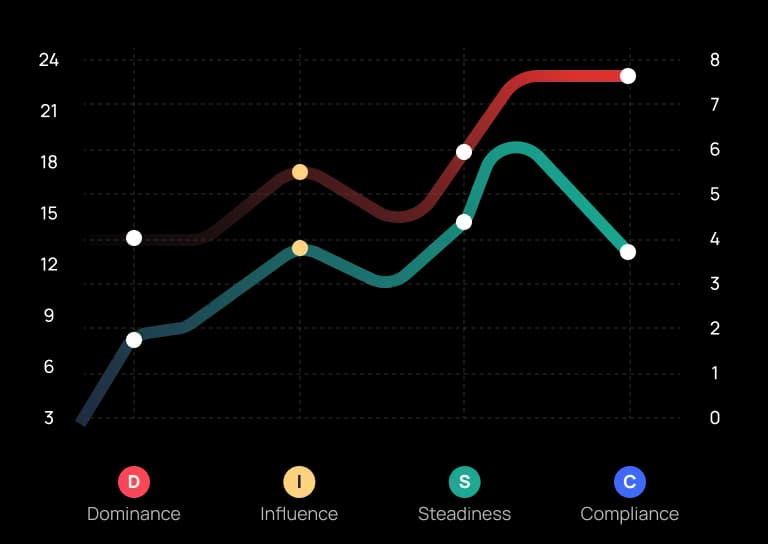
Represents your instinctive behaviors and desires.
Shows the behavioral tendencies you think you should exhibit in specific situations.
Related articles
You may also be interested in
 Self ExplorationNov 14, 2026
Ambivert vs Omnivert: Meaning, Differences, Examples
Ambivert vs omnivert explained: meaning, key differences, real examples, and how to tell which social style fits you. Try the free DISC test.
 Self ExplorationSep 28, 2026
What Is Self-Awareness and How Can You Develop It?
Discover what self-awareness means, how it shapes your thoughts and behavior, and practical ways to make better decisions and more.
 Self ExplorationSep 16, 2026
Introvert vs Extrovert: Which One Are You?
Are you an introvert, extrovert, or ambivert? See how energy, behavior, and environment shape your personality style, with traits and subtypes.
