


Table of content
What DISC Style Is Best for Leadership? A Situational Leadership Guide
Uncover what DISC style is best for leadership and how each personality type can shape your leadership approach. Maximize your strengths for team success.
When it comes to effective leadership, knowing what DISC style is best for leadership can transform the way you lead. Each DISC profile brings unique strengths to the table, shaping how you communicate, motivate, and drive results. In this article, we’ll guide you through discovering your DISC style and how to harness its power to lead with confidence, inspire your team, and achieve success. Unlock the potential of your leadership style and elevate your team's performance today.
What is the DISC personality model?
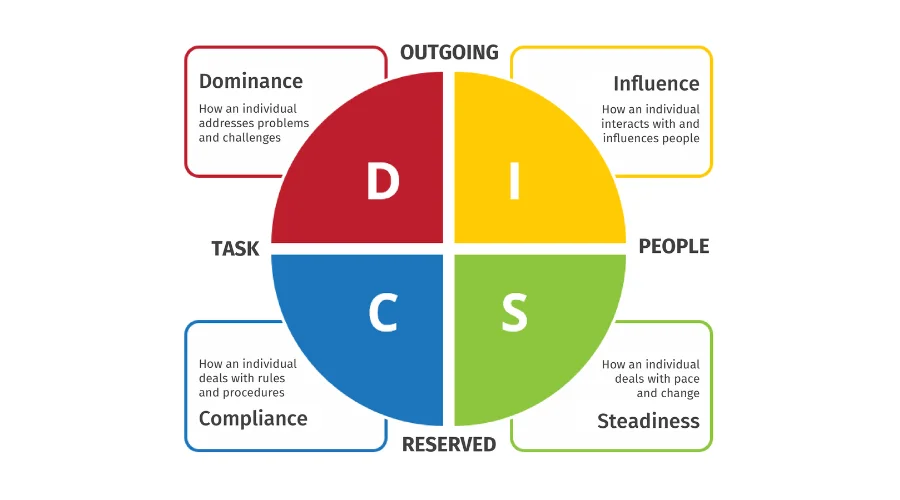
The DISC personality model is a tool used to understand different behavioral styles. Created by psychologist William Marston in 1928, it identifies four core personality types:
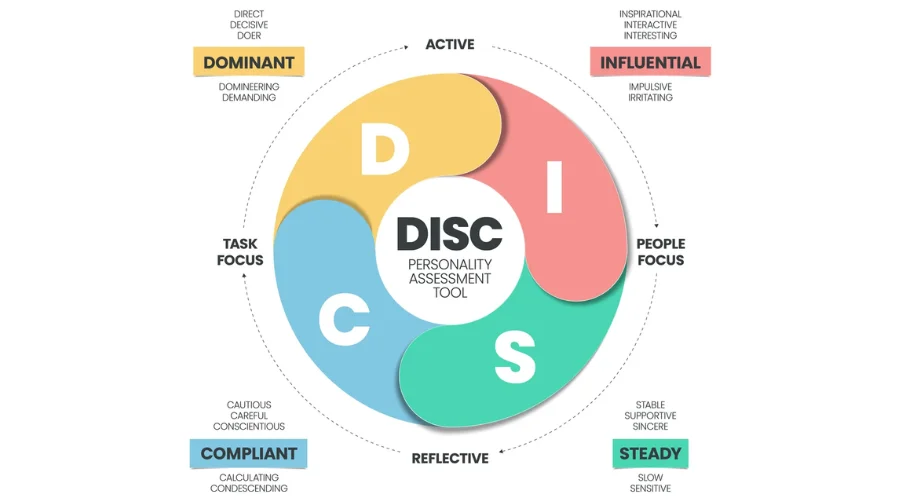
- Dominance (D): Assertive, results-driven, and decisive.
- Influence (I): Charismatic, social, and motivational.
- Steadiness (S): Calm, patient, and supportive.
- Compliance (C): Detail-oriented, analytical, and precise.
Each exhibits a combination of these traits, with one typically being dominant. The DISC assessment personality type can help you identify your natural tendencies and improve communication, leadership, and teamwork.
By understanding these personality types, leaders can leverage the strengths of each style, whether it’s to drive results, foster collaboration, or maintain quality standards. Knowing what DISC style is best for leadership allows you to adapt to different situations, improve team dynamics, and enhance overall performance.
The DISC model is valuable in leadership training, team-building activities, and workplace communication. It also helps with conflict resolution styles, offering insights into how different personality types interact, reducing friction, and boosting productivity.
Why DISC is widely used in leadership development
The DISC model is widely used in leadership development for several key reasons:
- Enhanced Self-Awareness: The DISC helps leaders recognize their strengths and areas for improvement, providing them with the insight needed to lead more effectively.
- Improved Communication: By understanding which leadership style is most effective, leaders can communicate better with their teams.
- Conflict Resolution: DISC helps leaders understand different personality types, making it easier to resolve conflicts and strengthen team cohesion.
- Team Dynamics: By recognizing different DISC types, leaders can build balanced teams that perform at their best.
- Motivation and Engagement: DISC leadership profiles allow leaders to tailor their approach, increasing motivation and engagement within their teams.
- Leadership Flexibility: Understanding DISC management profiles allows leaders to adapt their style as needed, making them more effective in various scenarios.
This is why DISC is widely used in leadership development, as it provides a framework that helps leaders communicate, engage, and adapt effectively.
Four DISC Leadership Styles
Understanding the four DISC leadership styles is crucial for recognizing how different personality types can influence team dynamics and performance. Each style brings unique strengths and challenges to leadership, and knowing when to apply them can help leaders connect better with their teams. Here’s a breakdown of the DISC profile leadership styles:
Dominance (D) Leadership Style
Dominant leaders are assertive and results-driven. They thrive in high-pressure environments and are often quick to take charge. Their direct and decisive approach helps them lead with confidence, much like famous leaders' DISC profiles that align with the Dominance style.
Core leadership strengths of high-D leaders:
- Visionary and goal-oriented
- Able to make tough decisions quickly
- Confident in taking charge
- Motivates teams to reach ambitious targets
- High energy and competitive drive
When Dominance leadership works best:
- In fast-paced or high-stakes environments
- When quick, bold decisions are needed
- To set clear goals and drive results
- When teams need direction and a sense of urgency
Common leadership blind spots for D styles:
- Tendency to overlook details
- Impatience with slower decision-making processes
- Struggles with empathy or understanding team concerns
- Can come off as overly forceful or domineering
Influence (I) Leadership Style
Influence leaders are charismatic and social. They inspire others through enthusiasm, energy, and excellent communication. They excel at building relationships and fostering a positive team environment, often seen in famous leaders' DISC profiles.
Core leadership strengths of high-I leaders:
- Excellent communication and relationship-building skills
- Motivates teams with enthusiasm and positivity
- Ability to inspire and persuade others
- Creates a strong team culture of collaboration
- Focuses on encouraging team participation and feedback
When Influence leadership works best:
- In creative or collaborative environments
- When team engagement and morale need a boost
- To drive motivation and foster innovation
- When developing relationships with clients or stakeholders
Common leadership blind spots for I styles:
- Difficulty with follow-through and attention to detail
- Tendency to avoid conflict or difficult conversations
- Overly optimistic without addressing potential risks
- Can struggle with structure and staying organized
Steadiness (S) Leadership Style
Steadiness leaders are empathetic, dependable, and patient. They are excellent at creating harmony within their teams and thrive in stable environments. Their calm approach makes them approachable and supportive, which is important for those in leadership roles who possess a common personality type focused on stability.
Core leadership strengths of high-S leaders:
- Exceptional listening skills and empathy
- Builds trust and maintains team harmony
- Excellent at providing consistent support
- Encourages collaboration and teamwork
- Values long-term relationships over short-term wins
When Steadiness leadership works best:
- In environments where stability and consistency are key
- When promoting team collaboration and cohesion
- To provide guidance and mentorship to others
- When working through interpersonal issues or conflict resolution
Common leadership blind spots for S styles:
- Avoiding conflict or delaying necessary change
- May struggle with making quick decisions
- Can be overly passive or indecisive in high-pressure situations
- Tendency to be too accommodating at the expense of progress
Compliance (C) Leadership Style
Compliance leaders are analytical, methodical, and precise. They focus on quality, standards, and accuracy. Their attention to detail helps ensure that processes run smoothly and efficiently, which is why their DISC profile leadership tends to shine in roles requiring high levels of responsibility and precision.
Core leadership strengths of high-C leaders:
- Strong focus on quality and accuracy
- Data-driven decision-making approach
- Excellent organizational and planning skills
- Holds high standards for performance and results
- Focuses on continuous improvement and process optimization
When Compliance leadership works best:
- In environments where precision and high standards are critical
- When detailed planning and structure are needed
- To establish clear procedures and guidelines
- In data-driven or technical roles where accuracy is essential
Common leadership blind spots for C styles:
- Tendency to overanalyze or get bogged down in details
- May struggle with delegation and trusting others
- Hesitation to make decisions without perfect information
- Can become rigid or overly focused on rules and procedures
What DISC Style Is Actually Best for Leadership?
When it comes to leadership, many ask: what DISC style is best for leadership? The truth is, there isn’t one single "best" DISC profile for leadership. Leadership success is not solely determined by personality traits; rather, it depends on the ability to adapt and leverage your natural DISC strengths in the right context.
Different DISC styles bring unique strengths to leadership, and effective leaders know how to use these strengths to inspire, manage, and drive their teams toward success. The most effective leadership style is often one that blends different DISC traits based on the needs of the team and situation.

The “Best” Style Depends on 3 Variables
There is no universal answer to which DISC style is best for leadership because it depends on three key variables: the situation, team dynamics, and the leader’s ability to adapt. For example:
- Dominance (D) works best when quick decisions are needed and the focus is on getting results.
- Influence (I) shines in environments where building relationships and inspiring others are important.
- Steadiness (S) is ideal when fostering a calm, stable environment is crucial.
- Compliance (C) excels when the focus is on structure, precision, and data-driven decisions.
A leader must be self-aware of their style and flexible enough to adjust their approach depending on the situation. For example, what DISC type are most CEOs? Many top executives tend to blend traits from Dominance and Influence, which helps them make quick decisions while also motivating their teams.
What High-Performing Leaders Have in Common
High-performing leaders often exhibit a combination of DISC styles. While each leader may naturally lean toward one dominant style, effective leadership comes from knowing when to incorporate other traits. Successful leaders know how to adapt their approach to fit the needs of their team and the specific challenges they face.
- Dominance (D) helps leaders take charge and drive results.
- Influence (I) allows leaders to motivate and engage their teams.
- Steadiness (S) enables leaders to build trust and foster collaboration.
- Compliance (C) helps leaders maintain standards and focus on quality.
Successful leaders blend their DISC strengths to adapt and create an environment where teams thrive. Understanding your DISC profile can help you become a more effective leader by adapting to your team’s unique needs.
Leadership is about knowing your strengths and using them to empower your team, regardless of your DISC type. The most successful leaders understand when to use which trait to guide their teams to success.
How to Lead Better With Your DISC Style
Understanding what DISC style is best for leadership is key to becoming a more effective leader. Each style has unique strengths and challenges. By identifying your own style and adapting it to suit your team, you can lead with confidence and maximize your leadership potential. Here’s how to lead better with each DISC style.

If You’re High D
If you're a High D, you're naturally assertive, decisive, and results-driven. To lead better with your Dominance style:
- Be mindful of your pace: Take time to listen to your team and involve them in decision-making when possible.
- Balance confidence with empathy: Use your decisiveness but show care and understanding toward your team’s needs.
While your drive for success can push your team forward, showing patience and considering their input will strengthen your leadership. Dominance can be the key to understanding what DISC style is best for leadership if used correctly.
If You’re High I
As a High I, you are charismatic, energetic, and great at building relationships. To lead better with your Influence style:
- Motivate your team: Use your positive energy to inspire and engage your team in your vision.
- Ensure follow-through: While your enthusiasm is contagious, make sure your plans are structured and actionable.
Your ability to connect with others is invaluable, but blending your enthusiasm with practical execution will drive better results. Many consider Influence as one of the top DISC styles for leadership because it inspires trust and boosts team morale.
If You’re High S
If you’re a High S, your strengths lie in empathy and building stable environments. To lead better with your Steadiness style:
- Promote collaboration: Use your patience to foster open communication and ensure everyone’s voice is heard.
- Adapt to change: Embrace change as an opportunity, rather than a challenge, to help your team stay flexible and resilient.
Your calm approach creates trust within your team, but welcoming change and leading proactively will make your leadership even more effective. Steadiness is vital for leadership that values long-term relationships and stability, making it an essential style to master.
If You’re High C
As a High C, you excel in precision, analysis, and organization. To lead better with your Compliance style:
- Delegate effectively: Trust your team to handle tasks, allowing you to focus on high-level decisions.
- Encourage collaboration: While you focus on detail, make sure your team is involved and communicates effectively.
Your attention to detail ensures high standards, but by embracing collaboration and delegation, you’ll empower your team to perform at their best. Compliance may not always be seen as the first choice for leadership, but it’s a powerful trait for creating efficient, data-driven environments.
How to Discover Your DISC Leadership Style
Discovering your DISC leadership style allows you to identify your strengths and areas for improvement. Once you understand your DISC type, you can adapt your leadership strategies to better motivate your team and achieve success.
Take a DISC Personality Test
Taking a DISC personality test helps identify your natural leadership style by categorizing your preferences into four main styles: Dominance, Influence, Steadiness, and Compliance. This test offers clarity on how you behave in leadership situations and helps you tailor your approach for better results.
Interpreting Leadership-Focused DISC Reports
Once you’ve completed your DISC test, it’s essential to interpret the results. A leadership-focused DISC report highlights how your personality impacts your leadership effectiveness. Understanding how you make decisions, communicate, and engage with your team will allow you to refine your approach and become a more adaptable leader.
- Dominance (D): Bold, decisive, results-oriented leaders.
- Influence (I): Charismatic leaders who motivate and inspire.
- Steadiness (S): Patient and empathetic leaders who foster harmony.
- Compliance (C): Analytical leaders who prioritize precision and organization.
Using DISC Results for Leadership Growth
Once you understand your DISC results, you can use them to enhance your leadership abilities. Focus on leveraging your strengths while working on areas of improvement. Whether it’s improving communication, building trust, or embracing change, DISC insights guide you toward becoming a more effective leader and improving team dynamics.
Knowing what DISC style is best for leadership helps you lead with clarity and confidence, improving your ability to manage and motivate your team.
Conclusion
Understanding what DISC style is best for leadership is not about fitting into a single mold, but about leveraging your unique strengths to lead effectively. Whether you lean towards Dominance, Influence, Steadiness, or Compliance, each style has the potential to drive success when applied thoughtfully. By embracing your DISC profile, you can enhance your leadership, foster stronger team dynamics, and inspire those around you to achieve their best. Start understanding your style today and watch your leadership transform!
FAQs
Can Influence leaders be effective executives?
Yes, Influence (I) leaders can be effective executives. Their ability to inspire, communicate, and build strong relationships helps foster a positive company culture. While they may need to work on details or follow-through, their charisma and ability to motivate teams make them effective in leadership roles.
Are Steadiness or Conscientiousness styles too “soft” for leadership?
No, Steadiness (S) and Compliance (C) leaders are not "soft" for leadership. S leaders excel in creating stable, harmonious environments and are highly effective in people-focused roles. C leaders bring precision, structure, and high standards, ensuring quality and consistency—traits critical for effective leadership.
Can I change my DISC leadership style over time?
Yes, you can adapt and develop your DISC leadership style over time. Leadership growth often involves increasing self-awareness and adopting strategies from other styles to improve flexibility and effectiveness in different situations.
Should companies hire leaders based on DISC results alone?
No, DISC results should not be the sole factor in hiring leaders. While the DISC profile offers valuable insights into a person’s strengths and preferences, a holistic view, including experience, emotional intelligence, and cultural fit, is essential for selecting the best leader.


DISC Team is a content writing team for tracnghiemtinhcach.vn, focusing on the DISC model, communication styles, and teamwork. The team aims to explain concepts in accessible language, helping readers connect them with situations in their work and everyday lives.
View author profile

Don't Let Your Potential Stay Hidden!
Take the DISC test today and discover your unique 'YOU', with deep insights into your true personality and potential.
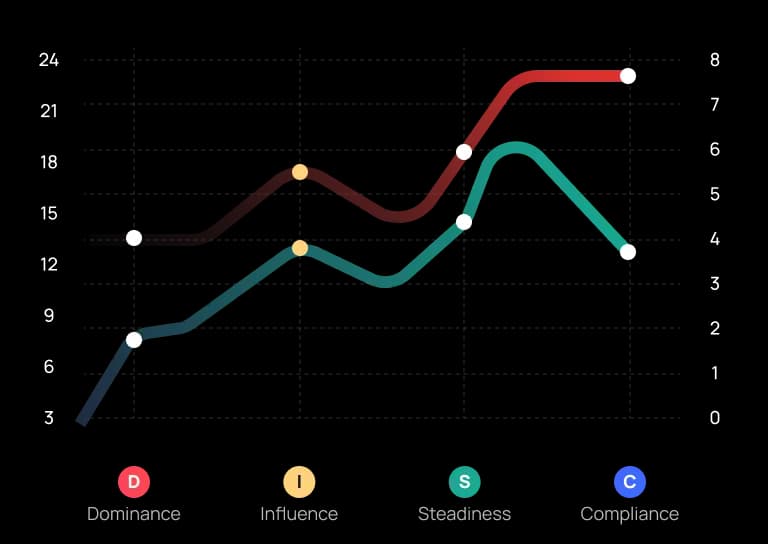
 Understand yourself
 Choose the right career
 Suggest effective communication
 Reduce negative emotions
Represents your instinctive behaviors and desires.
Shows the behavioral tendencies you think you should exhibit in specific situations.
Related articles
You may also be interested in
 DISCSep 28, 2026
How to Identify Your Strengths and Weaknesses at Work
Understand your strengths and weaknesses at work by reviewing your skills, past achievements, etc. Improve and align your strengths with career goals.
 DISCMay 29, 2026
DISC Profile Activities for Team Building, Communication, & Workplace
Discover how DISC profile activities enhance team collaboration and communication. Apply practical exercises to build self-awareness and apply at work.
 DISCMay 29, 2026
DISC Assessment for Hiring: How to Use DISC to Hire Better Candidates
Learn how to use DISC assessment for hiring responsibly. Discover how DISC helps evaluate work style, team fit, communication, onboarding, and hiring decisions.
